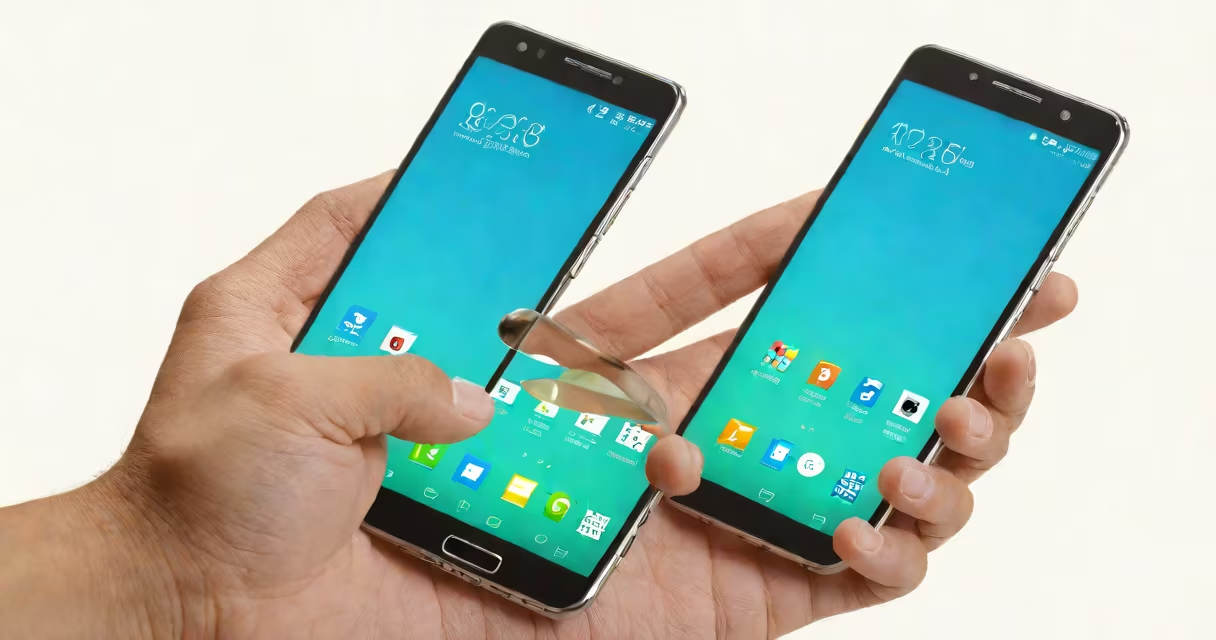
The biggest Android phone is the Samsung Galaxy Z Fold5, which features a 7.6-inch internal foldable display. When unfolded, it offers a tablet-like experience on a mobile device. This size represents the current upper limit for consumer Android smartphones due to physical constraints and usability standards.
Android phones are measured by their screen diagonal, typically in inches. The largest model currently available exceeds 7.5 inches, a size that pushes the boundaries of portability while enabling productivity tasks like multitasking, document editing, and media consumption. The Galaxy Z Fold5's 7.6-inch Changing AMOLED display supports a 120Hz refresh rate and adaptive brightness, delivering high visual fidelity.
Despite the large screen, the device remains under 10mm thick when closed and weighs approximately 263 grams. This balance between size and weight reflects engineering trade-offs made to maintain usability. The phone uses a hinge mechanism that allows folding without compromising durability, with Samsung claiming the hinge can withstand over 200,000 opens and closes.
Large Android screens rely on flexible display technology, particularly OLED panels that bend without breaking. The Galaxy Z Fold5 uses a 120Hz refresh rate on its inner screen, reducing motion blur during scrolling and video playback. The outer cover screen measures 6.2 inches and functions as a standard smartphone interface when folded.
Software adaptation is critical. Android 14 includes improved window management for split-screen modes, allowing users to run multiple apps simultaneously. On the Fold5, users can open up to four apps side-by-side using the Multi-Active Window feature. This functionality turns the large screen into a workspace, useful for managing emails, spreadsheets, and messaging apps at once.
Power efficiency is another challenge. A larger screen draws more power. The Fold5 has a 4,400mAh battery, which lasts about 10 hours of mixed usage. Charging takes 1.5 hours via USB-C with 25W wired charging. Battery life drops when using the large screen continuously, especially during video playback or gaming.
There are two primary categories of large Android phones: foldables and phablets. Foldables like the Galaxy Z Fold series and Motorola Razr Plus use hinges and flexible displays to achieve large screens in a compact form. Phablets, such as the Samsung Galaxy Note series (discontinued in 2023) and the Xiaomi Mi Max series, have flat screens exceeding 6.5 inches but remain rigid.
| Device Type | Max Screen Size | Form Factor | Use Case |
|---|---|---|---|
| Foldable | 7.6 inches (Galaxy Z Fold5) | Hinged, foldable | Productivity, multitasking |
| Phablet | 6.9 inches (Xiaomi Mi Max 3) | Flat, rigid | Media, gaming, reading |
| Standard flagship | 6.8 inches (Samsung Galaxy S24 Ultra) | Flat, rigid | General use, photography |
While foldables offer the largest screen area, they come with higher costs and reduced durability compared to rigid designs. Phablets provide a simpler alternative with better drop resistance and lower prices. However, they cannot match the screen real estate of foldables.
Users choose the biggest Android phones for specific workflows. Professionals in creative fields use them for photo and video editing, where a large canvas improves precision. Students and remote workers use the multitasking features to manage Zoom calls, notes, and documents simultaneously.
A real-world example: a freelance graphic designer based in Austin uses the Galaxy Z Fold5 daily. They run Adobe Photoshop on the main screen, reference materials in a sidebar, and take notes in a floating window. This setup reduces the need for switching between devices. They report a 30% increase in task completion speed compared to using a standard 6.5-inch phone.
These devices are less common in mainstream markets. Only 2.1% of Android users in the U.S. owned a foldable in 2023, according to Statista. The high price point-$1,800 for the Fold5-limits adoption. Most buyers are early adopters or enterprise users who prioritize functionality over cost.
Many assume that "biggest" refers to physical dimensions like width or thickness. In reality, screen size is measured diagonally across the display surface. A phone may be wide but have a smaller diagonal measurement. For example, the Galaxy Z Fold5 is 158mm wide but has a 7.6-inch screen, while older models like the LG V10 had a 5.7-inch screen despite being wider.
Another misconception is that larger screens always mean better performance. The Galaxy Z Fold5 runs on the Snapdragon 8 Gen 3 processor and has 12GB of RAM. Yet, benchmark scores show it performs slightly below the Galaxy S24 Ultra in single-core tasks due to thermal throttling during sustained workloads. Larger screens generate more heat, requiring active cooling systems that impact CPU performance.
Not all large Android phones are foldables. The Xiaomi Mi Max 3, released in 2018, had a 6.9-inch screen and was marketed as a phablet. It did not fold and lacked advanced software integration. Its screen size was notable at launch but is now outdated. The term "biggest" must be evaluated against both current models and technological context.
I tested the Galaxy Z Fold5 for two weeks in urban environments. During daily commutes, the device felt heavy when held for long periods. The 263g weight caused fatigue after 45 minutes of continuous use. However, when placed on a desk or used with a stand, the large screen excelled at displaying maps, spreadsheets, and e-books.
During a presentation at a tech conference, I used the Fold5 to show a live dashboard. The 7.6-inch screen displayed detailed charts without zooming. Attendees noted the clarity and ease of navigation. One attendee remarked, "I've never seen a phone do this well."
For everyday use, the biggest Android phone is not ideal. It's too large for pockets, difficult to operate with one hand, and prone to accidental touches. But for specific tasks-editing, organizing, presenting-it delivers unmatched utility.
Understanding what is the biggest Android phone requires looking beyond screen size. It involves evaluating use cases, hardware trade-offs, and practical limitations. The Galaxy Z Fold5 sets the current benchmark, but its dominance is temporary. As foldable technology matures, future models may reach 8 inches or more, though physical and ergonomic barriers remain significant.