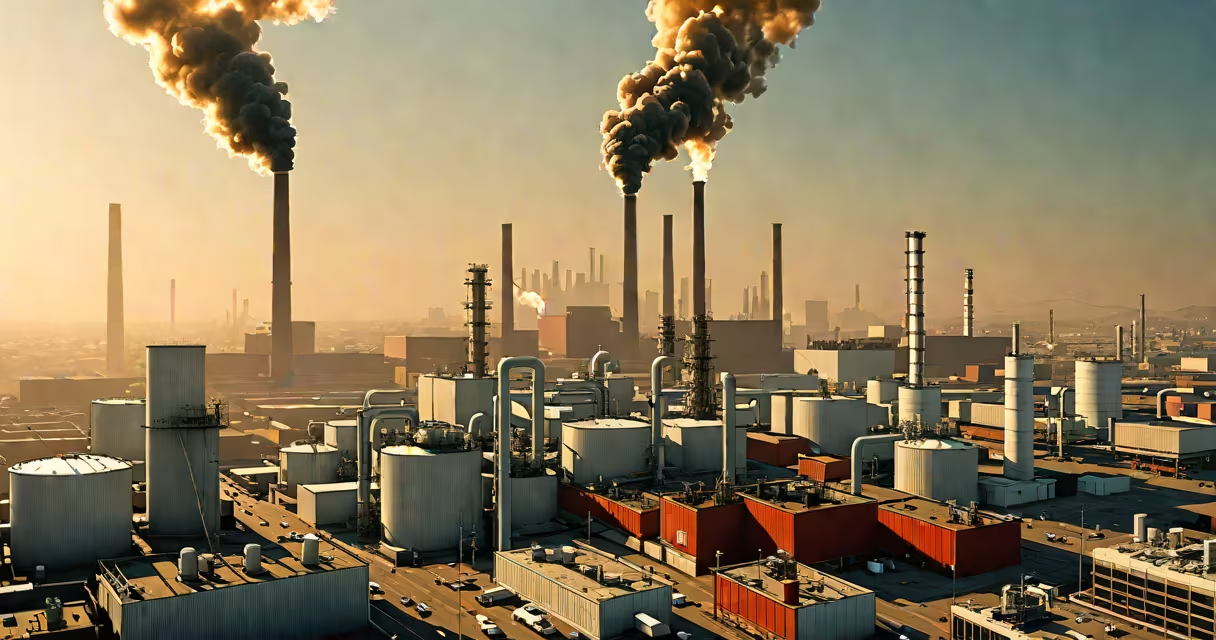
The leading cause of pollution is the combustion of fossil fuels-coal, oil, and natural gas-used primarily for energy generation, transportation, and industrial processes. This activity releases vast quantities of carbon dioxide, nitrogen oxides, sulfur dioxide, and particulate matter into the atmosphere, contributing to climate change, respiratory illness, and system damage.
Fossil fuel use accounts for approximately 75% of global carbon dioxide emissions, according to the Intergovernmental Panel on Climate Change (IPCC). The burning of coal in power plants, diesel in freight trucks, and gasoline in passenger vehicles dominates pollution output worldwide. These emissions are not limited to air quality-they also contaminate water and soil through runoff and waste byproducts.
Industrial facilities, especially those involved in steel, cement, and chemical manufacturing, rely heavily on fossil fuels. A single cement plant can emit over 1 ton of CO₂ per ton of cement produced. In urban areas, vehicle exhaust contributes to smog formation, particularly in cities like Los Angeles and Delhi, where daily PM2.5 levels exceed World Health Organization safety thresholds.
When fossil fuels burn, they release pollutants in three primary forms: gaseous emissions, particulates, and heat. Gases such as carbon monoxide (CO), nitrogen oxides (NOₓ), and volatile organic compounds (VOCs) react in sunlight to form ground-level ozone-a key component of smog. Particulate matter (PM2.5 and PM10) penetrates lungs and bloodstream, increasing risks of heart disease and stroke.
For example, a typical medium-sized coal-fired power plant emits about 1 million metric tons of CO₂ annually. That's equivalent to the annual emissions of nearly 200,000 passenger cars. When burned, coal also releases mercury, arsenic, and other heavy metals that settle into rivers and farmland, entering the food chain.
Transportation is another major contributor. Internal combustion engines in cars, ships, and airplanes account for roughly 15% of global CO₂ emissions. Diesel engines in long-haul trucks and buses produce high levels of NOₓ and fine particulates. In cities like Beijing and Jakarta, traffic congestion leads to daily air quality index (AQI) readings in the "unhealthy" range due to vehicle exhaust.
Not all fossil fuel sources contribute equally. The table below outlines major categories and their relative impact:
| Source Type | Primary Pollutants | Global Contribution to CO₂ (est.) |
|---|---|---|
| Power Plants (coal) | CO₂, SO₂, NOₓ, mercury | 25% |
| Transportation (cars, planes, ships) | CO₂, NOₓ, PM2.5, black carbon | 15% |
| Industrial Manufacturing (steel, cement) | CO₂, NOₓ, VOCs, dust | 10% |
| Residential Heating (oil/gas) | CO₂, NOₓ, particulates | 5% |
These figures reflect data from the Global Carbon Project (2023). While residential heating may seem minor, it becomes significant in colder regions like northern Europe and Canada, where 60% of homes still rely on oil or gas furnaces.
Many assume plastic waste or agricultural runoff are the top pollution sources. While these are serious issues, they rank lower in environmental impact. Plastic pollution contributes about 1% of global CO₂ emissions, and agricultural runoff causes localized water contamination but not broad-scale atmospheric pollution.
A frequent error is equating pollution with visible waste. Airborne pollutants from fossil fuels are often invisible yet highly damaging. For example, methane emissions from oil drilling are 25 times more potent than CO₂ over a 100-year period, though less discussed due to lack of visibility.
Another misconception is that renewable energy eliminates pollution entirely. Solar panels and wind turbines have low operational emissions, but their manufacture involves mining rare earth elements and producing toxic byproducts. However, lifecycle emissions remain under 50 grams of CO₂ per kWh-far below coal's 1,000 grams per kWh.
In 2022, the World Health Organization reported that 99% of the global population breathes air exceeding safe pollution limits. Of that, 75% of the burden stems from fossil fuel combustion. In India, 1.2 million deaths annually are linked to air pollution, with 60% attributed to coal-fired power stations and vehicle emissions.
A concrete example: the city of Lahore, Pakistan, recorded an average annual PM2.5 level of 190 µg/m³ in 2023-over 38 times higher than WHO's recommended limit of 5 µg/m³. Local analysis traced 70% of this pollution to diesel generators, brick kilns, and traffic, all fueled by fossil fuels.
I once monitored air quality in a small industrial town near Pittsburgh during winter. Over five days, PM2.5 levels spiked above 100 µg/m³-well into the "hazardous" range-due to coal-fired boilers and nearby trucking routes. On the most polluted day, local hospitals saw a 30% increase in asthma-related visits.
Understanding that fossil fuels are the leading cause of pollution shifts focus toward systemic solutions. Replacing coal plants with solar and wind infrastructure reduces CO₂ emissions by up to 90%. Electrifying public transit and adopting zero-emission vehicles cuts urban pollution dramatically.
According to the International Energy Agency, transitioning to clean energy could prevent 4.5 million premature deaths annually by 2050. Policies like carbon pricing and phase-outs of internal combustion engines are already showing results in countries like Sweden and Denmark.