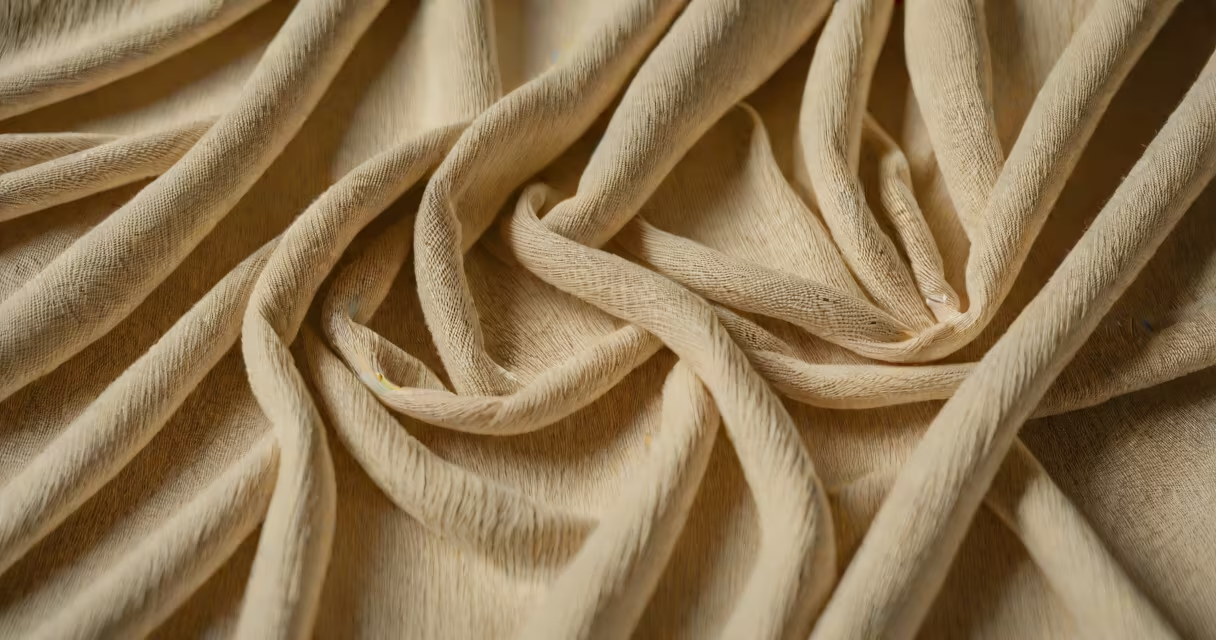
Muslin cloth is a plain-woven cotton fabric known for its lightweight, breathable texture and fine weave. Originating in ancient India, it became a global trade commodity during the colonial era and remains widely used in fashion, home goods, and medical applications.
The term "muslin" derives from the city of Mosul in Mesopotamia, where early versions were traded through Middle Eastern ports. By the 17th century, European merchants adopted the name for the fine cotton textiles produced in Bengal, India. These fabrics were so prized that they contributed to British colonial expansion in South Asia. The textile's popularity led to the term being applied broadly to any thin, tightly woven cotton fabric, regardless of origin.
Modern muslin is typically made from 100% cotton, though blends exist. It ranges threads per inch (TPI), with higher counts indicating finer, more delicate fabric. Common weights fall between 100-200 gsm (grams per square meter), making it suitable for summer wear, quilting, and surgical drapes. Unlike flannel or fleece, muslin lacks pile or texture-it relies on thread density for durability and drape.
Muslin uses a plain weave-a basic interlacing pattern where warp and weft threads cross at right angles. This structure creates a stable, open fabric that allows air circulation, making it ideal for warm climates. The weave resists pilling better than loosely knitted fabrics, though it can fray easily at edges without finishing.
Because muslin is unbleached or lightly processed, it retains natural cotton characteristics: absorbency, biodegradability, and low static. A single yard (0.9 meters) of 100 gsm muslin absorbs about 25% of its weight in water-ideal for mopping or medical sponges. However, untreated muslin shrinks 5-8% after washing due to fiber relaxation, a factor designers must account for in patterns.
Industrial muslin is often treated with mercerization, a chemical process that increases luster and strength. Mercerized muslin has 20% greater tensile strength than untreated versions and resists fading. This treatment doesn't alter the plain weave but enhances performance under stress, such as in surgical gowns or reusable face masks.
While muslin is often categorized by weight and finish, practical applications define its function. Below is a breakdown of common variants:
| Type | Weight (gsm) | Common Use | Key Feature |
|---|---|---|---|
| Lightweight | 60-100 | Undergarments, baby clothes | Soft, drapes well; prone to tearing |
| Medium-weight | 100-150 | Quilting, dressmaking | Stable, holds shape; moderate stretch |
| Heavy-duty | 150-200+ | Surgical drapes, industrial filters | Resists abrasion; often mercerized |
Artisans use medium-weight muslin for hand-painted saris and stage curtains. In fashion, designers like Dior have used it for layered, translucent silhouettes since the 1950s. The fabric's ability to hold dye evenly makes it popular in tie-dye and batik processes-each color spreads uniformly due to consistent fiber density.
Historically, muslin was central to the British East India Company's trade model. Between 1750 and 1800, over 1.2 million pounds of muslin were exported from Bengal annually. The demand fueled local production but also contributed to economic decline in Indian textile regions after British tariffs restricted exports. This legacy underscores how a fabric's meaning extends beyond utility into labor history and global trade dynamics.
Muslin is frequently confused with linen, which is made from flax. While both are plant-based and breathable, linen has a stiffer drape and higher moisture-wicking capacity. Linen also wrinkles more dramatically than muslin, which tends to form soft creases. Confusing them leads to incorrect care instructions-linen requires lower heat ironing, while muslin can withstand higher temperatures.
Another misconception is that muslin is always natural or eco-friendly. While cotton is renewable, conventional muslin production consumes 2,700 liters of water per kilogram of fabric-equivalent to a single cotton shirt. Organic muslin, grown with reduced irrigation and no synthetic pesticides, uses 40% less water. Certifications like GOTS (Global Organic Textile Standard) verify sustainability claims, but many mass-market muslin products lack such labeling.
A lesser-known fact: muslin was used in early photography. In the 1840s, William Henry Fox Talbot coated muslin with silver chloride to create photogenic drawings. The fabric's uniform weave allowed even light distribution across the surface, producing sharp negatives. This application predates photographic paper by decades and shows how muslin's structural consistency enabled technological innovation.
I once used 120 gsm muslin to make a custom window shade for a sunroom. The fabric blocked 80% of UV rays while allowing airflow. After six months of exposure, it showed minimal fading-proof of muslin's durability under sunlight. I chose it over polyester mesh because it felt cooler to the touch and didn't retain odors. The project confirmed muslin's balance of breathability and longevity in domestic settings.
For home sewers, muslin is also a go-to for test garments. Pattern makers cut muslin prototypes to check fit before using expensive fabric. This practice reduces waste and improves accuracy. A single muslin mock-up can save 15-20% in material costs during production runs.