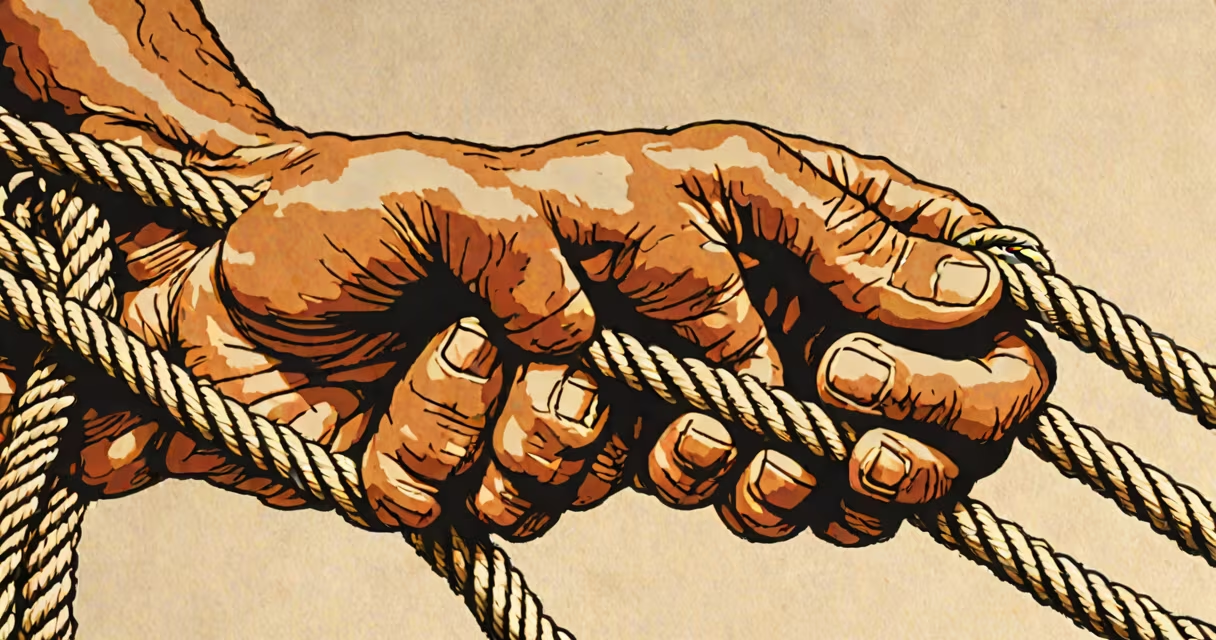
Will power is the mental strength to control impulses, delay gratification, and persist toward goals despite difficulty or distraction. It enables people to act according to long-term values rather than immediate urges. This ability underpins self-regulation, discipline, and goal attainment.
Will power functions as a cognitive resource that draws from limited mental energy. When depleted-through decision fatigue, stress, or prolonged focus-it weakens. Research shows that individuals who perform tasks requiring self-control later exhibit reduced performance on subsequent tasks demanding restraint, a phenomenon known as ego depletion.
Stanford psychologist Walter Mischel's famous marshmallow test demonstrated will power's long-term impact. Children who waited 15 minutes for a second treat-instead of eating the first immediately-tended to have higher academic achievement, better health outcomes, and greater emotional regulation decades later. The study linked delayed gratification to measurable life success.
Will power operates through executive function in the prefrontal cortex-the brain region responsible for planning, prioritizing, and inhibiting automatic responses. When faced with a temptation, such as skipping a workout to watch TV, will power engages the brain's ability to weigh consequences and choose actions aligned with deeper goals.
This process involves three core mechanisms: attention control (focusing on the goal), emotion regulation (managing frustration or boredom), and behavioral inhibition (resisting impulses). These processes are not infinite. Repeated use depletes mental resources, making it harder to sustain effort over time.
A 2010 study published in *Psychological Science* confirmed that glucose levels influence will power. Participants who consumed a sugary drink performed better on tasks requiring self-control than those given a placebo. This suggests physical energy supports mental endurance, though the effect is modest and context-dependent.
Will power manifests differently depending on context. It appears in four primary forms:
| Type | Description | Example |
|---|---|---|
| Goal-directed | Staying committed to a long-term objective despite setbacks. | Studying daily for months to pass a professional exam. |
| Impulse control | Resisting immediate desires in favor of larger outcomes. | Skipping dessert to maintain a diet. |
| Emotional regulation | Managing anger, fear, or anxiety during high-pressure moments. | Staying calm during a heated argument at work. |
| Behavioral persistence | Continuing effort even when progress is slow. | Practicing piano for hours despite feeling frustrated. |
These forms are interdependent. Emotional regulation often supports impulse control, and behavioral persistence relies on sustained goal-direction. However, they are not equally distributed across individuals. Some people naturally lean toward one form based on temperament, upbringing, or neurochemistry.
People often confuse will power with motivation. Motivation fuels desire to start; will power sustains action when desire fades. A person may feel excited about starting a fitness routine (motivation), but will power is needed to show up on cold mornings when enthusiasm wanes.
Another misconception is that will power is a fixed trait. It's not. While genetics play a role in baseline self-control, research shows it can be strengthened through practice. A 2016 meta-analysis in *Nature Human Behaviour* found that regular training in mindfulness, goal setting, and habit formation improved self-regulation across diverse populations.
Some assume will power is purely internal. But environment matters. A person trying to quit smoking in a household where others smoke faces stronger external pressure. The same individual in a smoke-free home has a higher chance of success. Will power functions within ecological constraints.
In 2018, a team of researchers tracked 1,200 college students over four years. Those who reported high levels of will power early in their studies were 37% more likely to graduate on time and had GPAs 0.4 points higher on average than peers with low will power scores. The difference wasn't due to intelligence-it was consistent across majors and socioeconomic backgrounds.
Consider a software developer aiming to complete a project under a tight deadline. They face constant distractions: social media, emails, meetings. Their will power allows them to close tabs, silence notifications, and work in focused blocks. Without it, they'd succumb to task-switching, reducing productivity by up to 40%, according to a 2021 study in *Journal of Applied Psychology*.
On a personal note, I once attempted to write a novel during a month-long retreat. By day five, my energy dipped. I wanted to check news, scroll through photos, or leave the room. I used a simple strategy: I wrote one sentence every 25 minutes, then took a five-minute break. This micro-habit preserved my will power by preventing burnout. I completed the draft in 28 days.
Will power is not the same as resilience. Resilience is the ability to recover from failure. Will power is the ability to act consistently despite internal resistance. You can be resilient after failing a test-but will power is required to study again after failing the last attempt.
It's also distinct from confidence. Confidence is belief in your ability. Will power is the action taken even when doubt exists. A confident person may skip training because they think they're ready. A person with strong will power trains anyway.
Finally, will power differs from discipline. Discipline is a system of routines and habits. Will power is the moment-to-moment choice to follow through. Discipline reduces reliance on will power over time. But initially, both are necessary.
Will power is not a mystical force. It is a measurable psychological capacity tied to brain function, behavior, and environmental factors. It enables people to align actions with values, even when effort is hard or rewards are distant.
It can be trained. Small, consistent choices-like choosing water over soda, or walking instead of driving-build mental stamina. Over time, these reinforce neural pathways associated with self-control.
Understanding the meaning of will power helps clarify why some people achieve long-term goals while others give up early. It's not about talent or luck. It's about the quiet, repeated decisions to do what's right-even when it's hard.