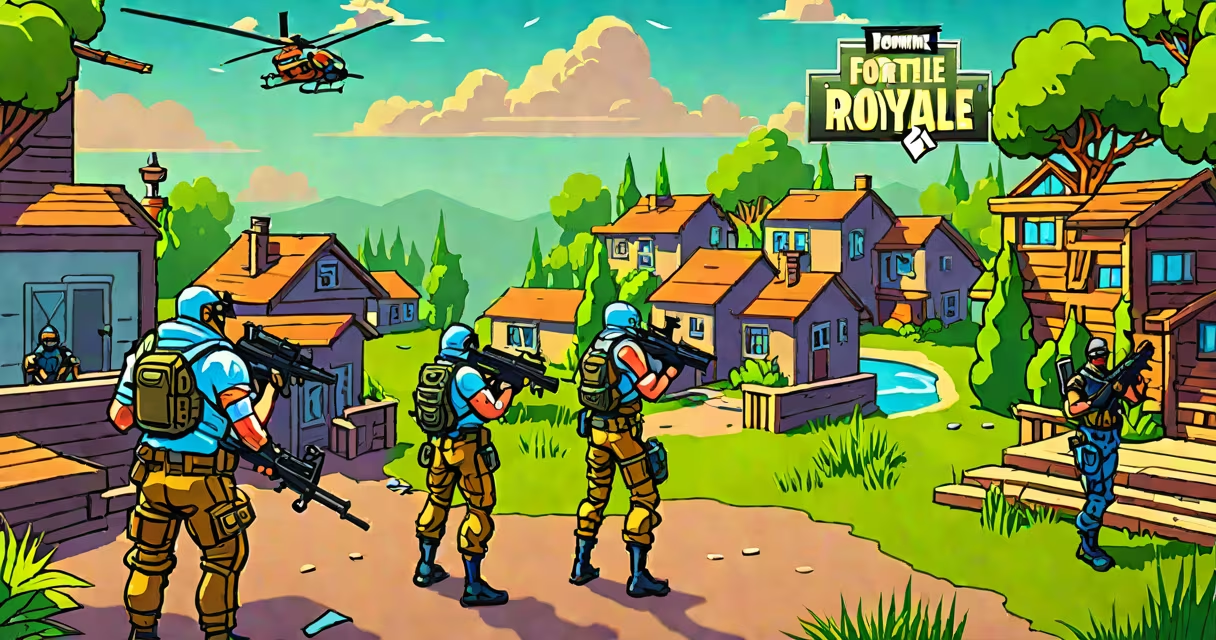
The most popular computer game is Fortnite, a battle royale title developed by Epic Games. As of 2024, it has over 500 million registered players across PC, console, and mobile platforms. Its dominance comes from consistent content drops, live in-game events, and free access.
Fortnite runs on Unreal Engine 4 and supports cross-platform play. Players join 100-person matches on a shrinking island, building structures mid-fight to gain tactical advantage. Matches last 20-30 minutes and end when only one player or team remains. The game's core loop combines shooting, construction, and strategy under time pressure.
Fortnite's popularity is not just about gameplay. It features real-time concerts, movie crossovers, and seasonal story arcs. In 2022, Travis Scott performed a virtual concert inside the game, drawing 27 million concurrent viewers. These events turn the game into a social platform, not just a shooter.
Each match begins with players parachuting onto a map filled with resources. They collect materials-wood, stone, and metal-to build walls, ramps, and floors. This construction system allows for creative defense and vertical mobility. A single well-placed wall can block a sniper shot or create a high-ground vantage point.
Game sessions are short and replayable. The map resets every few weeks, introducing new zones, loot spawns, and environmental changes. Seasonal updates bring new weapons, skins, and storylines. For example, Season 7 introduced the "Nexus" event, where players fought through a collapsing dimension to reach a final boss.
Updates occur weekly. Epic Games releases new content every Tuesday, often including balance changes, bug fixes, and cosmetic items. This cadence keeps players returning daily. The game's backend tracks player behavior, adjusting spawn rates and weapon availability based on real-time analytics.
Fortnite supports multiple modes beyond standard battle royale. Creative mode lets players design custom maps using tools like the Build Mode editor. These maps host minigames, puzzles, and multiplayer challenges. Over 10 million user-created maps exist on the platform.
Competitive play happens through official tournaments. The Fortnite Champion Series (FCS) runs regional qualifiers leading to global finals. Prize pools exceed $1 million per season. Top teams train with dedicated coaches and use advanced analytics software to refine strategies.
Community events are central to player retention. The game hosts live events tied to holidays and pop culture moments. During Halloween 2023, the map transformed into a haunted theme park with spooky music and animated traps. These events generate buzz and drive temporary spikes in player counts.
| Mode | Players | Duration | Platform Access |
|---|---|---|---|
| Battle Royale | 500M+ registered | 20-30 min | PC, console, mobile |
| Creative | 120M+ users | Varies | PC, console |
| Solo/duo/trio | 400M+ active | 25 min avg | PC, mobile |
Many assume the most popular computer game is a traditional AAA title like Call of Duty or Grand Theft Auto. But those games have smaller player bases. Call of Duty: Warzone had around 100 million players in 2023, fewer than Fortnite's peak numbers.
Another misconception is that popularity equals sales. While GTA V sold over 180 million copies, it is not played simultaneously by millions. Fortnite's strength lies in concurrent users-not lifetime downloads. In 2023, the game averaged 12 million concurrent players during major events.
Some confuse popularity with revenue. While Minecraft generates more annual income, it has fewer active players at any given time. Fortnite's business model relies on in-game purchases for cosmetics, not core gameplay. Players spend an average of $15 per month on skins and emotes.
I observed a group of middle school students in Austin, Texas, playing Fortnite during lunch break. All six were using laptops, sharing headphones, and coordinating builds. One student built a ramp in under ten seconds during a firefight. Their coordination was precise, and they referenced in-game lore casually-"That's the Nexus zone."
This scene reflects broader trends. According to Newzoo's 2024 Global Games Market Report, 68% of PC gamers aged 13-24 play Fortnite weekly. The report notes that 45% of players join via friends' invitations, showing strong social integration.
Fortnite's influence extends beyond entertainment. Schools in California and Ontario use it in STEM lessons to teach physics and geometry. Students learn about angles, trajectories, and structural integrity while building in-game. A 2023 study by the University of Michigan found that students who played Fortnite in class scored 14% higher on spatial reasoning tests.
Unlike role-playing games (RPGs) or simulation titles, Fortnite does not rely on long-term progression. There are no leveling systems or gear upgrades. Instead, success depends on reflexes, positioning, and teamwork. This makes it accessible to casual players while still challenging elite ones.
It differs from esports titles like League of Legends, which require deep knowledge of mechanics and character roles. Fortnite's learning curve is steeper in execution but lower in theory. You don't need to memorize 150 abilities-you just need to react quickly and build smart.
One non-obvious fact: Fortnite's server infrastructure handles over 1 billion actions per minute during peak events. This scale requires custom-built load balancers and distributed databases. Epic Games uses AWS and its own data centers to manage traffic spikes.