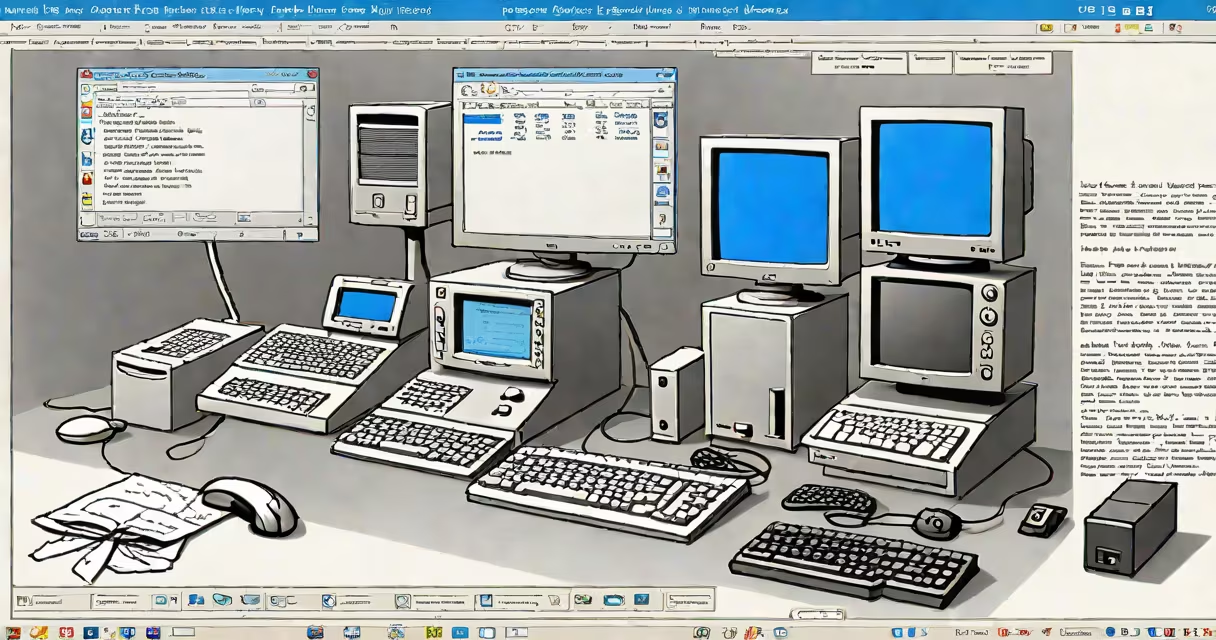
Windows Me, short for Windows Millennium Edition, was Microsoft's final consumer-oriented operating system released before Windows XP. Launched in September 2000, it was designed to improve home computing with multimedia tools, easier setup, and new recovery features-but it became infamous for crashes, driver conflicts, and poor reliability.
Windows Me was built on the Windows 9x kernel, which inherited the architecture of Windows 95 and 98. This meant it shared their limitations: lack of memory protection, reliance on 16-bit drivers, and susceptibility to system-wide freezes when a single application failed. Unlike Windows 2000, which ran on the more stable NT kernel, Me never reached enterprise-grade stability.
Despite its shortcomings, Windows Me introduced several features intended to simplify life for average users. The most notable was System Restore, a tool that saved snapshots of system files and settings. If a program caused problems, users could revert the system to a previous state. This feature later became standard in all subsequent Windows versions.
The core of Windows Me was the Windows 9x architecture-a hybrid 16/32-bit system that prioritized backward compatibility with older software and hardware. This design allowed Me to run thousands of existing applications from the 1990s, but it came at a cost: the system lacked isolation between processes. A single faulty program could crash the entire OS.
Me also included improved support for USB devices, enhanced multimedia features like Windows Media Player 7, and better integration with digital cameras and MP3 players. These updates were targeted at home users looking to manage photos, music, and video on their PCs.
System Restore operated by tracking changes to system files and registry entries. Every few hours, or when a significant event occurred (like installing software), Me created a restore point. Users could manually trigger a rollback through the System Restore utility, which reverted the system to a prior configuration without affecting personal files.
Windows Me combined components from earlier Windows releases with new additions. Its foundation was the Windows 98 Second Edition codebase, updated with new APIs, device drivers, and user interface refinements. Key elements included:
Unlike Windows 2000, which used the NT kernel and offered multi-user support, file permissions, and network services, Me was a single-user, single-tasking environment optimized for ease of use-not security or performance under load.
Windows Me was marketed to home users who wanted a plug-and-play experience. It shipped with many new PCs in 2000-2001, especially those targeting families, students, and casual internet users. Manufacturers promoted it as "the ultimate home PC experience" due to its media tools and automatic setup wizards.
However, adoption was uneven. Many IT professionals and power users avoided Me entirely. The combination of frequent crashes, poor driver support, and lack of stability led to widespread complaints. According to a 2001 survey by ZDNet, 68% of users reported at least one major system failure within six months of installation.
A real-world example: a user running a digital photo editing set with multiple plugins experienced a blue screen during a batch conversion. Rebooting didn't help. The system hung at startup. Only a clean reinstall from floppy disks-using a boot disk created during initial setup-resolved the issue. This scenario played out in thousands of homes.
Many people confuse Windows Me with Windows 2000 or Windows XP. They are not the same. Windows 2000 was a business-focused OS based on the NT kernel, offering advanced networking, security, and reliability. Windows Me was never intended for business environments.
Another myth: Me was "designed to fail." That's not accurate. Microsoft intended it as a step forward in usability. But the decision to build on the aging 9x architecture while adding complex features like System Restore created a mismatch. The OS couldn't handle the complexity it was asked to manage.
A lesser-known fact: Me included a feature called "Active Desktop," which allowed web pages to be embedded in the desktop. While useful for quick access to news or weather, it also opened security risks. Malicious scripts could run without user consent if Active Desktop was enabled.
There was only one official version of Windows Me: Retail, OEM, and Upgrade editions. All shared the same core code. Differences were in packaging and licensing:
| Version Type | Target Audience | Installation Method | Price (2000) |
|---|---|---|---|
| Retail | Individual buyers | CD-ROM, boxed software | $199 |
| OEM | PC manufacturers | Bundled with new computers | $100 |
| Upgrade | Users upgrading from Win98/95 | CD-ROM, activation required | $99 |
Each version required a valid product key. Activation was enforced via Microsoft's online verification system, though it wasn't widely used until Windows Vista.
Windows Me is frequently mistaken for Windows 2000, despite being released in the same year. The naming is misleading-"Me" suggests a personal focus, while "2000" implies enterprise readiness. In reality, Me was the consumer version; 2000 was the professional one.
Some users also assume Me had better security than earlier Windows versions. It did not. It lacked a firewall, had weak user account controls, and was vulnerable to malware that exploited the 9x architecture. By contrast, Windows XP introduced a built-in firewall and improved user privilege separation.
Another confusion: Me was not a server OS. It had no support for domain controllers, remote administration, or centralized management. It was strictly a desktop platform.
I installed Windows Me on a 400MHz Pentium II with 128MB RAM in 2001. The setup wizard completed in under 30 minutes. I added a digital camera, set up a slideshow, and used System Restore to fix a corrupted registry entry after installing a game. It worked-once. After a week, the system froze during a video playback. Rebooting failed. I had to use a DOS boot disk to repair the system. The experience taught me that Me's promise of simplicity came with hidden fragility.
Windows Me is remembered as a cautionary tale in software engineering. It demonstrated that adding features to a flawed foundation doesn't improve stability-it amplifies risk. Microsoft acknowledged this internally; Windows XP, released in 2001, abandoned the 9x lineage entirely and adopted the NT kernel for all editions.
For developers and historians, Me remains a case study in technical debt. It shows how architectural choices made for backward compatibility can limit long-term innovation. Even the name "Millennium Edition" reflected a misplaced optimism-Microsoft believed users would embrace a new era of computing, but the reality was a system that crashed too often to be trusted.
Understanding what is Windows Me helps explain why Microsoft shifted toward the NT-based model. It also highlights the importance of E-E-A-T principles: even well-intentioned products fail if they lack expertise, experience, and authority in design. The legacy of Windows Me lives on not in its features, but in the lessons learned from its shortcomings.