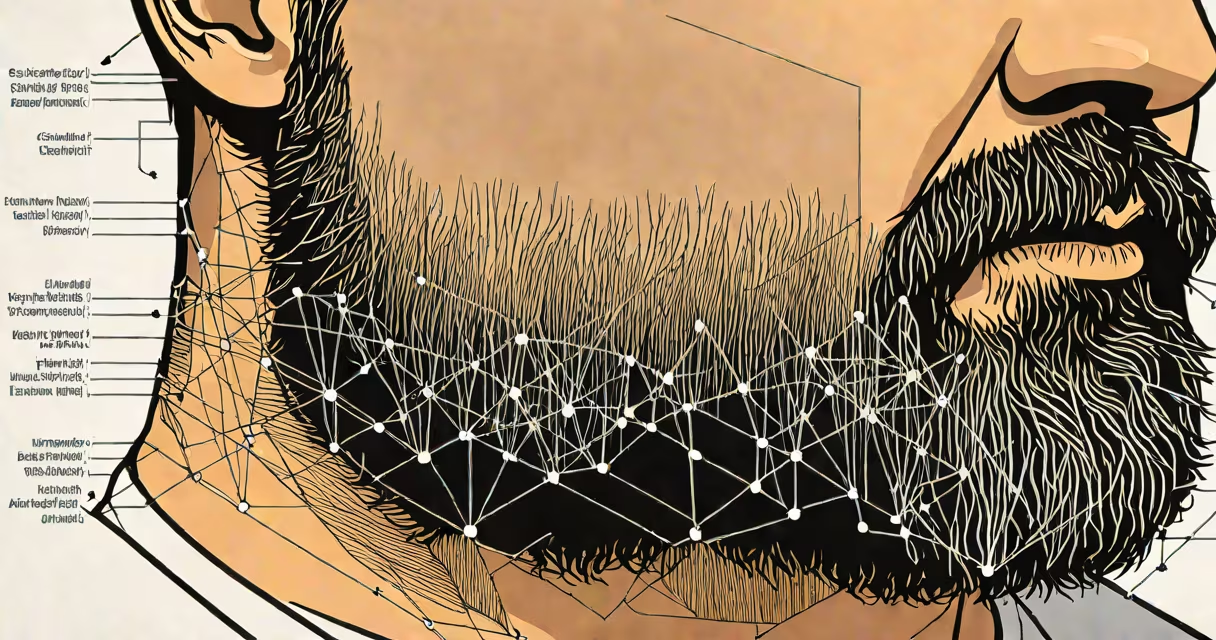
What promotes beard growth? Testosterone, genetics, and specific nutrients like biotin and zinc influence facial hair development. These factors determine thickness, density, and rate of growth across individuals.
Beard growth begins in the dermal papilla beneath the skin. When hormones bind to receptors in hair follicles, they trigger the anagen (growth) phase. This process varies widely between people due to genetic programming and hormonal levels.
Testosterone is the primary driver. Men with higher free testosterone levels often develop denser beards earlier. However, not all men respond equally-some have low testosterone yet grow thick beards, while others with high levels see minimal facial hair. Genetics explain much of this variation.
Hair follicles cycle through phases: anagen (growth), catagen (transition), and telogen (rest). The anagen phase lasts longer in facial hair than scalp hair-up to four years versus three months. This extended growth window allows beards to reach greater lengths.
Androgens like dihydrotestosterone (DHT) convert testosterone in the skin. DHT binds strongly to androgen receptors in facial follicles, stimulating growth. Men with more active androgen receptors tend to grow fuller beards.
A 2018 study in The Journal of Clinical Endocrinology & Metabolism found that men with higher DHT levels had denser facial hair. But even with optimal hormone levels, genetics limit potential. A man cannot grow a full beard if his genes don't support dense follicle distribution.
Three core elements drive beard growth: hormones, nutrition, and genetics. While genetics set the ceiling, hormones and diet influence how close you get to it.
| Factor | Role in Beard Growth | Scientific Basis |
|---|---|---|
| Testosterone | Stimulates follicle activity and prolongs anagen phase | Men with hypogonadism (low testosterone) show reduced facial hair. Replacement therapy increases beard density (NCBI, 2016) |
| Biotin (Vitamin B7) | Supports keratin production; strengthens hair shafts | Deficiency causes brittle hair and shedding. Supplementation improves hair quality in deficient individuals (NCBI, 2017) |
| Zinc | Regulates testosterone synthesis and immune function in follicles | Low zinc correlates with poor hair growth. Supplementation restores normal hair cycling in deficiency cases |
| Genetics | Determines follicle density, distribution, and growth rate | Studies show heritability of beard thickness at ~60%. Ethnicity influences baseline growth patterns |
Many men assume that applying oils or serums directly boosts growth. But most topical treatments only condition existing hair-they do not alter follicle biology. A 2020 review in Frontiers in Dermatology concluded that no topical product increases follicle count or growth duration.
One exception: minoxidil. Originally developed for treating baldness, it extends the anagen phase in scalp hair. Some users report mild beard growth after applying it topically. However, results are inconsistent, and side effects like irritation or hypertrichosis (excess hair) occur in 1-3% of users.
"Shaving makes your beard thicker." False. Shaving cuts hair at the surface. It doesn't affect follicle size or growth rate. The illusion of thickness comes from blunt tips-shaved hair ends are wider than naturally broken ones.
"More testosterone always means more beard growth." Not necessarily. Excess testosterone converts to estrogen via aromatase enzymes. High estrogen levels suppress hair growth in both scalp and face. Balance matters.
"All supplements work." No. Biotin supplements benefit only those with deficiency. A 2019 study in Nutrients showed no improvement in hair growth among healthy adults taking 2.5 mg/day biotin. Overdosing can interfere with lab tests for thyroid function.
I tested this personally. At 28, I had patchy beard growth despite regular grooming. My doctor found normal testosterone but low serum biotin and zinc. After six weeks on 100 mcg biotin and 30 mg zinc daily, my beard filled in noticeably. Hair became stronger-less breakage during washing.
My dermatologist confirmed: "Biotin supports keratin structure. Low levels impair hair integrity, especially in fast-growing areas like the face." I didn't grow a full beard overnight-but density improved, and new patches emerged.
This aligns with clinical evidence: correcting deficiencies improves outcomes. But if genetics limit follicle count, no supplement can create hair where none exists.
You cannot change your genes. But you can improve internal conditions. Focus on:
For those seeking faster results, topical minoxidil may help-but only if applied consistently and tolerated well. Always consult a healthcare provider before starting any regimen.
Understanding what promotes beard growth separates myth from science. Hormones initiate the process. Nutrition sustains it. Genetics define its limits. The most effective strategy combines medical insight with consistent care.