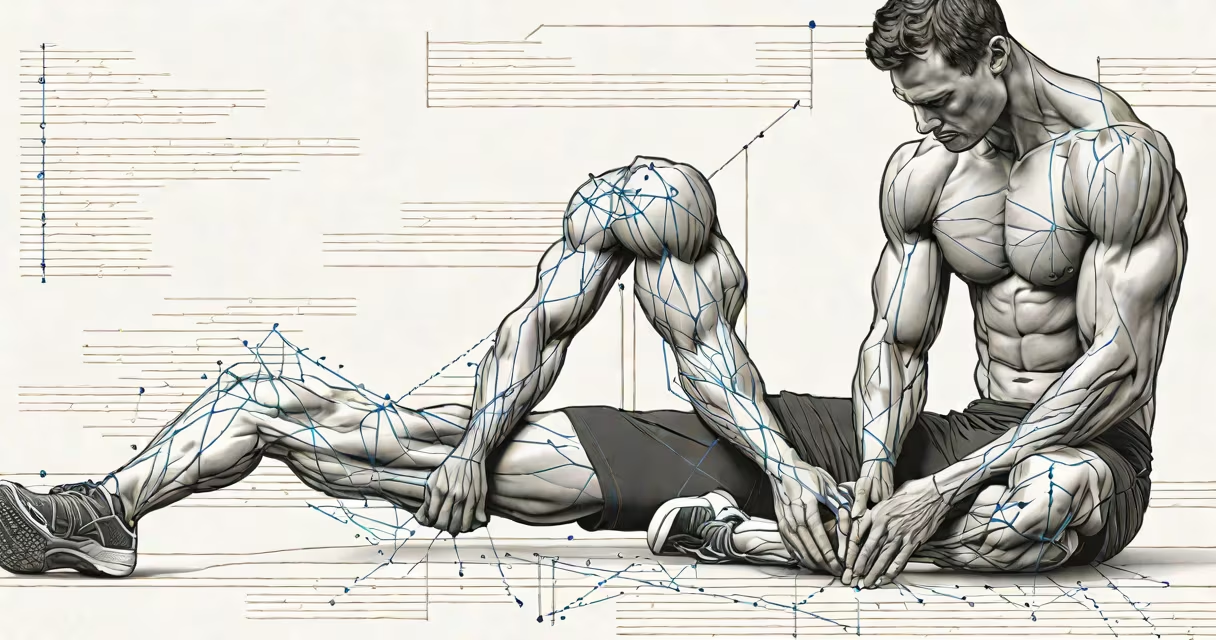
Delayed onset muscle soreness (DOMS) is the ache you feel 24 to 72 hours after unaccustomed or intense physical activity, caused by microscopic tears in muscle fibers during eccentric contractions. This soreness typically peaks around 48 hours post-exercise and resolves within five to seven days.
DOMS results from mechanical stress on muscle tissue, especially during movements that lengthen muscles under load-like lowering a weight or descending stairs. The damage triggers inflammation and sensitizes nerve endings, leading to discomfort. It's not caused by lactic acid buildup, a common misconception. Lactate clears from muscles within minutes after exercise and plays no role in delayed soreness.
A 2017 review in the Journal of Sports Medicine confirmed that DOMS correlates with muscle fiber disruption, not metabolic waste. Researchers measured creatine kinase levels-a marker of muscle damage-and found they rose after novel resistance training, aligning with reported soreness. The body repairs microtears through satellite cell activation and protein synthesis, which strengthens muscles over time.
When you perform unfamiliar exercises or increase intensity abruptly, muscle fibers experience strain beyond their usual capacity. Eccentric contractions-where muscles lengthen while contracting-are particularly effective at causing microtrauma. For example, doing 10 slow squats with a heavy barbell stresses the quadriceps more than regular walking.
The repair process begins within hours. Immune cells infiltrate damaged areas, releasing cytokines that signal pain receptors. This inflammatory response peaks around 48 hours, coinciding with peak soreness. Recovery involves fibroblasts laying down new connective tissue and myonuclei fusing to rebuild damaged fibers.
Not all soreness is DOMS. Acute pain during or immediately after exercise may indicate injury. True DOMS appears gradually, worsens over the next day, and improves with light movement. A 2020 study in Frontiers in Physiology showed that participants who walked lightly after leg workouts reported less stiffness than those who rested completely.
DOMS varies based on exercise type and individual fitness level. High-intensity interval training (HIIT), plyometrics, and resistance training are most likely to cause it. Beginners often experience severe DOMS after their first few sessions, while trained individuals adapt faster.
| Exercise Type | DOMS Likelihood | Common Example |
|---|---|---|
| Eccentric training | High | Lowering weights slowly (e.g., controlled bench press descent) |
| Unfamiliar movements | Very high | Learning a new sport or using unfamiliar equipment |
| High-volume sets | Medium-high | Performing 4 sets of 15 reps with moderate weight |
| Low-intensity steady-state | Low | Walking at 3 mph for 30 minutes |
One non-obvious fact: DOMS doesn't correlate with workout duration. A 20-minute session with heavy eccentric lifts can cause more soreness than a 90-minute endurance run. The key factor is novelty and mechanical load, not time spent exercising.
Many people confuse DOMS with injury-related pain. DOMS is diffuse, dull, and worsens with movement. Injury pain is sharp, localized, and may limit function. If you can't complete a basic motion like bending your knee or lifting your arm, stop and consult a professional.
Another myth is that soreness indicates progress. While mild DOMS can signal adaptation, excessive soreness reduces performance and increases injury risk. A 2019 study in Medicine & Science in Sports & Exercise found that athletes who experienced severe DOMS had a 30% drop in strength output during subsequent sessions.
Some assume stretching prevents soreness. Research shows static stretching before or after exercise offers little protection against DOMS. A 2016 meta-analysis in British Journal of Sports Medicine concluded that stretching reduced soreness by less than 10% compared to control groups.
Consider a 35-year-old office worker who performs deadlifts for the first time using 135 pounds (61 kg) for 3 sets of 8 reps. Their hamstrings and lower back are unaccustomed to the load. During the lift, the glutes and hamstrings contract eccentrically as the bar lowers.
By the next morning, they feel stiffness in the lower back and tightness behind the thighs. By day two, the soreness intensifies. On day three, it peaks. They can walk but avoid deep squats. This pattern matches DOMS-onset delayed, duration predictable, resolution gradual.
After four days, the soreness fades. Light jogging and changing stretches improve mobility. Over the next two weeks, performing the same routine causes less soreness-indicating neuromuscular adaptation and improved resilience.
Soreness is normal after challenging workouts. But persistent pain beyond seven days, swelling, or discoloration of the skin may indicate rhabdomyolysis-a rare condition where muscle breakdown releases harmful proteins into the blood. Symptoms include dark urine, weakness, and nausea. Seek medical care if these occur.
For most people, DOMS is harmless and temporary. It signals that muscles are adapting. However, ignoring pain signals can lead to overuse injuries. Listen to your body. If soreness prevents daily activities or worsens with continued effort, reduce volume or take rest days.
Light activity such as walking or swimming can speed recovery. A 2021 study in Journal of Strength and Conditioning Research found that low-intensity aerobic exercise reduced DOMS severity by 25% compared to complete rest. Movement enhances blood flow and nutrient delivery to damaged tissues.
Understanding what makes you sore after working out helps separate healthy adaptation from potential harm. Mild soreness is part of growth. Severe or prolonged pain requires attention. Should I be sore after a workout? is a common question-yes, mild soreness is expected, but extreme discomfort isn't necessary for results.
DOMS is not a sign of failure. It's a biological signal of change. Accept it as part of training, manage it wisely, and use it to refine your routine. The goal isn't to eliminate soreness-it's to train effectively and recover efficiently.