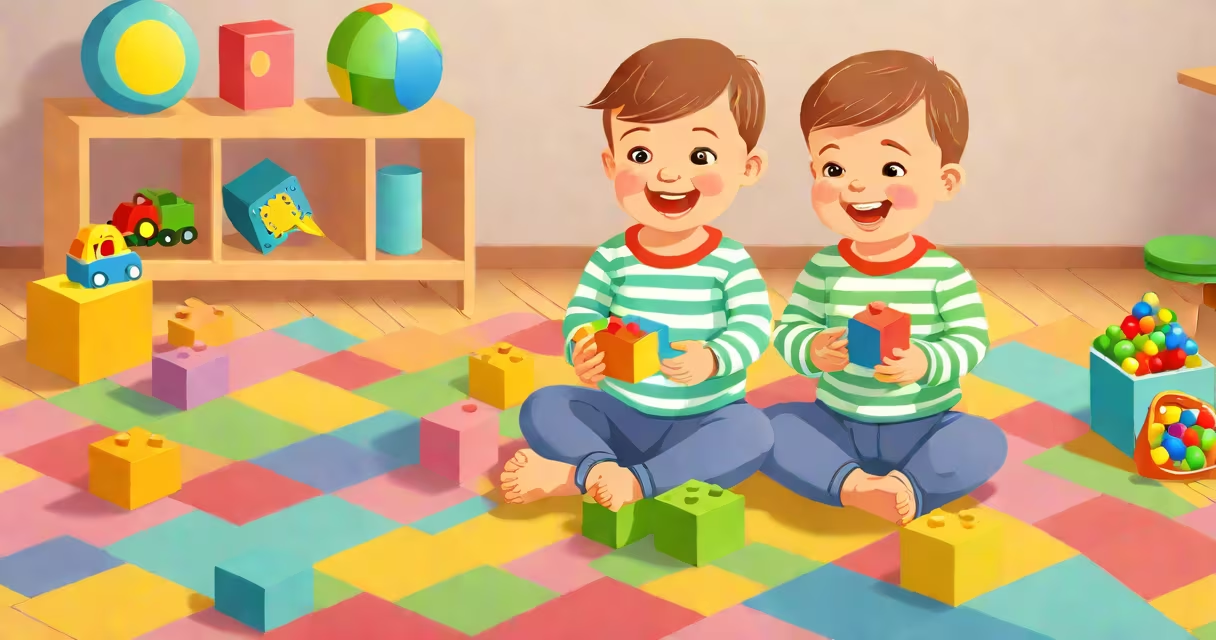
By age two, children typically understand simple verbal commands, use 50 to 200 words, and engage in parallel play. They begin to express emotions, imitate adults, and show independence through actions like feeding themselves.
At this stage, language development accelerates rapidly. A typical two-year-old can name common objects, follow two-step directions ("Pick up your shoes and put them in the box"), and ask simple questions like "Where's Mommy?" or "Why?" Their vocabulary expands beyond single words to short phrases such as "I want juice" or "Go park."
Motor skills progress. Most two-year-olds walk confidently, climb stairs with alternating feet, kick a ball, and stack blocks into towers of six or more. Fine motor control improves enough to turn pages in books, use crayons to scribble, and manipulate small toys.
Children around age two demonstrate key cognitive, emotional, and physical milestones. These aren't rigid requirements but general expectations based on pediatric research and early childhood assessments.
The American Academy of Pediatrics (AAP) notes that two-year-olds begin to understand cause and effect, recognize familiar people, and show preferences for certain foods, clothes, and routines. They may protest with "No!" frequently-a sign of emerging autonomy.
Emotional regulation remains limited. Tantrums are common because children lack the ability to manage frustration. They may cry when denied something they want, even if it's safe or reasonable. This behavior is normal and part of learning self-control.
Learning happens through play, repetition, and interaction. The most effective activities are those embedded in daily routines and natural curiosity.
| Category | Examples of What Two-Year-Olds Should Be Able To Do |
|---|---|
| Language | Use 50-200 words, combine two words ("more milk"), respond to simple questions ("Where's the dog?") |
| Motor Skills | Walk up and down stairs with help, run with unsteady balance, kick a ball, stack 6+ blocks |
| Social & Emotional | Play alongside others (parallel play), show affection, express emotions like joy or anger, imitate adult behaviors |
| Cognitive | Recognize body parts, sort shapes or colors, understand simple concepts like "in," "on," "off" |
For example, a child who can point to their nose when asked "Where's your nose?" demonstrates understanding of spatial relationships and body awareness. Another child who says "bye-bye" while waving at a departing parent shows symbolic thinking-the ability to represent ideas with gestures or words.
Parents often misjudge development based on comparisons. One child may speak in full sentences at 24 months; another may still be using single words. Both are within normal ranges. The Centers for Disease Control and Prevention (CDC) emphasizes that variation is expected and that delays should be evaluated by a healthcare provider-not assumed.
Many caregivers assume that two-year-olds should be able to do everything independently. This leads to frustration for both child and parent. In reality, two-year-olds are developing independence but still rely heavily on adult guidance.
A frequent error is expecting a child to follow complex instructions. Saying "Put your toys away, clean your room, and then come eat dinner" overwhelms a two-year-old. Instead, break tasks into one step: "Please put the red blocks in the bin." Success builds confidence and reinforces listening skills.
Another misunderstanding is equating early academic skills with intelligence. Some parents push reading or counting at this age. While exposure to books and numbers is beneficial, forcing formal instruction can hinder intrinsic motivation. Research from the National Association for the Education of Young Children (NAEYC) shows that play-based learning yields better long-term outcomes than early academics.
I once observed a mother trying to teach her two-year-old to write letters during a grocery store visit. The child became upset and dropped the crayon. When I suggested waiting until they were at home with time and space, she nodded. Later, the child spent ten minutes drawing circles and lines-natural precursors to letter formation. The difference between pressure and patience was clear.
While variation is normal, certain signs may indicate developmental delay. The CDC recommends consulting a pediatrician if a child:
Early intervention services, available through state programs, can support children with speech delays, motor skill challenges, or social communication differences. These services are free and accessible under the Individuals with Disabilities Education Act (IDEA).
Simple, everyday interactions build foundational skills. Reading picture books together three times a day increases vocabulary faster than screen time. Singing songs with gestures (like "Head, Shoulders, Knees, and Toes") strengthens memory and coordination.
Playtime with open-ended materials-such as blocks, playdough, or dress-up clothes-encourages creativity and problem-solving. A child stacking blocks into a tower learns about balance, size, and persistence. When the tower falls, they try again-developing resilience.
Consistent routines reduce anxiety. A predictable morning sequence-wake up, brush teeth, eat breakfast, choose clothes-gives structure. Children thrive on predictability, which supports emotional security and cognitive development.
Understanding what two year olds know means recognizing their current abilities-not comparing them to older children or expecting perfection. Their progress is measured in small steps: a new word, a successful tower, a shared laugh during storytime.
Parents don't need to teach everything. They need to observe, respond, and create opportunities for exploration. When a child says "Mama!" while pointing at a photo, that's language. When they hand a toy to a sibling, that's empathy. These moments matter more than test scores or milestones.
Knowing what two year olds should know helps caregivers set realistic expectations and nurture growth without pressure. Focus on connection, not performance. Support development through love, consistency, and play.