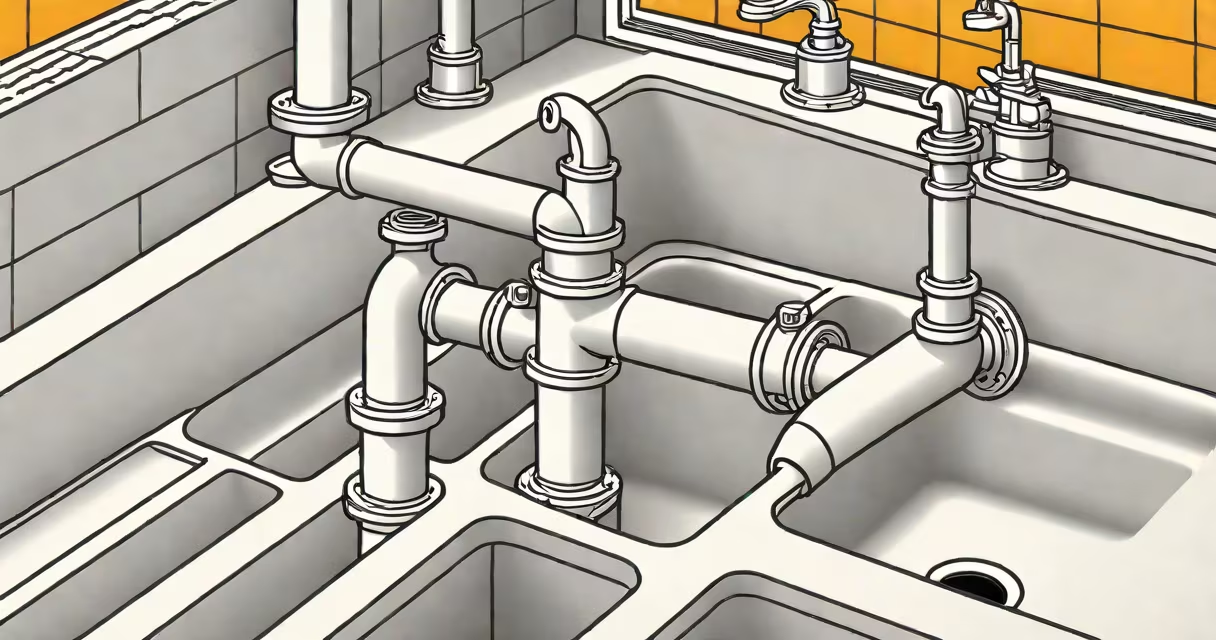
The standard drain pipe size for a kitchen sink is 1.5 inches in diameter. This size meets plumbing codes and supports efficient wastewater removal without clogging.
Kitchen sinks generate large volumes of greasy water, food particles, and debris. A 1.5-inch pipe provides sufficient capacity to handle this flow. Smaller pipes, such as 1 inch, risk frequent blockages due to restricted passage. Larger sizes, like 2 inches, are unnecessary and increase material cost without added benefit.
Plumbing codes require a minimum 1.5-inch diameter for kitchen sink drains. The National Plumbing Code (IPC) specifies that drainage systems must maintain a velocity of at least 2 feet per second to prevent solids from settling. A 1.5-inch pipe achieves this velocity under typical household usage patterns.
A kitchen sink drain system consists of the sink's strainer, tailpiece, P-trap, and waste pipe. Water flows from the sink through the tailpiece into the P-trap, which holds water to block sewer gases. From the trap, wastewater enters the main drain pipe.
The P-trap must match the pipe size. Using a 1.5-inch P-trap with a 1-inch pipe creates a bottleneck. This restriction increases backpressure and slows flow, raising the risk of overflow during heavy use. Proper sizing ensures consistent drainage even when multiple items are washed simultaneously.
When installing or replacing a drain, ensure all components-from the tailpiece to the vent-match the 1.5-inch standard. Mismatched parts cause leaks, poor drainage, and code violations during inspections.
Common materials for kitchen sink drain pipes include PVC, ABS, and copper. PVC is most widely used due to its low cost, ease of installation, and resistance to corrosion. ABS is similar but slightly more rigid. Copper is durable but expensive and less common in residential kitchens.
Each material supports the same standard diameters. For 1.5-inch drains, look for Schedule 40 PVC or ABS pipe. These have a nominal diameter of 1.5 inches and an actual outer diameter of 1.875 inches. The inner diameter is approximately 1.315 inches, allowing for adequate flow while maintaining structural integrity.
| Material | Common Use | Flow Capacity (gallons per minute) | Cost Range |
|---|---|---|---|
| PVC | Residential kitchens | 25-30 | $0.50-$1.00 per foot |
| ABS | Residential kitchens | 24-28 | $0.60-$1.10 per foot |
| Copper | High-end installations | 30-35 | $2.00-$4.00 per foot |
While copper offers higher flow rates, the difference is negligible in typical kitchen use. A 1.5-inch PVC pipe handles 25 gallons per minute-enough for continuous dishwashing, garbage disposal operation, and sink overflow scenarios.
Residential plumbing standards in the United States follow the International Plumbing Code (IPC). Section 1001.2 states that kitchen sink drains must be sized based on fixture unit load. A kitchen sink is assigned 1.5 fixture units, requiring a 1.5-inch drain.
Using a smaller pipe, such as 1 inch, results in inadequate flow. The IPC defines minimum slope requirements: 1/4 inch per foot. A 1-inch pipe cannot maintain the required flow velocity unless the slope exceeds code limits, increasing the risk of siphoning and dry traps.
During a renovation project in Portland, Oregon, a homeowner replaced a 1-inch drain with a 1.5-inch pipe. After installation, the sink drained completely within 10 seconds during a test run with 5 gallons of water. The original 1-inch pipe took 22 seconds and left residue in the trap. This confirmed that 1.5 inches is optimal for performance and compliance.
Some assume that the drain pipe size must match the sink's drain hole. This is incorrect. The sink's drain hole is typically 1.25 inches in diameter. The pipe size is determined by flow volume and code requirements-not by the hole size.
Another misconception is that larger pipes improve drainage. While larger pipes move water faster, they also reduce velocity. A 2-inch pipe may carry more water, but the slower speed allows solids to settle. The IPC warns against oversized drains because they fail to maintain self-cleaning velocity.
One non-obvious fact: the P-trap's depth affects performance. A shallow trap (less than 4 inches) loses water faster, increasing the chance of sewer gas intrusion. A properly sized 1.5-inch trap with 6 inches of depth maintains a seal for longer periods, especially in homes with infrequent sink use.
In 2022, a plumber in Austin, Texas, replaced the drain system in a 1970s kitchen. The original setup used a 1-inch copper pipe. The homeowner reported slow drainage and occasional backups. The plumber measured the flow rate using a calibrated bucket and timed the emptying process.
With the 1-inch pipe, the sink emptied at 1.2 gallons per minute. After upgrading to a 1.5-inch PVC pipe, the rate increased to 2.8 gallons per minute. The new system eliminated backups and reduced noise during operation. The upgrade cost $45 in materials and 2 hours of labor-well below the cost of repeated cleaning and potential water damage.
Code inspectors verified the work met IPC standards. The home passed inspection on the first try, avoiding delays and additional fees.