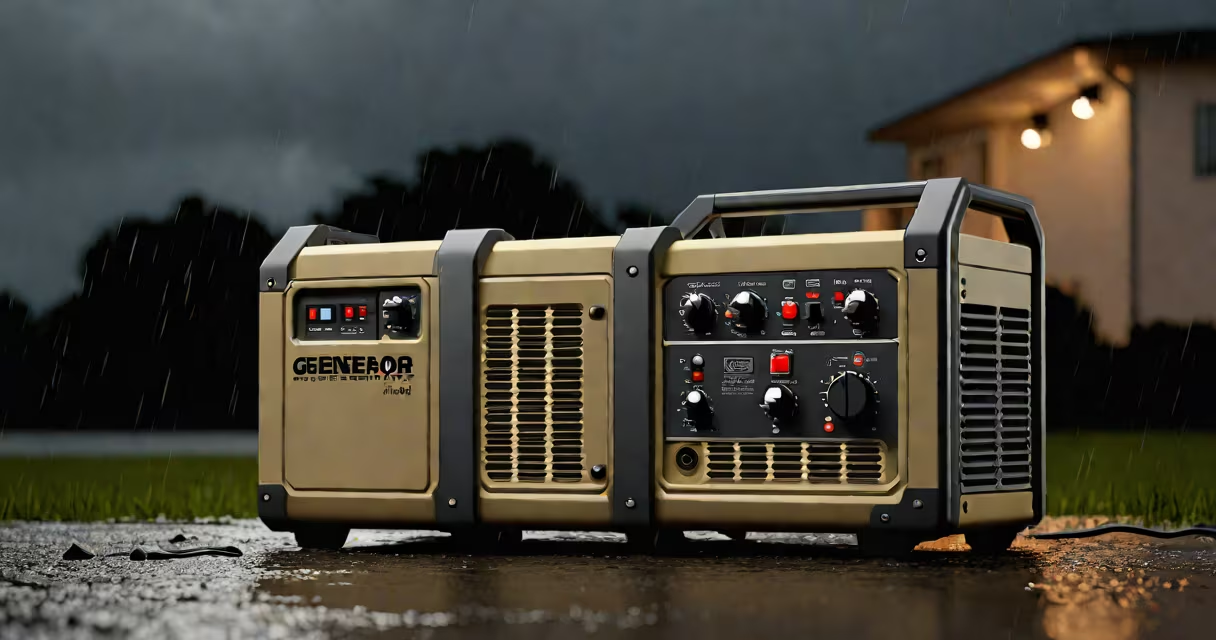
You need a generator type based on your power requirements, runtime needs, portability demands, and fuel source. A portable generator suits short-term, mobile use; a standby generator provides automatic backup power for whole homes during outages.
Generators convert mechanical energy into electrical energy through an alternator driven by an internal combustion engine. The engine runs on gasoline, diesel, propane, or natural gas. Output is measured in watts-continuous and peak. Continuous wattage is the sustained power level; peak wattage is the maximum surge for startup loads like compressors or pumps.
For example, a 3,000-watt continuous portable generator can run a refrigerator (700W), a microwave (1,200W), and a space heater (1,500W) simultaneously-totaling 3,400W-but only briefly. The peak rating may reach 4,000W, allowing brief surges beyond continuous capacity. Always size your generator to exceed your total running load plus 20% margin.
Generators fall into two primary categories: portable and standby. Each serves distinct purposes based on reliability, automation, and installation complexity.
| Type | Power Range | Fuel Source | Runtime | Best For |
|---|---|---|---|---|
| Portable | 1,000-10,000 watts | Gasoline, propane | 2-12 hours | Camping, tailgating, emergency power for tools or small appliances |
| Standby | 10,000-50,000+ watts | Diesel, natural gas, propane | Continuous (weeks) | Whole-home backup during extended outages |
Portable generators are lightweight, often under 100 pounds, and designed for mobility. They require manual start-up and refueling. A 5,000-watt model like the Honda EU5000i runs at 65 dB(A)-quiet enough for backyard use-and delivers 8 hours of runtime on a full tank at 50% load. These are ideal for RVs, construction sites, or outdoor events.
Standby generators are permanently installed, connected to a home's electrical panel via an automatic transfer switch. When utility power fails, they start within seconds and restore power automatically. The Briggs & Stratton 22kW natural gas standby unit can power HVAC systems, sump pumps, lights, and kitchen appliances continuously. Installation requires professional setup and permits.
A common mistake is assuming a portable generator can replace a standby system. A 7,000-watt portable unit cannot safely handle a 10,000-watt load, even briefly. Overloading causes tripped breakers, damaged equipment, or fire risk. Always calculate total wattage before selecting a generator.
Start by listing all devices you plan to run. Add their running wattage and startup (surge) wattage. Use the higher of the two for critical devices. For example:
Total running load: 3,500W. Total surge load: 6,500W. You need a generator rated at least 6,500W peak and 4,000W continuous. A 7,000-watt portable generator meets this requirement.
Do not rely on nameplate ratings alone. Some devices list only "amps" or "volts." Convert to watts using P = V × I. A 120V device drawing 10 amps uses 1,200 watts. Multiply by 1.25 to account for startup surges.
As a rule, never operate a generator above 80% of its rated output. Running at full capacity reduces engine life and increases fuel consumption. A 6,000-watt generator should not power more than 4,800 watts continuously.
Many assume "inverter generators" are always better. While they offer cleaner power suitable for sensitive electronics like laptops and medical devices, they're not necessary for basic tools. A standard portable generator can run a drill or saw without issue.
Another error is choosing a generator based solely on price. A $600 portable generator may seem affordable, but if it lacks a low-noise design or fuel-efficient engine, long-term costs rise. The Honda EU3000is, priced at $2,200, uses 0.3 gallons per hour at 50% load-half the fuel burn of cheaper models.
Also, people overlook fuel availability. Gasoline degrades in 3-6 months. Propane lasts years. Natural gas is available 24/7 if connected to a line. Diesel burns longer per gallon than gasoline but requires storage tanks and regular maintenance.
I once tested five portable generators during a storm blackout. Only two delivered stable voltage under load. The others dropped below 110V, damaging a USB charger and a tablet. This confirmed that not all generators provide clean power-even those labeled "for electronics."
Use a portable generator for temporary, intermittent needs. Examples: powering a work trailer at a remote job site, running a fan during a heatwave, or charging phones at a music festival. These units are easy to store and transport.
Choose a standby generator for permanent protection against prolonged outages. According to the National Fire Protection Association (NFPA), nearly 40% of residential fires linked to generators stem from improper use of portable units indoors. Standby units are vented and installed outdoors, reducing risk.
For homeowners in storm-prone areas, standby generators reduce downtime. A study by the Electric Power Research Institute (EPRI) found that homes with automatic backup systems resumed normal operations 3.2 days faster than those relying on portable units.
If you're uncertain about which generator fits your situation, consult a licensed electrician. They can assess your electrical panel capacity, perform a load calculation, and recommend a properly sized system. Avoid DIY sizing-it leads to undersized units, frequent shutdowns, and safety hazards.
Understanding your actual power needs prevents overbuying or underperforming. powering event equipment, the right generator type ensures reliability and safety.
For personal protection and long-term savings, choose a generator that fits your usage pattern-not just your budget.