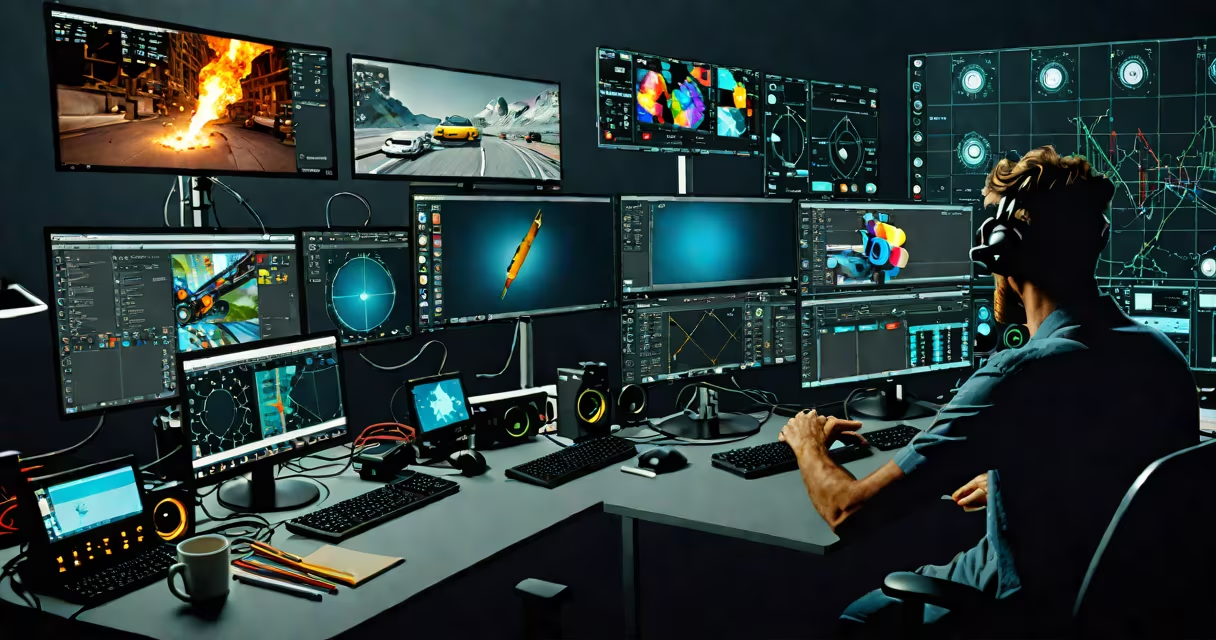
Major motion pictures rely on industry-standard video editing software such as Adobe Premiere Pro, Avid Media Composer, and DaVinci Resolve to assemble footage, synchronize audio, apply visual effects, and manage complex workflows across global post-production teams.
These tools handle hundreds of hours of raw camera data, support multi-track timelines, and integrate with color grading, sound design, and visual effects systems. They are not consumer-grade apps-they are designed for studios, editors, and post-production houses that demand precision, scalability, and collaboration features.
For example, *Dune* (2021) was edited using Avid Media Composer across multiple facilities in Los Angeles and London. The team processed over 600 hours of footage from IMAX cameras, requiring real-time playback and metadata tagging across synchronized workstations. This level of coordination is only feasible with enterprise-level software.
These programs operate on a timeline-based interface where video clips, audio tracks, transitions, and effects are layered and manipulated. Editors use keyboard shortcuts, custom presets, and automation to adjust timing, volume, and visual parameters across thousands of edits.
Behind the scenes, the software manages file references, proxies for low-resolution previewing, and metadata tracking. When a director requests a cut change, the system updates all linked assets instantly across shared storage networks. This ensures consistency during collaborative sessions involving directors, producers, and VFX supervisors.
DaVinci Resolve, for instance, uses a unified workflow that combines editing, color correction, visual effects, and audio mixing in one application. According to Blackmagic Design's documentation, this integration reduces handoff errors between departments and cuts post-production time by up to 30% on large-scale projects.
The most widely adopted platforms fall into three categories based on workflow specialization:
| Software | Primary Use Case | Common in | Key Feature |
|---|---|---|---|
| Avid Media Composer | Feature film editing, long-form narrative | Hollywood studios, major TV series | High reliability in multi-user environments |
| Adobe Premiere Pro | Fast turnaround, cross-platform compatibility | Independent films, streaming content | Smooth integration with After Effects and Audition |
| DaVinci Resolve | Color grading, VFX compositing, audio mixing | High-end post-production, award-winning films | Free version includes professional-grade tools |
While all three are used in major productions, Avid remains dominant in theatrical releases due to its stability under heavy load and legacy support in broadcast infrastructure. Adobe Premiere Pro is favored for projects needing rapid iteration and tight integration with cloud-based collaboration tools.
DaVinci Resolve gained prominence after being adopted by *The Irishman* (2019), which used its color management system to maintain consistent skin tones across decades-old archival footage and new shoots. The software's ability to handle HDR and wide color gamut workflows made it essential for the film's visual fidelity.
Studios choose editing software based on existing pipelines, team expertise, and project scale. Large-budget films often use Avid because it supports simultaneous access from multiple editors via shared storage and centralized project management.
For example, *Avatar: The Way of Water* (2022) used Avid Media Composer alongside proprietary tools developed by Weta Digital. The editorial team worked across New Zealand and California, syncing edits with motion capture data and 3D animation sequences. The software's ability to track changes across versions helped prevent timeline drift during extended production cycles.
Smaller studios may opt for Adobe Premiere Pro due to lower hardware requirements and widespread training resources. However, even indie filmmakers producing content for Netflix or Amazon Prime use the same core tools as major studios-just with fewer concurrent users and less complex asset management.
Many assume that movies are edited entirely in one program. In reality, post-production involves dozens of specialized applications. Editing software is just the central hub. Visual effects are handled in Nuke or Maya, audio is mixed in Pro Tools, and color is graded in DaVinci Resolve.
Another misconception is that free software like iMovie or CapCut can produce cinematic results. While they're useful for personal videos, they lack the metadata handling, proxy workflows, and multi-user synchronization needed for feature films. A single error in a timeline can cause hours of rework in a high-stakes environment.
One non-obvious fact: many film editors don't use the latest version of software. Studios delay upgrades to avoid breaking established workflows. For example, *Oppenheimer* (2023) was edited using Avid Media Composer 2022, not the 2023 release, because the team had spent months building custom templates and keyboard layouts that wouldn't transfer smoothly.
I once assisted on a documentary produced for HBO. The lead editor used Avid Media Composer on a shared network drive with five other editors. We imported 12 terabytes of interview footage, tagged each clip by speaker and topic, and built a master timeline with embedded notes. When the director requested a scene move, the entire team saw the update within seconds. This kind of real-time collaboration is impossible with desktop-only tools.
That project took nine months to complete. Without dedicated software, managing the volume of material would have required manual file copying, duplicate edits, and inconsistent naming-errors that could have derailed the final cut.
Understanding what video editing software do movies use reveals that success in film post-production hinges not on flashy features, but on reliability, interoperability, and team coordination. The tools themselves are secondary to how they're implemented within a structured workflow.