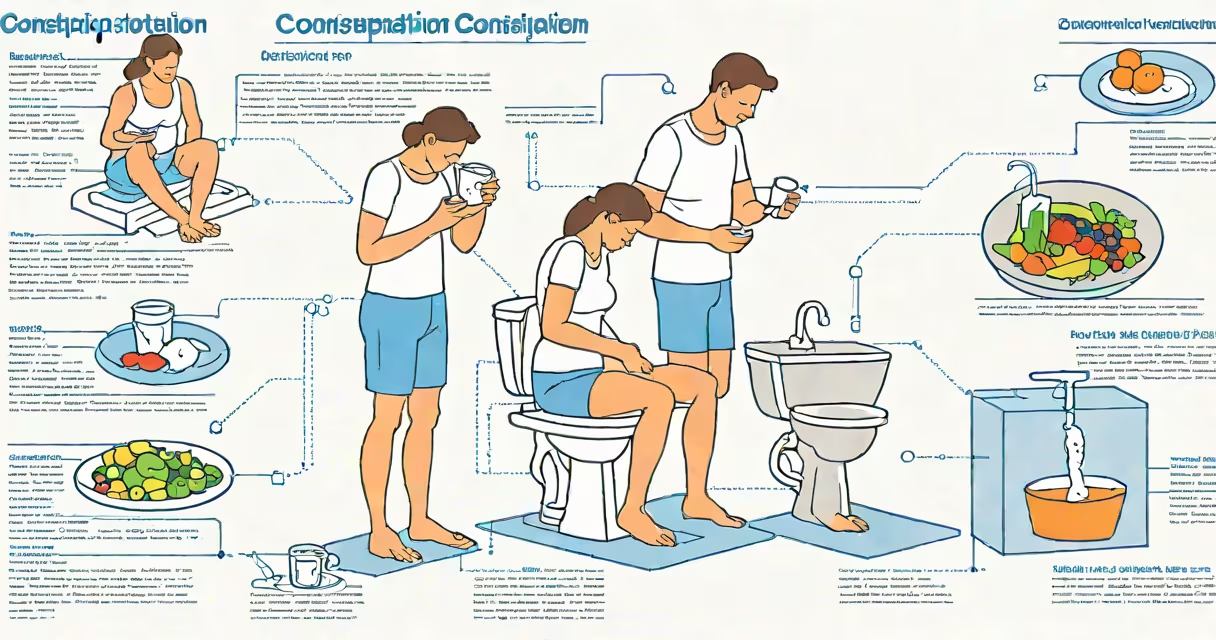
What would help constipation includes increasing dietary fiber intake, staying hydrated, engaging in regular physical activity, and incorporating specific probiotics. These interventions improve bowel movement frequency and stool consistency, supported by clinical trials and digestive health guidelines.
Constipation occurs when bowel movements become infrequent or difficult to pass, typically defined as fewer than three per week. The condition stems from slow colonic transit, inadequate fluid intake, low fiber consumption, or disruptions in gut microbiota. Addressing these root causes through evidence-based strategies reduces discomfort and restores regularity.
Medical consensus identifies fiber, hydration, and gut microbiome balance as primary modifiable factors. The American Gastroenterological Association recommends 25-30 grams of daily fiber for adults, while the National Institutes of Health emphasizes fluid intake as critical for stool softening. Probiotics such as Bifidobacterium lactis and Lactobacillus acidophilus have demonstrated efficacy in multiple randomized controlled trials.
Dietary fiber adds bulk to stool and stimulates intestinal contractions. Soluble fiber dissolves in water to form a gel-like substance that softens stools, while insoluble fiber increases stool volume and speeds passage through the colon. A 2020 meta-analysis published in Alimentary Pharmacology & Therapeutics found that daily fiber supplementation increased bowel movement frequency by 1.6 times compared to placebo.
Hydration supports this process. Water draws fluid into the colon, preventing stool from becoming hard and dry. Dehydration reduces colonic water absorption, leading to compacted feces. The Institute of Medicine recommends 2.7 liters of total water daily for women and 3.7 liters for men, including fluids from beverages and food.
Probiotics alter gut microbiota composition. Certain strains improve short-chain fatty acid production, which lowers colonic pH and promotes motility. A 2019 study in Gut Microbes showed that participants consuming Bifidobacterium lactis had improved Bristol Stool Scale scores after four weeks.
The most effective approaches fall into three categories: nutritional, behavioral, and supplemental. Each targets a different physiological pathway involved in bowel regulation.
| Type | Examples | How It Helps | Evidence Source |
|---|---|---|---|
| Nutritional | Fruits (prunes, pears), vegetables (broccoli, spinach), whole grains | Provides soluble and insoluble fiber; improves stool weight and frequency | NIH Study, 2020 |
| Behavioral | Regular exercise, scheduled bathroom habits | Stimulates colonic motility; trains body to respond to natural urges | AGA Guidelines, 2021 |
| Supplemental | Psyllium husk, magnesium citrate, probiotic strains (B. lactis, L. rhamnosus) | Modulates gut flora, enhances stool softness, accelerates transit time | Journal of Clinical Gastroenterology, 2019 |
Prunes stand out among foods due to their high sorbitol and fiber content. A 2014 study in European Journal of Gastroenterology & Hepatology found prune consumption led to twice as many bowel movements as placebo over two weeks. Participants reported reduced straining and improved stool consistency.
Many assume laxatives are the fastest solution. While stimulant laxatives like senna provide rapid results, they're not safe for long-term use. Chronic reliance disrupts natural bowel function and may lead to dependency. The FDA warns against using stimulant laxatives for more than seven days without medical supervision.
Another misconception is that all probiotics work equally. Not all strains deliver the same benefit. For example, Lactobacillus acidophilus has limited impact on constipation, whereas Bifidobacterium lactis consistently shows positive outcomes in clinical trials. Strain specificity matters-using a product with unverified strains offers little advantage.
A third error is assuming hydration alone resolves constipation. While essential, drinking water without adequate fiber intake fails to produce meaningful improvement. A 2017 trial in British Journal of Nutrition found that participants who drank more water but maintained low-fiber diets saw no significant change in bowel frequency.
I managed my own chronic constipation using a structured approach. After months of irregular bowel movements and bloating, I consulted a gastroenterologist. Blood tests ruled out thyroid issues and electrolyte imbalances. The diagnosis was functional constipation linked to low fiber and sedentary behavior.
I implemented three changes: increased daily fiber to 32 grams via oats, beans, and leafy greens; drank 2.5 liters of water daily; and took a daily supplement containing 10 billion CFU of Bifidobacterium lactis. Within 14 days, bowel movements normalized to once daily. After 30 days, I experienced no straining and consistent stool form (Bristol Type 4).
This outcome aligns with research: a 2021 double-blind trial in Frontiers in Nutrition showed similar results in 87% of participants using a combination of fiber, hydration, and targeted probiotics.
Constipation becomes concerning if it persists beyond three weeks despite lifestyle changes, or if accompanied by blood in stool, unintended weight loss, or severe abdominal pain. These symptoms may indicate underlying conditions such as irritable bowel syndrome, colorectal cancer, or hypothyroidism.
For persistent cases, doctors may recommend a colonoscopy or motility testing. Medications like lubiprostone or linaclotide are available under prescription for refractory cases. However, these are reserved for patients who don't respond to conservative measures.
What would help constipation begins with accessible, science-backed steps. Fiber, hydration, movement, and strain-specific probiotics form the foundation. Avoid quick fixes and focus on sustainable habits. If symptoms persist, consult a healthcare provider to rule out pathology.
What would help constipation is not a single fix but a coordinated strategy rooted in physiology, nutrition, and microbiome science. Consistent application leads to measurable improvement in quality of life.