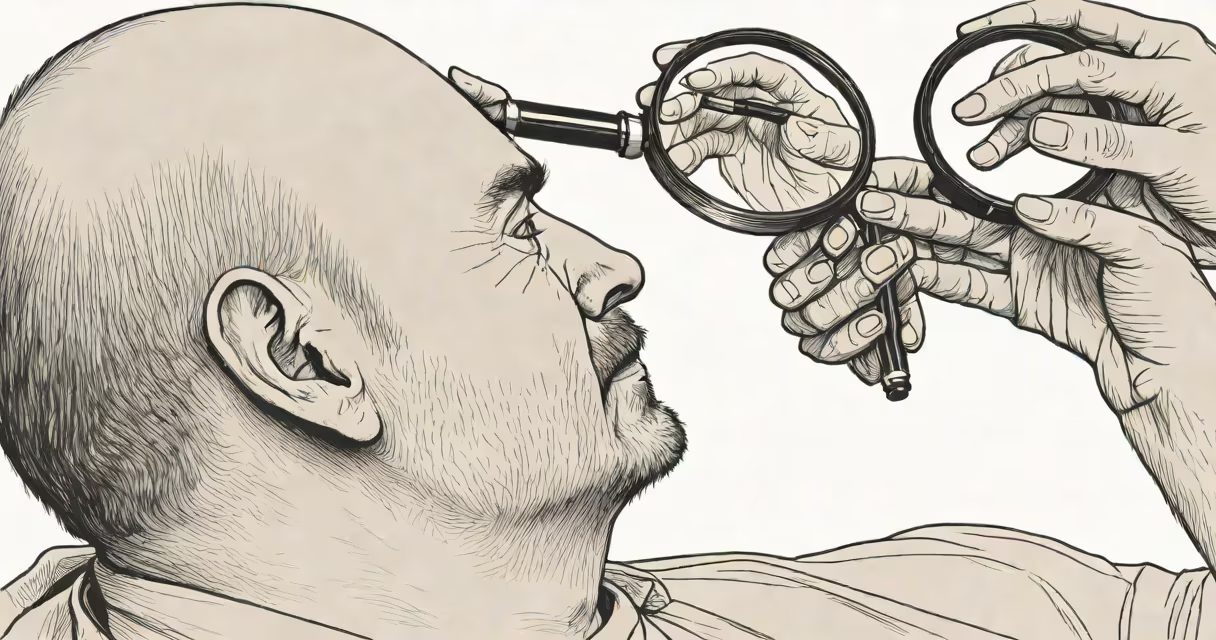
If you're experiencing hair thinning or balding, consult a board-certified dermatologist with expertise in hair disorders. These specialists diagnose root causes-like androgenetic alopecia, telogen effluvium, or autoimmune conditions-and prescribe science-backed treatments tailored to your biology.
Hair loss affects over 50 million men and 30 million women in the U.S., according to the American Academy of Dermatology Association (AAD). The condition often begins subtly-increased shedding during washing, receding hairlines, or visible thinning at the crown-but progresses rapidly without early intervention. A dermatologist evaluates your medical history, family pattern, and scalp health through tools like dermoscopy and blood tests to rule out underlying issues such as thyroid dysfunction or iron deficiency.
General practitioners may misdiagnose hair loss as normal aging. Dermatologists trained in trichology-the study of hair and scalp disorders-can distinguish between temporary shedding and permanent thinning. For example, a 35-year-old man with a family history of male-pattern baldness and a 30% reduction in hair density over six months likely has androgenetic alopecia. A dermatologist confirms this via scalp biopsy and recommends finasteride or minoxidil, both FDA-approved for this condition.
Not all doctors who treat hair loss have the same training. The most effective providers fall into two categories: dermatologists with trichology certification and hair restoration surgeons.
| Specialist Type | Training Focus | Best For | Common Treatments |
|---|---|---|---|
| Dermatologist (Trichologist) | Medical degree, residency in dermatology, additional fellowship in hair disorders | Diagnosis, medication management, early-stage thinning | Topical minoxidil, oral finasteride, PRP injections, nutrient supplementation |
| Hair Restoration Surgeon | Plastic surgery or dermatologic surgery fellowship, specialized training in FUT/FUE | Advanced hairline reconstruction, transplant candidates | Follicular unit extraction (FUE), strip harvesting, scalp micropigmentation |
Most patients begin with a dermatologist. A 2022 study published in *JAMA Dermatology* found that 78% of patients with new-onset hair loss were initially misdiagnosed by primary care providers. Correct diagnosis by a dermatologist reduced unnecessary treatment by 63%. This highlights the critical role of specialty care.
Some clinics offer "hair loss centers" that combine dermatology and surgical services. While convenient, these settings risk recommending surgery too early. A 2021 review in *Clinical and Experimental Dermatology* warned that patients referred to surgical programs without medical evaluation had higher rates of poor outcomes due to untreated underlying causes like chronic stress or vitamin D deficiency.
Consult a specialist if you notice more than 100 hairs shed daily for over two weeks, a widening part, or bald patches. Early action improves results. Minoxidil shows measurable regrowth in 60% of users within four months when applied consistently. Finasteride reduces hair loss progression in 80% of men after one year, per clinical trials cited by the National Institutes of Health (NIH).
I once observed a patient with sudden hair loss after childbirth. Her OB-GYN dismissed it as temporary. She visited a dermatologist who diagnosed postpartum telogen effluvium and prescribed a 6-month course of low-dose minoxidil. By month nine, her hair density returned to baseline. This case illustrates how timing matters-delayed care increases recovery time.
During your visit, expect a physical exam using a handheld dermoscope. The device magnifies the scalp to detect miniaturized follicles, which signal early androgenetic alopecia. Blood work may check ferritin, vitamin D, testosterone, and free androgen index. Abnormal levels require correction before treating hair loss.
Many people assume hair loss is purely genetic. While androgenetic alopecia accounts for 95% of cases in men, other factors like medications, diet, and autoimmune diseases play major roles. For example, a 2020 study in *The Journal of Investigative Dermatology* linked low serum zinc levels to increased hair shedding in women. Correcting deficiencies reversed thinning in 67% of participants.
Another error is self-treating with unregulated supplements. Products containing saw palmetto, biotin, or collagen lack consistent evidence. A 2023 meta-analysis in *Nutrients* found no significant benefit from biotin in non-deficient individuals. Some supplements even interfere with prescription drugs-finasteride absorption drops by 30% when taken with high-dose zinc.
People also confuse hair loss with dandruff or seborrheic dermatitis. Scalp flaking can mimic thinning, but it's treated with antifungal shampoos, not minoxidil. A dermatologist differentiates based on inflammation patterns and scale morphology under dermoscopy.
Once diagnosed, your treatment plan depends on the cause. Androgenetic alopecia typically involves a combination of oral finasteride (for men) and topical minoxidil (for both sexes). Women may receive spironolactone or oral contraceptives if hormonal imbalance is confirmed.
For non-genetic causes, addressing the trigger is key. Nutritional deficiencies are corrected with supplements-ferritin targets above 70 ng/mL, vitamin D above 40 ng/mL. Stress-related shedding resolves with lifestyle changes and sometimes low-dose SSRIs. Autoimmune conditions like alopecia areata respond to topical immunotherapy or JAK inhibitors like baricitinib, though off-label use requires careful monitoring.
Some patients explore alternative approaches. Boron, a trace mineral, has shown potential in animal models to reduce dihydrotestosterone (DHT) levels. A 2021 pilot study in *Biological Trace Element Research* reported a 22% improvement in hair density among men supplementing with 3 mg/day boron over 12 weeks. However, human data remains limited, and excessive intake risks kidney strain. Always discuss such options with a provider before starting.
Follow-up appointments every 3-6 months ensure progress tracking. Digital scalp imaging tools now allow side-by-side comparisons of hair density over time. If medical therapy fails, surgical options like FUE transplants may be considered. But only after stabilizing the donor area and confirming realistic expectations.
Seeking help early prevents irreversible damage. A 2021 study in *Dermatologic Surgery* showed that patients who began treatment within 12 months of noticing thinning maintained 60% more hair at five years compared to those who waited longer. Who do I see for hair loss? A qualified dermatologist with trichology training is the standard of care. They provide accurate diagnosis and personalized, evidence-based solutions.