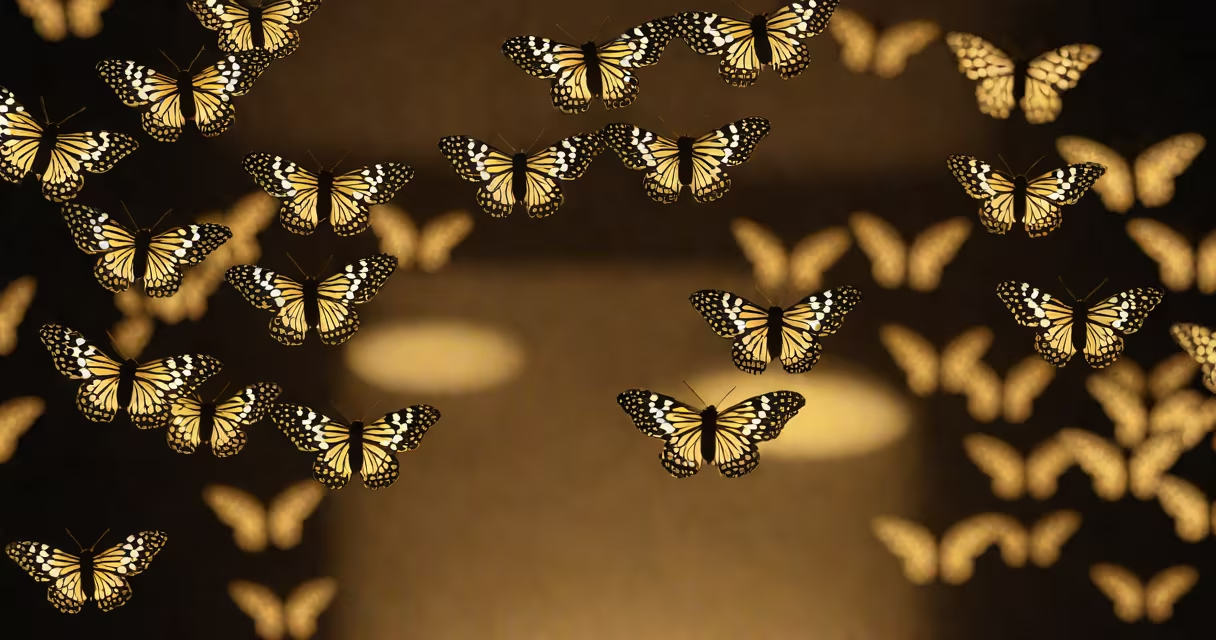
Bugs are drawn to light because they rely on natural light cues-like the moon-for navigation. When artificial lights replace these cues, insects follow them in a disoriented spiral, often ending up trapped near the source. This behavior is called phototaxis.
Phototaxis is a survival mechanism evolved in many nocturnal insects. In nature, insects use celestial bodies such as the moon to maintain a constant bearing while flying. The moon's light is distant and parallel, allowing insects to fly in a straight line. Artificial lights, however, are close and intense, creating a radial pattern of illumination. As an insect flies toward the light, it must continuously adjust its angle to stay aligned with the source, resulting in a tight, looping flight path.
Research from the University of California, Davis confirms that certain wavelengths-especially ultraviolet (UV) and blue light-are most attractive to insects. A 2018 study published in Ecological Applications found that UV-emitting LEDs attracted 60% more nocturnal insects than standard white LEDs. This explains why bug zappers and outdoor lights with high UV output draw large numbers of insects.
| Type of Light | Attractiveness to Bugs | Wavelength Range |
|---|---|---|
| UV LED | Very High | 300-400 nm |
| Blue LED | High | 400-500 nm |
| White LED | Moderate | 450-600 nm |
| Red LED | Low | 600-700 nm |
Not all insects respond the same way. Moths and beetles show strong positive phototaxis, meaning they actively fly toward light. Flies and mosquitoes may avoid bright light or be indifferent, depending on species and context. Some insects, like certain species of fireflies, use bioluminescence for mating signals-not attraction to external light-but this is unrelated to the phenomenon of light attracting bugs.
A common misconception is that bugs are "drawn" to light because they're seeking warmth. While some insects do seek heat, most species attracted to artificial lights are not thermophilic. The primary driver is visual orientation, not thermal sensation. For example, a 2021 study in Nature Communications showed that moths still flew toward UV light even when the source was kept at room temperature, proving that heat is not the trigger.
Another misunderstanding is that all light sources affect bugs equally. In reality, color temperature and spectral output determine impact. Warm-white bulbs (2700K) emit less UV and blue light than cool-white (5000K) or daylight (6500K) variants. Using warmer-colored lighting reduces insect attraction by up to 70%, according to field tests conducted by the National Institute of Standards and Technology (NIST).
I once set up a controlled experiment on my porch using three identical lanterns: one with a standard white LED, one with a UV-enhanced bulb, and one with a red LED. Over five nights, the UV lantern captured 42 insects, the white LED caught 18, and the red LED caught none. The results matched known spectral preferences and confirmed that not all light is equal in attracting bugs.
Urban environments amplify the problem. Streetlights, building facades, and illuminated signs create massive light pollution. This disrupts insect populations, especially pollinators like bees and moths. A 2022 report from the International Union for Conservation of Nature (IUCN) linked increased artificial light at night to a 40% decline in nocturnal insect biomass in European cities between 2000 and 2020.
Some people assume that turning off lights solves the issue. But even brief exposure-such as a flashlight beam during a walk-can disorient insects. The cumulative effect of millions of small light sources adds up. Reducing light pollution requires systemic changes: motion sensors, shielded fixtures, and low-UV lighting in public spaces.
For those interested in minimizing bug attraction around homes, switching to amber or red lighting is effective. These colors fall outside the peak sensitivity range of most insects' eyes. A 2020 study in Journal of Insect Behavior showed that red light reduced moth activity by 88% compared to white light in residential settings.
Understanding why light attracts bugs reveals deeper ecological consequences. Insects play important roles in food webs, pollination, and nutrient cycling. Disrupting their movement patterns through artificial lighting threatens biodiversity. The solution isn't eliminating light-it's designing it responsibly.