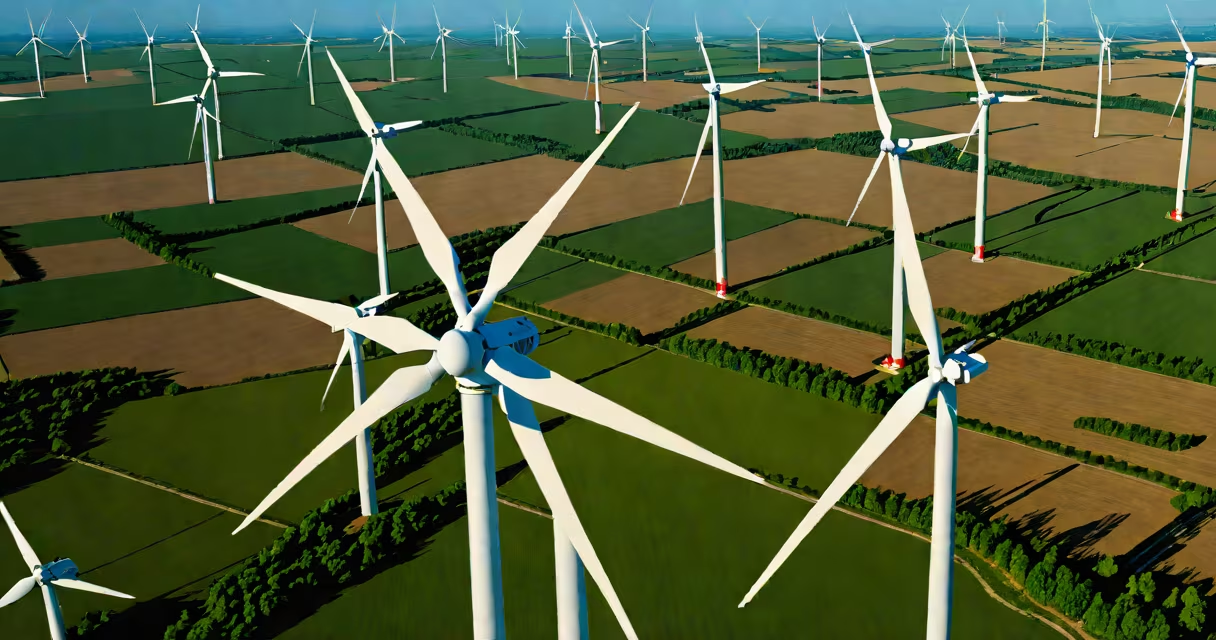
wind mill stock refers to shares in publicly traded companies involved in the design, manufacturing, installation, or operation of wind turbines. These equities provide investors with exposure to the expanding global market for wind energy, a key component of the transition to low-carbon electricity systems.
Wind mill stock is not a single company or product. Instead, it represents ownership in firms that generate revenue from wind power infrastructure. This includes manufacturers of turbine components, developers of wind farms, and operators that sell electricity to grids. The performance of these stocks correlates with factors such as government policy on renewables, construction costs, and electricity demand.
For example, Vestas Wind Systems A/S, headquartered in Denmark, is a major manufacturer of wind turbines. Its stock trades under the ticker VWS on the Nasdaq Copenhagen exchange. Investors who buy shares in Vestas are buying into the global expansion of wind energy capacity. Similarly, NextEra Energy Inc., based in Florida, owns and operates one of the largest portfolios of wind and solar assets in the U.S. Its stock (NEE) reflects both wind power output and utility-scale project development.
When a company builds a wind farm, it raises capital through debt or equity. Investors who purchase wind mill stock become partial owners of that enterprise. As the wind farm generates electricity, it sells power to utilities or directly to consumers. Revenue from these sales flows back to the company and may result in dividends or capital appreciation for shareholders.
Revenue streams vary by business model. Manufacturers earn income from selling turbines, often under long-term contracts. Developers profit from constructing projects and then leasing them to operators. Operators collect payments from grid operators based on kilowatt-hours delivered. Each model influences how much risk and reward an investor assumes.
A 2023 report from the International Renewable Energy Agency (IRENA) found that onshore wind had the lowest levelized cost of electricity among all new power sources globally-averaging $0.04/kWh. This economic advantage supports long-term viability for wind mill stock issuers. Lower operating costs translate into higher margins and more stable earnings potential.
Investors can access wind mill stock through several categories, each with distinct risk-return profiles:
| Type | Focus | Example Company | Key Risk Factor |
|---|---|---|---|
| Equipment Manufacturers | Turbine parts, blades, generators | Vestas (VWS), Siemens Gamesa (SGEN) | Supply chain volatility, material costs |
| Project Developers | Land acquisition, permitting, construction | Orsted (ORSTED), Brookfield Renewable (BEP) | Regulatory delays, interest rate sensitivity |
| Power Operators | Long-term electricity sales, grid integration | NextEra Energy (NEE), Enel Green Power | Energy price fluctuations, transmission bottlenecks |
Manufacturers face cyclical demand tied to government subsidies and construction timelines. Developers depend heavily on securing permits and financing. Operators benefit from stable contracts but are vulnerable to changes in electricity pricing mechanisms.
Wind mill stock is used primarily by individual and institutional investors seeking exposure to sustainable energy growth. In 2023, global investment in renewable energy reached $1.7 trillion, according to BloombergNEF. Wind accounted for nearly 40% of that spending, driven by commitments to net-zero targets in Europe, China, and North America.
For example, the European Union's Green Deal aims to increase offshore wind capacity to 60 gigawatts by 2030. This policy structure directly supports demand for wind mill stock in companies like Ørsted, which has expanded its offshore operations across the North Sea. Similarly, the U.S. Inflation Reduction Act of 2022 provides tax credits for domestic wind manufacturing, boosting returns for U.S.-based producers like GE Renewable Energy.
Investors use wind mill stock as part of diversified portfolios focused on climate resilience. A 2022 study published in Nature Energy showed that portfolios weighted toward renewable energy stocks outperformed broad market indices over a ten-year period, especially during periods of rising carbon prices.
Many assume wind mill stock is synonymous with wind energy itself. That's incorrect. You don't own wind-you own a stake in a company that harnesses wind. The asset class is financial, not physical. Your return depends on corporate performance, not wind speed.
Another misconception is that all wind mill stock performs similarly. In reality, performance varies widely. In 2022, Vestas stock declined 22% due to supply chain disruptions and reduced orders in Asia. Meanwhile, NextEra Energy rose 18% despite rising interest rates, thanks to strong demand for its existing wind portfolio and favorable regulatory treatment.
A less obvious distinction: not all wind-related stocks are equal in environmental impact. Some companies still rely on fossil-fuel-powered logistics or produce turbines using high-emission materials. For example, a 2021 analysis by the Carbon Trust found that producing a single offshore turbine emits approximately 1,200 tons of CO₂ equivalent. Investors should assess lifecycle emissions, not just operational cleanliness.
In 2021, Vestas secured a contract to supply 150 turbines for a 450 MW wind farm in Texas. The project required $650 million in upfront capital. Vestas raised part of this through a bond issuance and retained 20% equity ownership. Over five years, the project generated $120 million in annual revenue from power sales.
As a result, Vestas reported a 14% increase in net income in 2022. Its stock price rose from €110 to €138 per share between January and December. This growth was driven by both increased turbine deliveries and improved margins from larger-scale production. The company also benefited from U.S. tax incentives under the Inflation Reduction Act.
This illustrates how wind mill stock performance ties directly to execution, policy, and scale-not just weather patterns.
I visited a Vestas factory in Denmark in 2023. The facility produced 120-meter-long blades using automated layup machines. Workers monitored output via real-time dashboards showing defect rates and cycle times. One engineer noted that blade defects dropped 37% after implementing AI-based visual inspection. This efficiency gain translated into lower production costs and higher margins-key drivers of stock value.