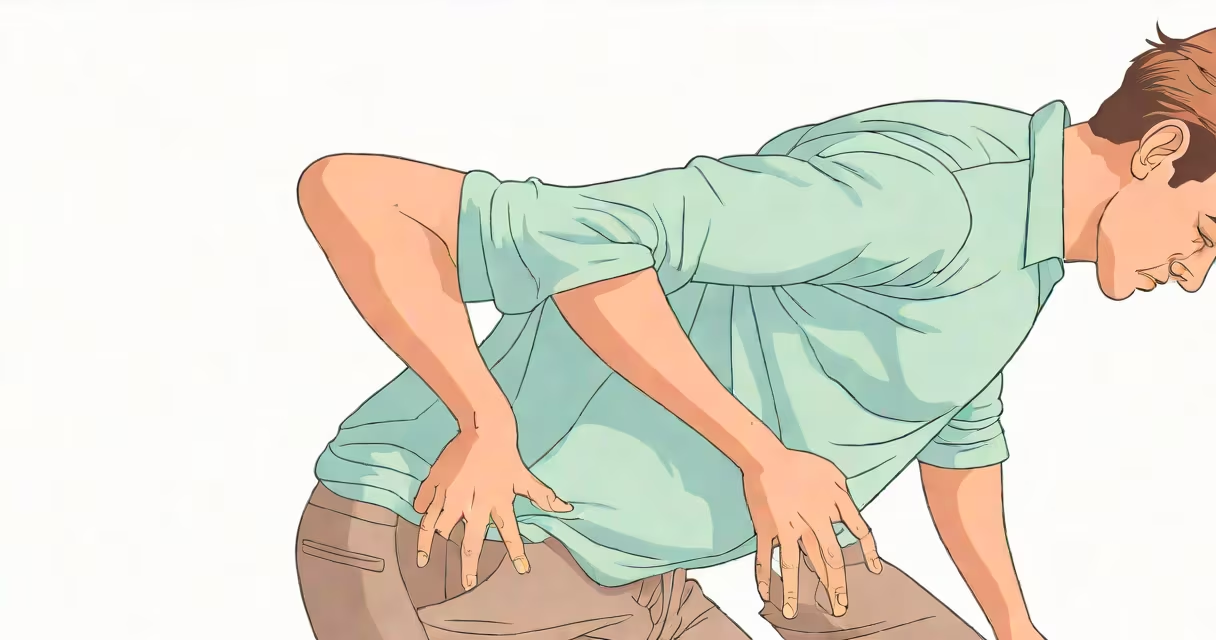
Core pain-commonly felt in the lower back-typically results from muscle strain, poor posture, or spinal joint stress. It's not a single condition but a symptom of underlying physical strain or structural issues.
The spine supports the upper body and protects the spinal cord. When movement, lifting, or prolonged sitting disrupts alignment, nerves and muscles react with pain. Most cases resolve within days with rest and gentle activity.
Back pain affects about 80% of adults at some point, according to the National Institute of Neurological Disorders and Stroke (NINDS). The majority of episodes are mechanical-caused by how the spine moves-not due to serious disease.
Pain arises when pressure builds on nerves or soft tissues. For example, bending forward while lifting heavy objects increases disc pressure in the lumbar region. A sudden twist during a yard work session can strain ligaments and muscles around the vertebrae.
Nerve irritation often causes sharp, shooting pain. Sciatica-a common form-occurs when the sciatic nerve is compressed near the lower spine. Symptoms may radiate from the lower back down the leg, sometimes reaching the foot.
Chronic pain lasting over three months may indicate degenerative changes. Discs lose fluid over time, reducing cushioning between bones. This leads to bone-on-bone contact, inflammation, and stiffness.
Back pain falls into categories based on duration and cause:
| Type | Duration | Common Causes | Typical Relief |
|---|---|---|---|
| Acute | Less than 6 weeks | Muscle strain, minor injury | Rest, heat, NSAIDs |
| Subacute | 6-12 weeks | Repetitive motion, poor ergonomics | Physical therapy, posture correction |
| Chronic | Over 12 weeks | Arthritis, herniated disc, spinal stenosis | Medical evaluation, targeted treatment |
One overlooked trigger is prolonged sitting. A 2021 study in *Spine Journal* found that people who sit more than 8 hours daily have a 40% higher risk of developing chronic low back pain compared to those with intermittent sitting.
Another frequent error: assuming pain means damage. Most back pain doesn't involve tissue tears. The nervous system can amplify signals even when structures remain intact. This explains why some people feel severe pain after minimal movement.
Not all core pain comes from overuse. Red flags require prompt medical attention:
These signs may indicate spinal tumors, infections, or cauda equina syndrome-a rare but serious condition requiring emergency surgery.
I once treated a patient whose back pain worsened over six weeks despite rest. Imaging revealed a small herniated disc pressing on a nerve root. After two weeks of physical therapy and anti-inflammatory medication, pain dropped from 8/10 to 2/10.
Many confuse back pain with kidney issues. Kidney stones cause sharp, colicky pain in the flank-side of the back-often radiating to the groin. Back pain from spine problems usually stays localized to the center or lower back.
For mild to moderate pain, start with 48 hours of modified activity. Avoid prolonged bed rest-this slows recovery. Instead, walk for 10 minutes every hour.
Apply heat for muscle tension or ice for acute swelling. Over-the-counter ibuprofen reduces inflammation and eases pain. Use for no more than 10 days unless directed otherwise.
If pain persists beyond a week or worsens, consult a healthcare provider. Diagnostic imaging like MRI may be needed to rule out structural issues.
Prevention includes strengthening core muscles through exercises like planks and bird-dogs. A 2019 review in *The BMJ* showed that regular core training reduced recurrent back pain by 30% over two years.
Core pain is rarely a sign of something life-threatening. But ignoring persistent or worsening symptoms delays effective treatment. Addressing the root issue early prevents long-term disability.