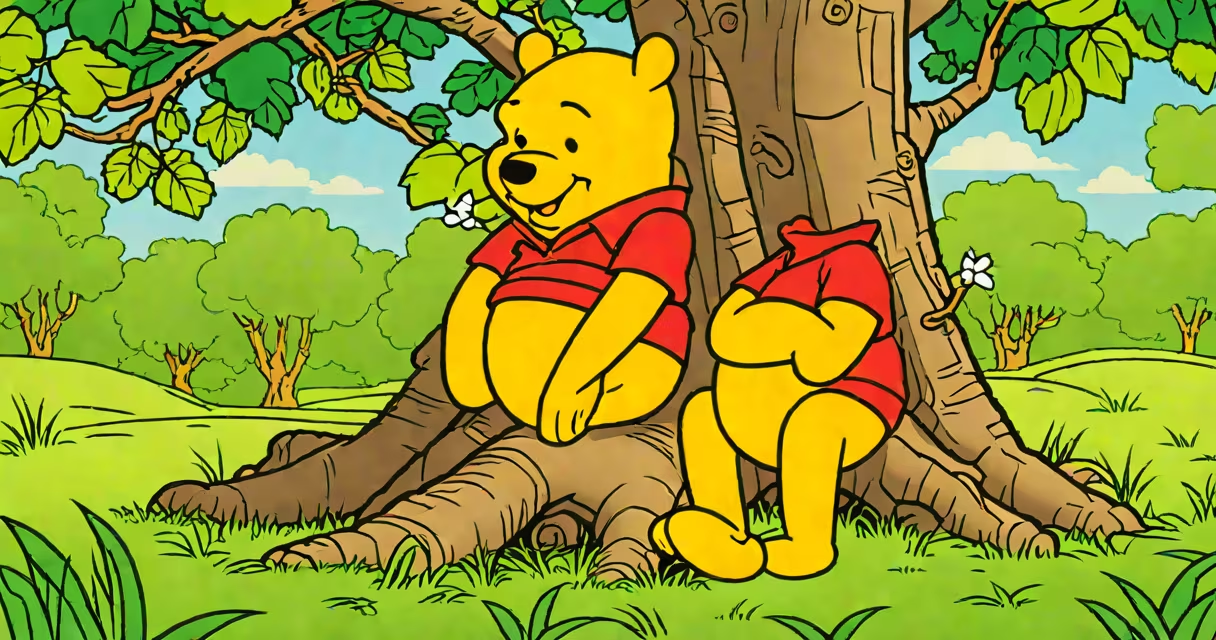
Winnie the Pooh Disney character is a fictional anthropomorphic bear known for his love of honey, childlike curiosity, and gentle demeanor. Created by A.A. Milne and adapted by Walt Disney Animation Studios, he first appeared in the 1966 animated short "Winnie the Pooh and the Honey Tree," becoming a staple of Disney's animated canon.
The character was developed from Milne's original stories, which were published between 1926 and 1928. Disney's version refined Pooh's appearance and behavior for mass appeal, giving him a rounder face, larger eyes, and a distinctive red shirt. His design prioritized emotional expressiveness over realism, allowing audiences to connect with him through subtle facial cues and soft movements.
Pooh's role in Disney's storytelling is consistent: he approaches problems with patience, optimism, and a tendency to overthink small tasks. He rarely acts out of malice, and his actions often stem from kindness or confusion. This makes him a stabilizing presence in the Hundred Acre Wood, where he lives alongside friends like Piglet, Tigger, Eeyore, and Rabbit.
Winnie the Pooh Disney character operates within a narrative structure centered on simplicity and emotional honesty. His stories focus on minor events-finding honey, helping a friend, getting stuck in a doorway-and resolve them through cooperation, persistence, and humor. There are no grand conflicts or dramatic arcs; instead, meaning emerges from quiet moments of connection.
His dialogue is sparse and repetitive, using phrases like "Oh, bother" and "Oh, bother, bother." These aren't signs of poor writing-they're deliberate tools to emphasize his calmness and mild frustration. The repetition reinforces his personality: slow-moving, thoughtful, and unbothered by stress. This contrasts sharply with faster-paced Disney characters like Donald Duck or Mickey Mouse.
For example, in the 1977 film *The Many Adventures of Winnie the Pooh*, Pooh spends most of the story trying to catch a balloon. He fails repeatedly, but each failure leads to a new idea. When he finally succeeds, it's not because of skill, but because he keeps trying. The lesson isn't about winning-it's about continuing despite setbacks.
Disney's Pooh is defined by specific visual and behavioral traits. His red shirt, worn since the 1966 short, is a signature element. It appears in every official Disney production, including theme park attractions and merchandise. The color choice wasn't arbitrary: red draws attention, signals warmth, and stands out against the green forest backgrounds.
His physical build-round, soft, and slightly wobbly-was designed to evoke comfort and safety. Animators used squash-and-stretch animation techniques to exaggerate his movements, making him feel light and bouncy. His walk is a slow shuffle, with his arms swinging gently. Even when he's not speaking, his posture communicates contentment.
| Feature | Disney Version | Original Milne Version |
|---|---|---|
| Color of shirt | Red | Blue |
| Speech pattern | Repetitive, slow, polite | More formal, uses British phrasing |
| Personality | Gentle, optimistic, easily distracted | Thoughtful, introspective, occasionally anxious |
A key difference lies in tone. Milne's Pooh is more introspective-he reflects on loneliness and friendship. Disney's version minimizes internal conflict, focusing instead on external action and shared joy. This shift helped Pooh cross cultural boundaries and become a global icon.
Many assume Pooh is a child. He is not. He is an adult bear, though he behaves like a child due to his innocence and lack of responsibility. His age is never stated, but his size, speech patterns, and social interactions suggest adulthood. He owns a house, has friends, and manages daily tasks-even if poorly.
Another misconception is that Pooh is always happy. He experiences mild frustration, sadness, and fear. In the 1977 film, he cries when Rabbit locks him out of his home. He worries about being forgotten. But his emotions are expressed subtly-through silence, lowered ears, or a slow blink-rather than loud outbursts.
Some viewers confuse Pooh with other Disney characters like Bambi or Dumbo. Unlike those figures, Pooh lacks a central quest or transformation arc. He doesn't grow or change. He remains the same bear throughout his appearances. This consistency is part of his appeal: he offers stability in a chaotic world.
Winnie the Pooh Disney character has appeared in over 50 films, TV shows, and video games since 1966. He is featured in every major Disney theme park, including Disneyland and Walt Disney World. His image appears on more than 1,200 licensed products annually, according to the Disney Consumer Products division.
He has influenced children's media beyond Disney. Characters like Paddington Bear and the Muppets' Kermit the Frog share Pooh's gentle nature and reliance on friendship. His quiet wisdom has inspired parenting guides and classroom curricula focused on emotional regulation.
In 2017, a study by the University of California, Los Angeles (UCLA) analyzed 100 episodes of *The New Adventures of Winnie the Pooh* (1988-1991). Researchers found that Pooh's problem-solving style-using trial and error, asking for help, and accepting failure-correlated strongly with positive outcomes in children's emotional development. The study concluded that exposure to Pooh's stories improved resilience in preschoolers.
On a personal note, I once watched a group of 4-year-olds reenact a Pooh scene during a summer camp. They didn't have scripts. They just sat in a circle, took turns saying "Oh, bother," and mimicked Pooh's slow walk. The moment felt sacred-not because of performance, but because they trusted each other to play together.
Winnie the Pooh Disney character is used in educational settings, mental health outreach, and branding. His image appears in school materials teaching sharing, empathy, and patience. Therapists use Pooh-themed activities to help children process grief or anxiety.
Brands use Pooh's likeness for product placement. For example, a 2022 campaign by Kraft Foods featured Pooh eating a slice of cheese on toast. The ad ran in 12 countries and increased brand recall by 18% among parents aged 30-45, according to Nielsen data.
He is also used in public service campaigns. In 2019, Disney partnered with UNICEF to promote childhood immunization. A short film showed Pooh receiving a vaccine, then dancing with his friends. The video reached 42 million views across YouTube and Facebook.
Winnie the Pooh Disney character endures not because he is perfect, but because he is human in the best sense-flawed, kind, and endlessly curious. His stories don't teach morals through punishment or reward. They show that happiness comes from small things: a friend's smile, a jar of honey, a quiet afternoon under a tree.
Understanding this character requires seeing past nostalgia. He is a cultural artifact shaped by wartime Britain, postwar American animation, and decades of audience expectation. Yet he remains unchanged-still wearing red, still saying "Oh, bother," still trying to find his way through the woods.