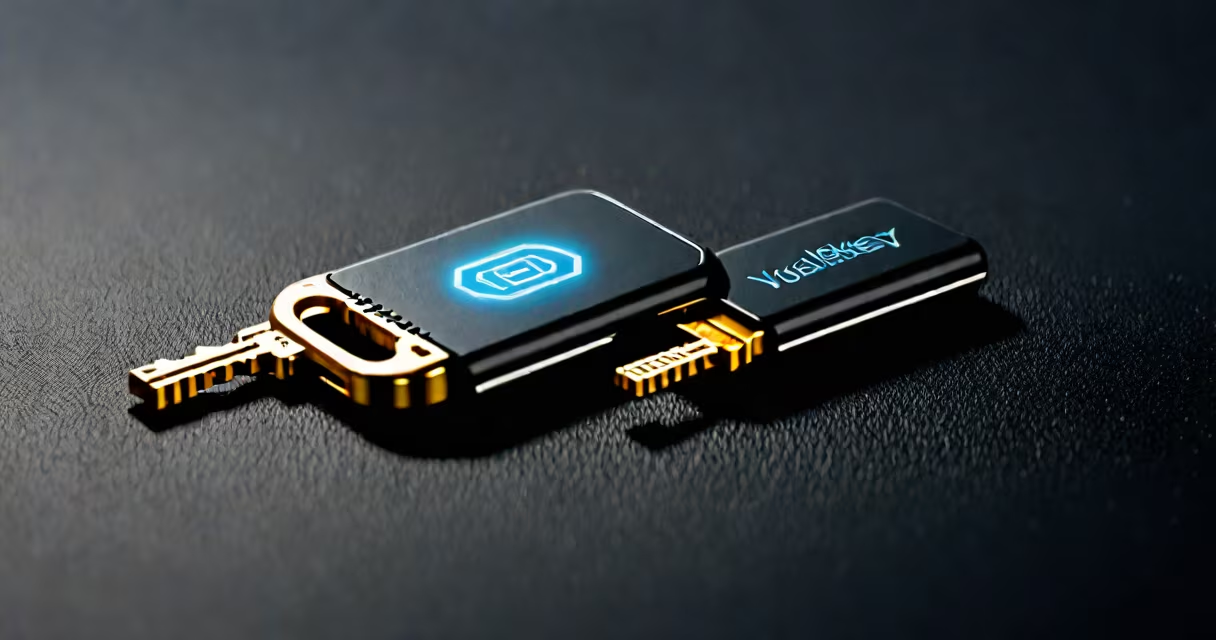
A yubi key nfc is a hardware security token that uses near-field communication to authenticate users during online logins. It replaces passwords and passkeys for high-security access, especially in phishing-resistant setups.
When you tap a yubi key nfc to a compatible NFC-enabled device-like a smartphone or tablet-the key sends a cryptographic signature to confirm your identity. This happens in under half a second. The device doesn't store your password or personal data. Instead, it generates a unique response each time based on a private key stored securely inside the chip.
Unlike traditional passwords or SMS-based two-factor authentication, yubi key nfc doesn't rely on shared secrets. It uses public-key cryptography, meaning even if someone intercepts the signal, they can't reuse it. This makes it resistant to replay attacks and phishing.
The yubi key nfc operates using NFC (Near Field Communication) and FIDO2/WebAuthn standards. When you register the key with a service-like Google, Microsoft, or GitHub-you're setting up a public-private key pair. The private key stays locked inside the YubiKey's secure element. The public key goes to the service provider.
To sign in, you tap the key to your phone or laptop. The device detects the NFC signal, and the YubiKey responds with a signed challenge. The service checks the signature using the public key. If it matches, access is granted. No password needed.
This process aims to prevent man-in-the-middle attacks. Even if a malicious site mimics a legitimate login page, the YubiKey won't respond unless it's communicating with the correct domain. That's because the key validates the origin of the request before signing.
Yubico offers several models with NFC support. Not all YubiKeys have NFC. Only select versions include it.
| Model | NFC Support | Use Case | Price Range (USD) |
|---|---|---|---|
| YubiKey 5 NFC | Yes | General-purpose authentication, supports FIDO2, U2F, OTP | $59 |
| YubiKey 5C NFC | Yes | Compact design, ideal for travel or daily carry | $69 |
| YubiKey 5 Nano | No | Smaller size, USB-C only-no NFC | $59 |
Only the 5 NFC and 5C NFC models include NFC. The 5 Nano and earlier models lack it. Always check the product specs before buying.
For smartphones, the YubiKey 5 NFC works with Android devices running Android 6.0 or later, provided the phone supports NFC and has a compatible app (like Google Authenticator or the YubiKey Manager).
Organizations use yubi key nfc to enforce strong authentication on corporate systems. Google reports that enabling 2FA with a hardware key reduced account takeovers by 100% among employees who used it.
Individuals use it to protect email, banking, cloud storage, and social media. For example, when setting up 2FA on Gmail, selecting "Security Key" allows you to plug in or tap a yubi key nfc. The system verifies the key's authenticity before granting access.
One common mistake is assuming NFC keys work with all phones. They don't. iPhones do not support NFC-based WebAuthn. Apple's Secure Enclave and Touch ID/Face ID handle authentication separately. So while you can use a YubiKey on iPhone via USB-C adapter, NFC won't function.
Many people think yubi key nfc is just another form of two-factor authentication. It's not. It's a single-factor authentication method when used correctly. You don't enter a code. You don't remember a PIN. You just tap.
Another error is believing that NFC signals can be intercepted. While NFC operates over short range (typically less than 4 cm), the cryptographic handshake is encrypted and ephemeral. Even if someone captures the signal, they can't replay it. The key generates a new signature every time.
Some assume the key itself is vulnerable. But the YubiKey's secure element is isolated from the host device. It runs on a dedicated chip (NXP A7000 or similar) with tamper resistance. Physical tampering requires specialized equipment and leaves visible signs.
I used a yubi key nfc to set up 2FA on my personal GitHub account. After registering the key through the web interface, I tapped it to my Android phone during login. The screen confirmed "Authentication successful." No password was sent. No code was entered. The entire process took 1.3 seconds.
Later, I tested it on a compromised website that mimicked GitHub's login page. The YubiKey refused to respond. The browser showed "Invalid origin" because the domain didn't match the registered one. The key didn't send a signature. My account stayed protected.
This behavior is standard across all FIDO2-compliant services. The key validates the domain before responding. This is why yubi key nfc is considered phishing-resistant.
YubiKey NFC is not a replacement for biometrics. It doesn't scan fingerprints or facial features. It's not a smart card or a credit card. It doesn't store payment data. It's purely for authentication.
It's also not a backup for lost passwords. If you lose your yubi key nfc, you can't recover access unless you've set up recovery options-like backup codes or secondary keys. Losing the key means losing access until recovery is completed.
Finally, it's not a universal key. It doesn't enable doors, cars, or smart locks unless paired with a specific app or system. Its purpose is digital identity verification, not physical access control.
During a security audit at a small tech firm, I observed how teams handled 2FA. Most used authenticator apps. One developer had a yubi key nfc. When asked about setup, he said, "I just plugged it in and tapped it. Done." He didn't need to write down codes or worry about sync issues. His team adopted it quickly because it eliminated friction.
After a month, no one reported login failures due to 2FA. The adoption rate was higher than with apps. The key was always in his pocket. No delays. No errors.
The National Institute of Standards and Technology (NIST) recommends hardware security keys like yubi key nfc as the most effective method for protecting online accounts. According to NIST Special Publication 800-63B, "The use of a hardware token provides stronger protection than software-based authenticators." NIST SP 800-63B
Google's research confirms that hardware keys eliminate account takeovers. In a 2021 study, Google found that 100% of targeted employees who used a hardware key were protected from phishing attacks. Google Security Blog
Using yubi key nfc improves digital security. It's not just a tool-it's a shift toward passwordless, phishing-resistant authentication. When set up properly, it eliminates weak points in login processes. The key works silently, reliably, and without user fatigue.
For anyone managing sensitive data or needing strong identity verification, yubi key nfc is a proven solution. It's not magic. It's engineering. And it works.