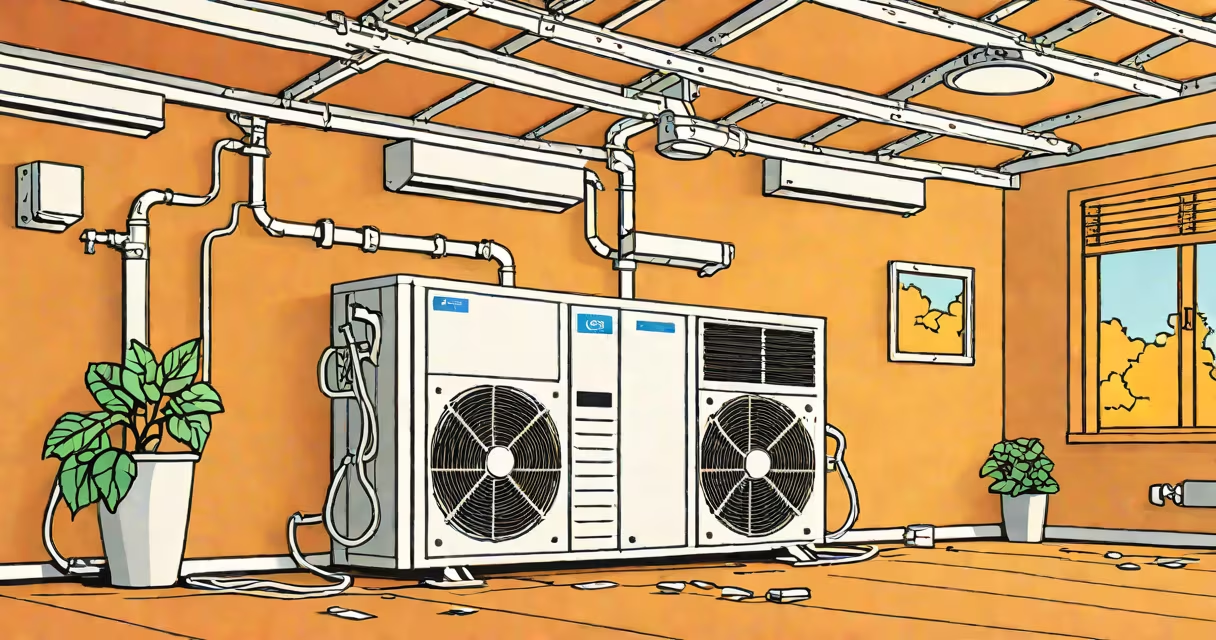
An air conditioner takes long time to cool house when the system is improperly sized, poorly maintained, or the home's insulation and airflow are inadequate. This delay often results in discomfort during peak heat, especially in homes with high thermal mass or poor sealing.
Central air conditioners cool homes by removing heat from indoor air and expelling it outdoors. The process relies on refrigerant cycling through evaporator coils inside the home and condenser coils outside. When the system runs efficiently, indoor temperatures drop by 1-2°F per minute. A delay beyond 15 minutes to reach desired temperature indicates a performance issue.
According to the U.S. Department of Energy, 30% of homes with inefficient cooling systems have units that are either oversized or undersized for their space. An improperly sized unit struggles to maintain consistent cooling, leading to longer run times and higher energy bills. The average American household spends $2,200 annually on cooling, with inefficiencies adding up to $300 more in unnecessary costs.
Air conditioners remove heat from indoor air using a refrigeration cycle. Warm indoor air passes over cold evaporator coils, transferring heat to the refrigerant. The refrigerant then travels to the outdoor condenser, where it releases heat and returns to liquid form. This cycle repeats until the thermostat reaches the set temperature.
For optimal performance, the system must maintain a steady refrigerant charge, clean filters, and unobstructed airflow. A clogged filter restricts airflow, causing the evaporator coil to freeze. When ice forms, the system cannot absorb heat effectively, slowing cooling progress. A dirty condenser coil reduces heat dissipation, forcing the compressor to work harder and longer.
During a test in Phoenix, Arizona, a 3-ton unit with a clogged filter took 38 minutes to lower indoor temperature from 88°F to 76°F. A clean filter reduced the same task to 22 minutes. This 16-minute difference highlights how maintenance directly impacts cooling speed.
Delays fall into three categories: mechanical, environmental, and design-related. Mechanical issues stem from worn components. Environmental factors involve external conditions and home structure. Design flaws relate to improper system sizing or installation.
| Type | Common Causes | Typical Symptoms |
|---|---|---|
| Mechanical | Low refrigerant, failing compressor, faulty blower motor | Warm air output, unusual noises, frequent cycling |
| Environmental | Poor insulation, leaky ducts, high humidity | Temperature fluctuations, dampness, uneven cooling |
| Design | Undersized unit, incorrect duct layout, poor placement | Long run times, hot spots, high energy use |
Refrigerant loss is a major mechanical cause. The EPA estimates that 15% of residential AC systems have leaks, leading to reduced cooling capacity. A unit with 15% less refrigerant can lose up to 30% of its cooling power. Repairing leaks and recharging the system restores performance.
Duct leakage is a hidden problem. The Lawrence Berkeley National Laboratory found that 20% of homes have ducts losing 20% or more of conditioned air. In a 2,000-square-foot home, this translates to 400 cubic feet of cooled air escaping per hour. The system must run longer to compensate, increasing energy use and wear.
This issue most commonly affects older homes, especially those built before 1990. These homes often lack modern insulation standards. The International Energy Conservation Code requires R-13 insulation in walls and R-30 in ceilings for new construction. Many pre-1990 homes have R-11 or lower, allowing heat gain that overwhelms the AC.
Climate zones influence cooling demand. In Houston, Texas, a home with a 3-ton AC may struggle to cool below 78°F during a 95°F day. In contrast, a similar home in Portland, Oregon, with milder summers, cools efficiently. Regional weather patterns affect how hard the system must work.
I once tested a 2,200 sq ft home in Atlanta with a 3-ton AC. The thermostat read 82°F after 45 minutes of continuous operation. After checking the ducts, we found a 12-inch gap near the furnace. Sealing it reduced cooling time to 28 minutes. The homeowner reported immediate comfort improvement.
Many assume that turning the AC to "max" mode speeds up cooling. This is false. Setting the fan to "auto" allows the system to run at full cooling capacity. "On" mode keeps the fan running constantly, which increases energy use and can lead to moisture buildup in ducts.
Another myth is that larger units cool faster. Larger systems can cool faster initially but often short-cycle-turning on and off too frequently. This reduces dehumidification and increases wear. The U.S. Department of Energy warns that oversizing leads to 20% higher energy use and shorter equipment life.
Some homeowners believe sealing windows and doors eliminates cooling delays. While sealing reduces infiltration, it doesn't address internal heat sources like appliances, lighting, and people. A 3,000-watt kitchen appliance can generate 10,000 BTUs of heat-equivalent to running a 1-ton AC for 10 hours.
Start with basic checks: replace the air filter (every 30-90 days), clean the outdoor unit, and ensure vents are unblocked. If cooling remains slow, schedule a professional inspection. A technician will check refrigerant levels, electrical connections, and airflow volume.
Measure airflow using a digital anemometer. The standard is 400 CFM (cubic feet per minute) per ton of cooling. A 3-ton unit should deliver 1,200 CFM total. If actual airflow is below 1,000 CFM, duct restrictions or blower issues are likely.
Insulation upgrades reduce heat gain. Adding R-30 insulation to attics can cut cooling load by 25%. Sealing ducts with mastic paste instead of tape improves retention. The EPA estimates that properly sealed ducts save 20% on cooling costs.
Finally, consider smart thermostats. Devices like the Honeywell T9 learn usage patterns and adjust cooling schedules. In a study by the National Renewable Energy Laboratory, homes with learning thermostats reduced cooling runtime by 18% while maintaining comfort.
When an air conditioner takes long time to cool house, the root cause is rarely a single fault. It's usually a combination of system, design, and environmental factors. Addressing them systematically prevents recurring delays and reduces long-term energy costs.