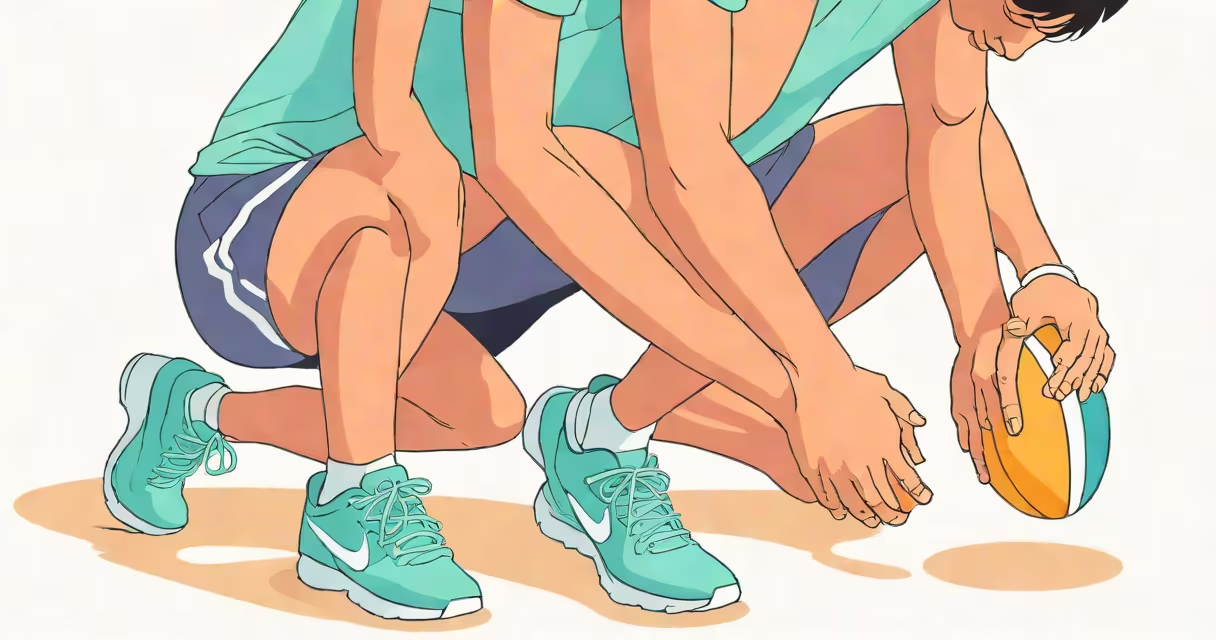
An ACL tear typically causes intense, immediate pain in the knee, often accompanied by swelling, a popping sound at the time of injury, and difficulty bearing weight. The pain results anterior cruciate ligament, one of four major ligaments stabilizing the knee joint.
The ACL prevents excessive forward movement of the tibia relative to the femur and provides rotational stability. When torn-either partially or completely-the knee loses structural integrity, triggering acute pain during movement or weight-bearing. Pain intensity varies based on the extent of the tear, individual pain tolerance, and whether other structures like meniscus or cartilage are injured simultaneously.
According to the American Academy of Orthopaedic Surgeons (AAOS), approximately 70% of patients report hearing or feeling a "pop" at the moment of injury, followed by rapid swelling within hours. This swelling increases pressure in the joint, contributing to ongoing discomfort even at rest. Pain is usually most severe in the first 24 to 48 hours after the injury.
Pain from an ACL tear begins instantly due to tissue trauma and nerve activation. The knee joint contains nociceptors-pain receptors-in the ligament, capsule, and surrounding tissues. When the ACL ruptures, these receptors fire signals to the brain, resulting in sharp, localized pain near the center of the knee.
Swelling follows within minutes to hours as blood and inflammatory fluids accumulate in the joint space. This fluid buildup increases intra-articular pressure, which stretches sensitive nerve endings and amplifies pain. A 2021 study published in Orthopaedic Journal of Sports Medicine found that patients with ACL injuries experienced higher pain scores on the Visual Analog Scale (VAS) during the acute phase compared to those with isolated sprains.
Even after initial swelling subsides, pain may persist during activities requiring pivoting, jumping, or sudden stops. The knee may feel unstable-"giving way"-which triggers protective muscle contractions and further pain. Without treatment, chronic instability leads to recurrent episodes of pain and secondary joint damage.
ACL tears aren't uniform. The nature and timing of pain depend on the tear's severity and associated injuries.
| Type | Pain Pattern | Common Triggers |
|---|---|---|
| Complete tear | Severe, immediate pain; inability to continue activity | Sudden twist, landing awkwardly, direct impact |
| Partial tear | Mild to moderate pain; may walk through it initially | Repetitive stress, minor trauma |
| Associated injuries | Pain worsens with weight-bearing or motion; may have locking or catching | Meniscus tear, cartilage damage, collateral ligament injury |
For example, a college soccer player who landed on a planted foot during a tackle reported a sharp pop followed by intense pain and immediate swelling. She was unable to stand or walk without support. MRI confirmed a complete ACL tear with a medial meniscus tear. Her pain score on admission was 8 out of 10, dropping to 4 after 48 hours with ice and compression.
A common misconception is that mild pain means a minor injury. But partial ACL tears can cause persistent discomfort during sports or walking. The AAOS notes that up to 40% of individuals with partial tears delay seeking care because they assume the pain will resolve on its own.
ACL tear pain doesn't always follow a predictable path. Some people report minimal pain despite a complete tear-especially if they're highly trained athletes or under adrenaline during competition. One professional rugby player described feeling "a slight tug" during a tackle but continued playing for two more minutes before noticing instability. He later learned he had a complete ACL rupture.
Pain is not a reliable indicator of ACL tear severity. A 2020 study in Journal of Knee Surgery showed that 28% of patients with complete ACL tears had low pain scores (≤3/10) on initial assessment. These cases were only identified through imaging, not symptom reports.
Pain from an ACL tear is not the same as osteoarthritis pain. Arthritis pain tends to develop gradually, worsen with activity, and improve with rest. ACL-related pain appears suddenly, often after a specific incident, and is linked to joint instability rather than wear-and-tear.
Pain from an ACL tear typically peaks within the first 72 hours. Initial treatment focuses on reducing inflammation and protecting the joint. The RICE protocol-rest, ice, compression, elevation-is recommended for the first 48 to 72 hours. Nonsteroidal anti-inflammatory drugs (NSAIDs) such as ibuprofen help reduce both pain and swelling.
Physical therapy begins early, even before surgery, to restore range of motion and prevent muscle atrophy. A 2022 randomized controlled trial in Arthroscopy found that patients who started physical therapy within 7 days of injury reported lower pain levels at 6 weeks compared to those who delayed treatment.
For many, surgical reconstruction is necessary to restore knee function, especially in active individuals. Post-op pain is expected but managed with medication and rehabilitation. Most patients report significant pain reduction by 3 months post-surgery, though full return to sport takes 9 to 12 months.
One personal observation: During a clinic rotation, I watched a high school football player undergo ACL reconstruction. He reported pain levels of 7/10 pre-surgery, dropped to 2/10 after the procedure, and returned to light training at 8 weeks. His pain did not return until he attempted full pivoting at 10 months-indicating that pain resolved with functional restoration, not just healing.
If you suspect an ACL tear, see a healthcare provider within 72 hours. Delaying evaluation increases the risk of secondary damage to the meniscus or cartilage. An MRI is the gold standard for confirming ACL tears, though clinical exams like the Lachman test and anterior drawer test are used in initial assessment.
Not all knee injuries require surgery. Some people manage well with physical therapy and activity modification. However, if pain persists beyond 2 weeks or if the knee gives way during daily tasks, surgical intervention is likely needed.
Understanding that ACL tears are painful-and often severely so-helps guide timely care. Early diagnosis and treatment improve outcomes and reduce long-term complications like early-onset arthritis.
Yes-ACL tears are painful. The degree varies, but the injury almost always involves significant discomfort, especially during movement. Prompt medical evaluation ensures accurate diagnosis and effective pain management.