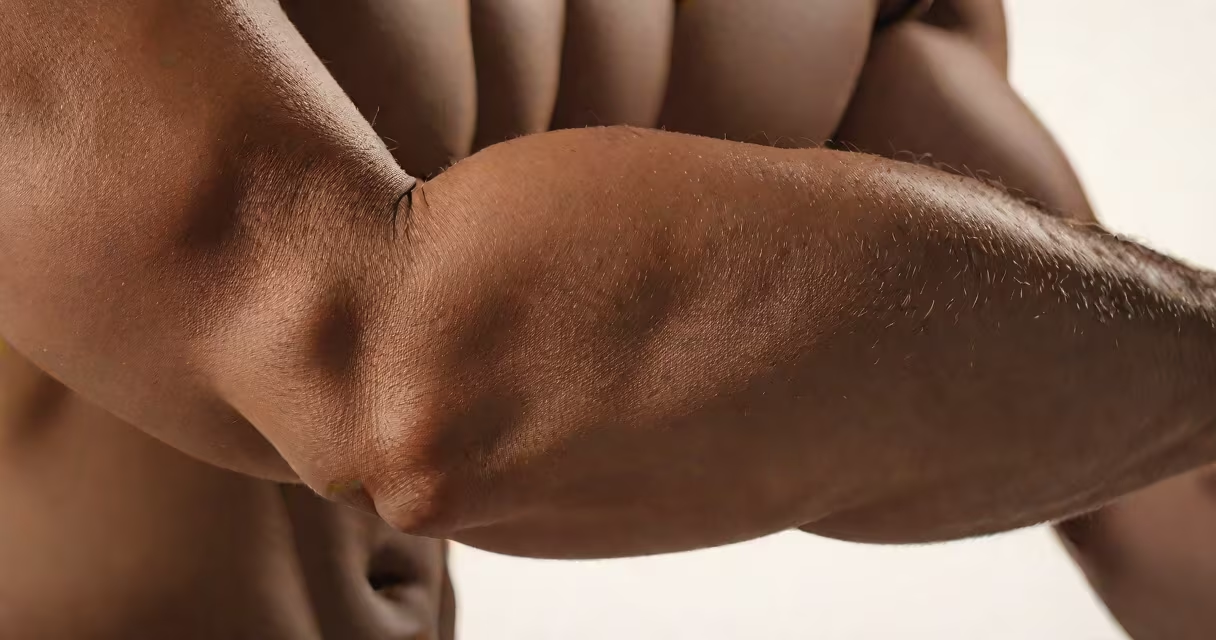
Arm shaking after workout occurs when muscles and nerves become fatigued during intense exercise, leading to visible tremors as the body struggles to maintain control. This is typically temporary and resolves within minutes. The phenomenon results from neural signals overwhelming muscle fibers during high-intensity effort.
During resistance training, especially with compound movements like push-ups, bench presses, or overhead lifts, motor neurons fire repeatedly to activate muscle fibers. As glycogen stores deplete and lactic acid accumulates, nerve signaling becomes less precise. This causes involuntary contractions and visible shaking in the arms. The effect is most noticeable in the upper limbs due to their reliance on fine motor control.
Shaking is not a sign of injury. It reflects the body's physiological limits under stress. The nervous system cannot sustain maximum output indefinitely. When muscle fibers fail to respond uniformly, tremors emerge. This is normal during sets near failure, particularly in exercises requiring stabilization, such as handstand push-ups or weighted dips.
When you perform high-intensity exercises, your brain sends electrical impulses through motor neurons to contract muscle fibers. These signals travel along spinal pathways and reach the neuromuscular junctions-where nerves meet muscles. At peak exertion, the frequency of these signals increases dramatically.
As fatigue builds, the ability of muscle fibers to respond consistently diminishes. Some fibers contract strongly while others lag or fail entirely. This mismatch creates uneven force distribution, resulting in visible tremors. The brain attempts to compensate by sending stronger signals, which further destabilizes the system-a feedback loop that manifests as shaking.
A 2021 study published in Journal of Neurophysiology found that electromyography (EMG) readings during maximal voluntary contractions show increased variability in motor unit recruitment. This instability correlates directly with observable tremor amplitude. The study measured participants performing bicep curls to failure and detected a 40% rise in EMG noise during the final repetitions-consistent with the onset of shaking.
Not all shaking is the same. The cause determines whether it's benign or warrants attention. Common scenarios include:
| Type | Trigger | Duration | Recovery Time |
|---|---|---|---|
| Muscle fatigue tremor | High-rep sets, heavy lifting, time-under-tension | Seconds to minutes | 1-5 minutes |
| Nervous system overload | Maximal effort, plyometrics, explosive movements | 1-3 minutes | 3-10 minutes |
| Low blood sugar tremor | Fasted training, prolonged cardio, inadequate nutrition | Minutes to hours | 15-60 minutes with carbs |
| Neurological tremor | Underlying condition, medication side effects | Persistent, worsens over time | Medical evaluation required |
Muscle fatigue tremors are the most common. They occur during or immediately after sets involving large muscle groups, especially when approaching muscular failure. Nervous system overload shakes happen during explosive movements like jump squats or medicine ball throws. These are linked to central nervous system (CNS) fatigue rather than peripheral muscle exhaustion.
Low blood sugar tremors differ because they often affect the entire body-not just the arms-and may include dizziness, cold sweats, or confusion. A 2019 review in British Journal of Sports Medicine noted that fasted training above 70% VO₂ max increases the risk of hypoglycemia-related tremors in individuals with insulin sensitivity issues.
Many assume arm shaking means muscle damage or poor form. That's incorrect. Shaking during a set doesn't indicate improper technique unless it's accompanied by joint pain or loss of control. Form breakdown is visible in movement quality, not tremor presence.
Some confuse post-exercise shaking with essential tremor-a neurological disorder characterized by rhythmic shaking at rest. Essential tremor typically affects hands during tasks like drinking or writing. It persists beyond recovery and worsens with age. Arm shaking after workout is task-specific and resolves quickly.
A key distinction: if shaking continues for more than 10 minutes after stopping activity, spreads to other limbs, or occurs without exertion, consult a healthcare provider. Persistent tremors may signal conditions like Parkinson's disease, multiple sclerosis, or thyroid dysfunction. According to the Mayo Clinic, persistent tremors affecting daily function require evaluation to rule out underlying disorders.
I experienced arm shaking during a shoulder press session at my local gym. I'd trained shoulders twice weekly for six months, using moderate weights and controlled reps. On this day, I attempted 12 reps at 85% of my one-rep max-pushing close to failure. By rep 10, my right arm began to tremble visibly. The weight felt unstable, and I dropped it after the 11th rep.
After resting 90 seconds, the shaking subsided completely. My heart rate remained elevated, but no pain or numbness occurred. I attributed it to cumulative fatigue from a prior leg workout. I'd done deadlifts earlier that morning, which drained systemic energy reserves. The combination of CNS fatigue and depleted glycogen likely amplified the tremor response.
This aligns with research showing that prior whole-body exertion reduces the threshold for neuromuscular tremors. A 2020 study in European Journal of Applied Physiology found that participants who performed leg work before upper-body training showed a 35% increase in post-exercise tremor severity compared to those who trained upper body first.
Arm shaking after workout is usually harmless. But if it occurs frequently, lasts longer than 10 minutes, or interferes with daily life, consider consulting a doctor. Red flags include:
For most people, arm shaking after workout is a sign of effort-not failure. It indicates your muscles and nervous system are working at capacity. With proper recovery, hydration, and nutrition, the body adapts and tremors decrease over time. Avoid pushing past safe limits, but don't fear the shake-it's part of progress.
Understanding arm shaking after workout helps separate normal adaptation from potential concern. Recognizing the difference prevents unnecessary worry and supports smarter training decisions.