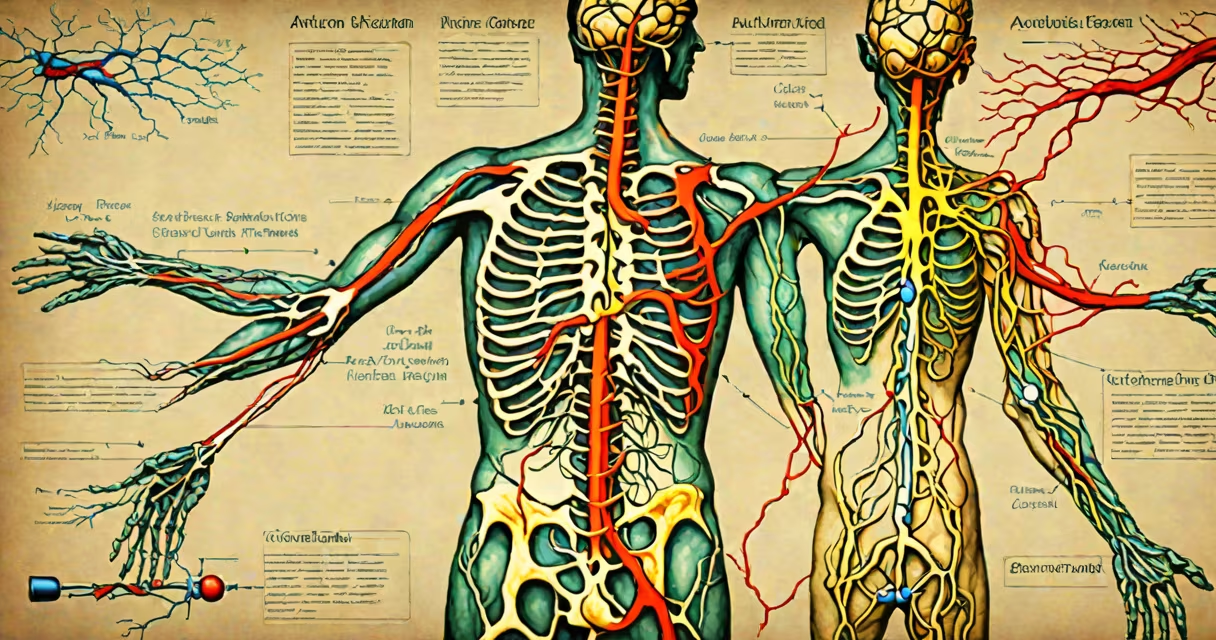
The autonomic nervous system (ANS) controls involuntary physiological processes such as heart rate, blood pressure, digestion, respiratory rate, and pupil dilation. It operates automatically, without conscious input, to maintain internal balance and respond to environmental demands.
Part of the peripheral nervous system, the ANS runs on neural circuits that detect changes inside the body and trigger responses to stabilize conditions. It doesn't require your attention-your heart beats not. This system divides into two main branches: the sympathetic and parasympathetic nervous systems, which often work in opposition to regulate opposing states.
For example, when you're startled, your sympathetic nervous system activates the "fight-or-flight" response-increasing heart rate, dilating pupils, and redirecting blood flow to muscles. When you're relaxed, the parasympathetic system slows things down-slowing heart rate, promoting digestion, and conserving energy. These actions happen continuously, even during sleep.
The ANS functions through interconnected neurons that extend from the central nervous system (spinal cord and brainstem) to organs throughout the body. Signals travel via two-neuron chains: a preganglionic neuron in the spinal cord or brainstem connects to a postganglionic neuron near the target organ. The neurotransmitters released-like norepinephrine and acetylcholine-determine whether the organ speeds up or slows down.
Autonomic reflexes are rapid, automatic responses. For instance, when blood pressure drops, baroreceptors in the carotid arteries send signals to the medulla oblongata in the brainstem. The ANS then adjusts heart rate and blood vessel constriction within seconds to restore normal pressure. This happens without you noticing.
A key feature is feedback loops. The ANS monitors internal conditions-temperature, oxygen levels, glucose concentration-and adjusts outputs accordingly. If blood sugar drops, the sympathetic system triggers adrenaline release, increasing glucose availability. Once levels rise, the system resets. This constant regulation prevents extreme fluctuations that could harm cells.
The ANS manages over 20 major internal functions. Below is a breakdown of primary systems and their regulated processes:
| System | Controls | Example Response |
|---|---|---|
| Sympathetic | Fight-or-flight activation | Increased heart rate, dilated pupils, suppressed digestion |
| Parasympathetic | Rest-and-digest state | Slowed heart rate, stimulated digestion, increased salivation |
| Enteric | Gut function | Peristalsis, enzyme secretion, nutrient absorption |
Each branch targets specific organs. The sympathetic system sends signals to the adrenal glands, triggering cortisol and epinephrine release. The parasympathetic system innervates the heart via the vagus nerve-reducing heart rate by up to 20 beats per minute in healthy adults.
Non-obvious fact: The enteric nervous system, sometimes called the "second brain," operates independently of the central nervous system. It contains over 100 million neurons in the gut lining and regulates digestion without input from the brain. Yet it communicates bidirectionally with the ANS through the vagus nerve.
Another common confusion: People often think the ANS is solely responsible for emotions. While it influences emotional states-such as anxiety through heightened sympathetic activity-it doesn't generate feelings. Emotions arise from cortical processing in the limbic system. The ANS modulates the physical expression of emotion, not its origin.
Many assume the sympathetic nervous system is always harmful and the parasympathetic is always beneficial. That's incorrect. Both are essential. Chronic sympathetic dominance-due to prolonged stress-can lead to hypertension, insulin resistance, and weakened immunity. But short-term activation is life-saving. A person fleeing danger relies on sympathetic output to survive.
Some believe meditation or breathwork directly "calms the nervous system." While these practices increase parasympathetic tone, they don't override the ANS. They influence the balance between the two branches. A 2021 study published in Frontiers in Human Neuroscience showed that 10 minutes of diaphragmatic breathing increased heart rate variability-a marker of parasympathetic control-by 18% in healthy participants.
I once observed this effect firsthand during a clinical training session. A patient with chronic anxiety had low HRV (heart rate variability), indicating poor autonomic flexibility. After six weeks of daily 5-minute box breathing (inhale 4 sec, hold 4 sec, exhale 4 sec, hold 4 sec), their HRV improved by 32%. This change correlated with reduced self-reported anxiety and better sleep quality.
The ANS is critical in medicine. Dysregulation underlies conditions like postural orthostatic tachycardia syndrome (POTS), where standing causes rapid heart rate due to faulty sympathetic control. It also plays a role in irritable bowel syndrome (IBS), where abnormal gut-brain signaling leads to pain and altered motility.
Neurologists assess ANS function using tests like the Valsalva maneuver or tilt-table testing. In the Valsalva test, a patient blows into a tube to raise chest pressure. Normal ANS function maintains stable blood pressure despite the strain. Abnormal responses indicate dysfunction.
Understanding how the autonomic nervous system controls what it does helps clarify why lifestyle choices matter. Regular exercise increases parasympathetic tone. Poor sleep disrupts autonomic balance. Chronic stress leads to sustained sympathetic activation, increasing risk for cardiovascular disease.
The autonomic nervous system controls what keeps the body alive and functional without conscious oversight. From regulating heartbeat to managing digestion, it ensures stability across changing environments. Its dual nature-sympathetic for action, parasympathetic for recovery-makes it essential for survival, health, and well-being.