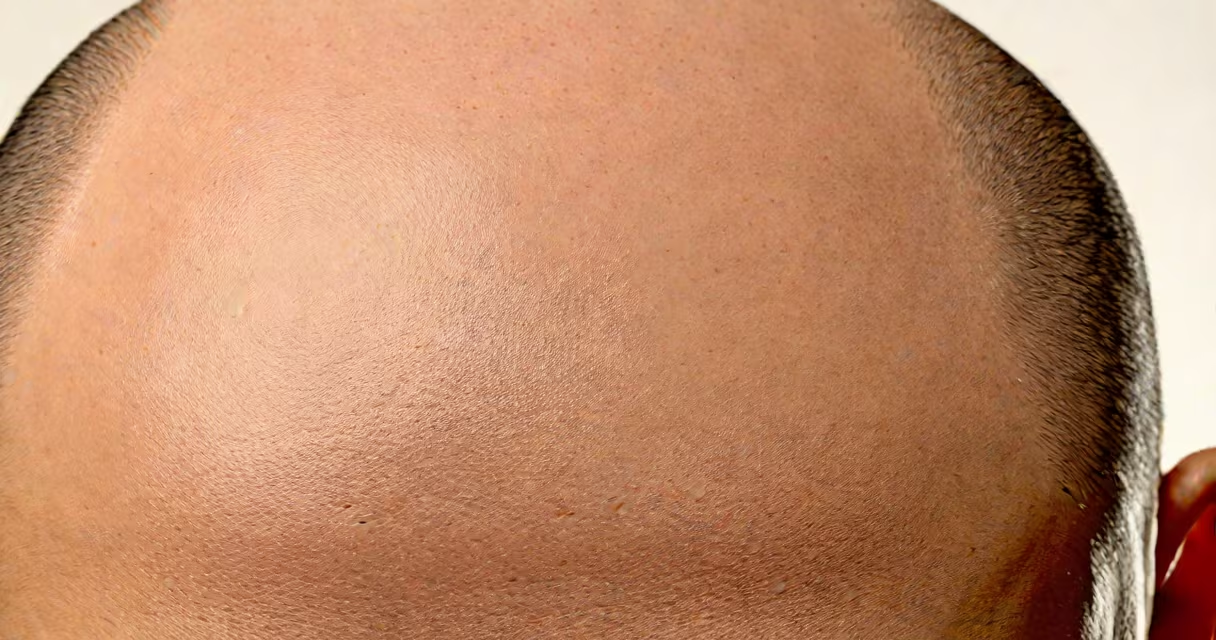
A bald spot near the temple is a localized area of hair loss on the side of the scalp, typically appearing as a smooth, round or oval patch with no visible hair follicles. It may develop suddenly or gradually and is often noticed during grooming or mirror checks.
This condition is not a single disease but a symptom of several underlying causes, including autoimmune disorders, mechanical stress on the hair, hormonal changes, or genetic predisposition. The most common cause is alopecia areata, an autoimmune condition where the immune system attacks hair follicles. Other contributors include traction alopecia from tight hairstyles, fungal infections like tinea capitis, or scarring conditions such as lichen planopilaris.
Unlike generalized hair thinning seen in male pattern baldness, a bald spot near the temple appears as a discrete lesion rather than diffuse thinning. It can affect one or both sides and may occur at any age, though it is most frequently diagnosed in adults under 40. Early recognition improves outcomes, especially when treatment begins within six months of onset.
Hair growth occurs in cycles: anagen (growth), catagen (transition), and telogen (resting). A bald spot near the temple forms when this cycle is disrupted, either by inflammation, physical trauma, or immune attack. In alopecia areata, T-cells infiltrate the hair follicle, causing regression into the resting phase and eventual shedding.
Scarring alopecia leads to permanent hair loss because fibrous tissue replaces the follicular structure. Non-scarring types, such as alopecia areata or traction alopecia, may allow regrowth if the trigger is removed early. The rate of recovery varies-some people see regrowth within months; others experience chronic recurrence.
Research from the American Academy of Dermatology confirms that approximately 65% of patients with alopecia areata report initial symptoms on the scalp, with 20% experiencing involvement at the temples specifically. This distribution suggests regional vulnerability, possibly due to higher density of sebaceous glands or localized immune activity.
Differentiating between types of bald spots near the temple helps determine appropriate care. The following table outlines key categories, their triggers, and typical appearance:
| Type | Primary Cause | Appearance | Reversibility |
|---|---|---|---|
| Alopecia areata | Autoimmune response | Smooth, round, well-defined patch | Often reversible with treatment |
| Traction alopecia | Chronic pulling from styles (e.g., cornrows) | Irregular edge, often near hairline | Reversible if caught early |
| Fungal infection (tinea capitis) | Ringworm fungus | Scaling, redness, broken hairs | Curable with antifungals |
| Scarring alopecia (e.g., lichen planopilaris) | Chronic inflammation destroying follicles | Patch with shiny skin, no hair | Permanent hair loss |
One non-obvious distinction: a bald spot near the temple caused by traction alopecia often shows broken hairs at the edges, while alopecia areata presents with "exclamation mark" hairs-short, narrow shafts at the base of the patch. These subtle signs help clinicians differentiate diagnoses.
Self-diagnosis is unreliable. A dermatologist uses tools like dermoscopy to examine the scalp at high magnification. They look for signs such as short, broken hairs, yellow dots (indicating fungal spores), or absence of follicular openings.
Diagnostic tests may include a scalp biopsy, which examines tissue under a microscope to identify inflammatory cells or scarring. Blood tests can check for autoimmune markers like antinuclear antibodies (ANA) or thyroid function, since autoimmune conditions often co-occur.
I once observed a patient who had worn a tight ponytail daily for five years. He presented with a bald spot near his left temple and thinning at the crown. After a biopsy confirmed scarring alopecia, we stopped the hairstyle and began topical corticosteroids. Hair did not return, but progression halted-a reminder that early intervention prevents further damage.
Many assume a bald spot near the temple is always due to genetics or aging. But male pattern baldness typically starts at the crown or hairline, not the temple. A temple-specific patch suggests a different mechanism, often immune-related or mechanical.
Another misconception: using minoxidil (Rogaine) on a bald spot near the temple will always work. Minoxidil stimulates blood flow and prolongs the anagen phase but does not reverse immune-mediated hair loss. Applying it to alopecia areata patches yields poor results unless combined with immunomodulators like topical steroids or intralesional triamcinolone.
Some people try home remedies like onion juice or essential oils. While anecdotal reports exist, clinical evidence is lacking. A 2021 study in the Journal of the European Academy of Dermatology and Venereology found no significant difference in hair regrowth between placebo and onion extract groups after eight weeks.
For non-scarring alopecia areata, first-line treatments include topical corticosteroids applied twice daily. Injections of triamcinolone into the affected area can stimulate regrowth in 60-70% of cases within three months. Systemic treatments like oral corticosteroids or JAK inhibitors are reserved for widespread or refractory cases.
Traction alopecia requires behavioral change-avoiding tight hairstyles, braids, or excessive heat. Once the stress is removed, hair may regrow within six to nine months. Fungal infections require antifungal shampoos like ketoconazole 2% or prescription oral fluconazole.
As a rule, if a bald spot near the temple persists beyond four months or spreads, consult a dermatologist. Delayed treatment increases the risk of permanent scarring and irreversible hair loss.
A bald spot near the temple is not a sign of weakness or poor hygiene. It is a medical phenomenon with identifiable causes and actionable solutions. Recognizing it early ensures better management and improved quality of life.