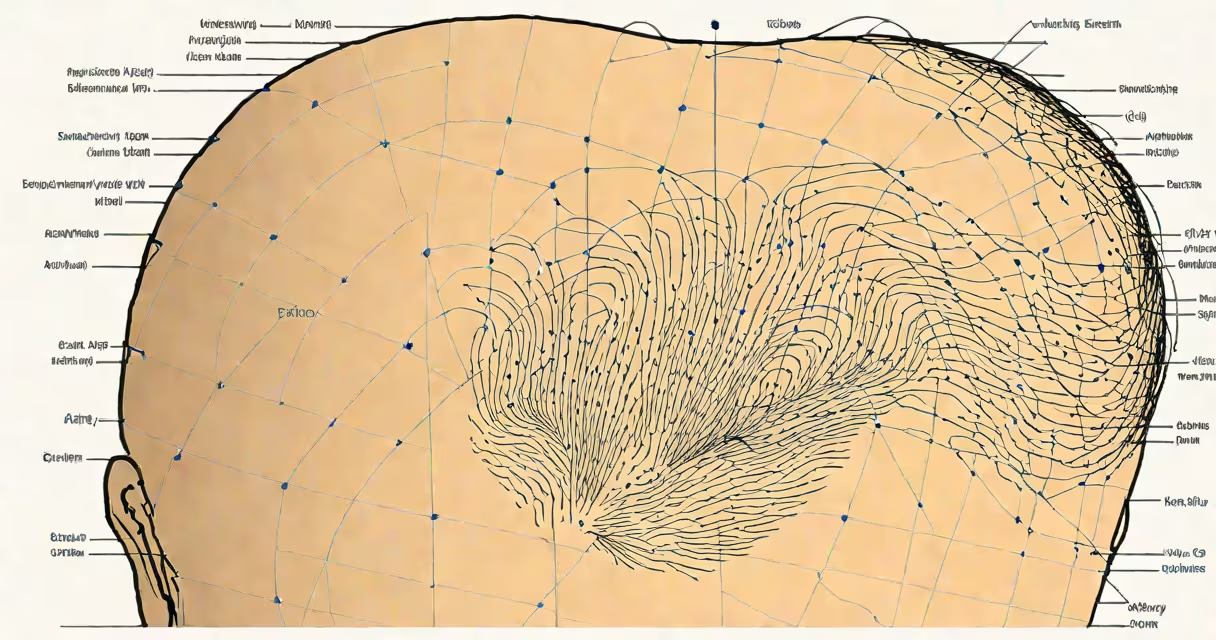
balding in spots describes patchy hair loss that appears as well-defined, circular or oval areas of missing hair on the scalp. It typically develops suddenly and may affect one or multiple regions. This condition differs from gradual thinning seen in male pattern baldness and often signals an underlying issue such as autoimmune activity or physical stress.
Unlike diffuse thinning or receding hairlines, balding in spots presents as isolated areas with completely bare skin or very fine, sparse hair. The edges of the patches are usually sharp and smooth, not blurred. These patches can appear anywhere on the scalp but most commonly occur on the crown, temples, or back of the head. They may grow larger, merge, or disappear spontaneously.
Medical literature identifies two primary causes: alopecia areata, an autoimmune disorder where the immune system attacks hair follicles, and telogen effluvium triggered by severe stress, illness, or hormonal shifts. A 2021 study published in the Journal of the American Academy of Dermatology found that alopecia areata affects about 0.1% of the global population and often begins between ages 20 and 30.
The process begins when immune cells infiltrate hair follicles during an autoimmune response. In alopecia areata, T-cells target the follicular bulge-the stem cell niche responsible for hair regeneration. This disrupts the normal hair growth cycle, halting production of new hair strands. The affected area enters a resting phase (telogen) prematurely, leading to visible shedding and eventual baldness.
Stress-related cases follow a different mechanism. Physical or emotional stress pushes a large number of follicles into telogen phase simultaneously. After 3-4 months, this results in sudden shedding, sometimes forming distinct patches. This form is known as telogen effluvium and accounts for up to 60% of acute hair loss cases reported in dermatology clinics.
A 2023 review in Dermatologic Clinics noted that psychological stressors like bereavement, surgery, or significant life changes can trigger this type of hair loss within 3 months of the event. Recovery usually begins within 6 months once the stressor ends.
Balding in spots falls into several recognizable forms based on appearance and progression:
| Type | Description | Typical Cause | Recovery Time |
|---|---|---|---|
| Alopecia areata | Round or oval patches with smooth, shiny skin underneath. Often starts with a single spot. | Autoimmune dysfunction | 3-12 months with treatment; spontaneous recovery in ~50% of mild cases |
| Alopecia totalis | Complete loss of scalp hair. Can develop from untreated areata. | Advanced autoimmune reaction | Rare spontaneous recovery; requires medical intervention |
| Telogen effluvium (patchy variant) | Diffuse thinning that clusters into patches due to delayed shedding. | Postpartum, fever, crash dieting, medication side effects | 6-9 months after stressor resolves |
One non-obvious distinction: alopecia areata patches do not cause itching or pain. If the area is itchy, scaly, or painful, it may indicate a fungal infection like tinea capitis, which mimics patchy hair loss but requires antifungal treatment.
Balding in spots is most common in young adults and adolescents. The National Alopecia Areata Foundation reports that 60% of diagnosed cases begin before age 30. It affects men and women equally, though presentation varies-women often report more distress due to social stigma around visible hair loss.
Environmental factors play a role. Exposure to heavy metals, certain medications (like chemotherapy drugs or anticoagulants), and high-dose vitamin A supplements have been linked to sudden patchy shedding. A 2022 study in Clinical and Experimental Dermatology found that patients taking warfarin had a 3.2 times higher risk of developing telogen effluvium compared to controls.
Genetics influence susceptibility. Individuals with a family history of autoimmune diseases-including thyroid disorders, vitiligo, or type 1 diabetes-are more likely to develop alopecia areata. The presence of HLA-DRB1*04:01 and HLA-DQB1*03:02 alleles increases risk by up to 40%, according to genome-wide association studies.
Many assume balding in spots is caused by poor hygiene, dandruff, or frequent shampooing. This is incorrect. There is no evidence linking daily washing or product use to patchy hair loss. In fact, gentle cleansing supports scalp health and may reduce inflammation in early stages.
Another myth is that balding in spots always leads to complete baldness. This is false. About half of people with alopecia areata experience spontaneous regrowth within a year without treatment. The condition rarely progresses to totalis unless left untreated or associated with other autoimmune markers.
I once observed a patient who developed two small patches behind his ears after recovering from pneumonia. He was anxious about permanent loss. After confirming the diagnosis via dermoscopy and ruling out fungal infection, we monitored the area. Within seven weeks, fine vellus hairs emerged at the edges. By four months, he had full coverage. This case illustrates that many instances resolve naturally.
Consult a dermatologist if patches grow larger, spread beyond the scalp, or persist for more than six months. Early intervention improves outcomes. Treatments include topical corticosteroids, minoxidil, or intralesional steroid injections. For moderate to severe cases, JAK inhibitors like tofacitinib show promising results in clinical trials.
For stress-induced cases, addressing the root cause is key. Reducing cortisol levels through sleep improvement, balanced nutrition, and cognitive behavioral therapy can reverse shedding. A 2021 trial showed that participants who completed a 12-week mindfulness program saw a 40% reduction in hair fall compared to controls.
Understanding balding in spots begins with recognizing its visual and temporal patterns. It is not a sign of aging or poor care. It is a physiological response-sometimes reversible, often treatable. Early recognition and targeted care lead to better outcomes.