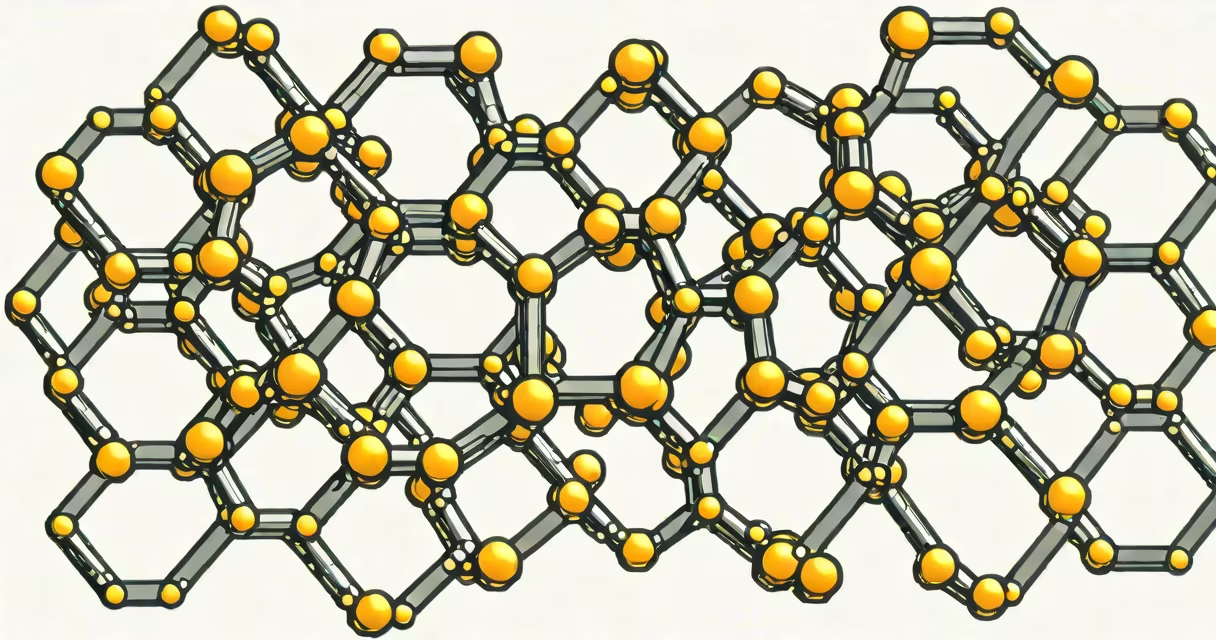
Benzene is a colorless, flammable liquid with a sweet odor, composed of six carbon atoms arranged in a planar hexagonal ring with alternating single and double bonds. It is the simplest aromatic hydrocarbon and serves as the foundational structure for countless organic compounds.
The molecule's stability arises from electron delocalization-the six π electrons in the ring are shared equally among all six carbon atoms, forming a continuous cloud above and below the plane. This resonance stabilization lowers the energy of the molecule compared to a hypothetical cyclohexatriene with localized double bonds.
Benzene was first isolated by Michael Faraday in 1825 from illuminating gas. Its structure puzzled chemists until August Kekulé proposed the cyclic arrangement with alternating bonds in 1865. Modern spectroscopy confirms that all carbon-carbon bonds in benzene are equal in length (1.39 Å), intermediate between single (1.54 Å) and double (1.34 Å) bonds.
Benzene's unique behavior stems from its aromaticity-a property defined by Hückel's rule: a planar, cyclic, conjugated system with 4n + 2 π electrons. With six π electrons (n = 1), benzene meets the criterion and exhibits strong stability.
This stability makes benzene less reactive than typical alkenes. Instead of undergoing addition reactions (like breaking double bonds), it prefers substitution-replacing hydrogen atoms with other groups while preserving the ring structure. For example, nitration introduces a nitro group (-NO₂), forming nitrobenzene, a key intermediate in dye production.
Electrophilic aromatic substitution is the dominant reaction pathway. An electrophile attacks the electron-rich ring, temporarily disrupting aromaticity. The intermediate carbocation then loses a proton to restore the aromatic system. This mechanism explains why benzene resists oxidation and addition under normal conditions.
Benzene derivatives form a vast class of chemicals. Substitution patterns determine their naming and properties:
| Substitution Pattern | Example | Common Use |
|---|---|---|
| Monosubstituted | Chlorobenzene | Solvent, pesticide precursor |
| Ortho-disubstituted | o-Dichlorobenzene | Insecticide, moth repellent |
| Meta-disubstituted | m-Nitrotoluene | Explosives, dyes |
| Para-disubstituted | p-Bromotoluene | Pharmaceutical intermediates |
Each positional isomer has distinct physical and chemical behavior. For instance, para-substituted benzenes often crystallize more easily due to symmetry, aiding purification in industrial processes.
Benzene is a building block in petrochemical manufacturing. It accounts for about 10% of global oil refining output. Major applications include:
Despite its utility, benzene is classified as a carcinogen by the International Agency for Research on Cancer (IARC). Long-term exposure increases risk of leukemia. The U.S. Environmental Protection Agency (EPA) limits benzene in drinking water to 5 parts per billion (ppb).
Benzene is often mistaken for being highly reactive due to its double bonds. In reality, it resists addition reactions. Adding bromine to benzene without a catalyst yields no reaction-unlike alkenes, which decolorize bromine water instantly.
Another error is assuming all aromatic compounds resemble benzene. While benzene is the prototype, heterocyclic aromatics like pyridine (nitrogen-containing) or thiophene (sulfur-containing) differ in electronic distribution and reactivity.
A lesser-known fact: benzene's resonance energy is approximately 36 kcal/mol. This value quantifies the extra stability gained from electron delocalization-far greater than expected for a molecule with three double bonds.
In 2019, a chemical plant in Texas experienced a benzene leak during a distillation process. The vapor spread rapidly due to benzene's low boiling point (80.1°C) and high volatility. Emergency responders used portable gas detectors measuring parts per million (ppm) levels. Exposure above 10 ppm requires evacuation. The incident underscored the need for strict containment protocols in facilities handling benzene.
Benzene what is it? A six-membered aromatic ring with delocalized electrons, fundamental to organic chemistry. Its stability enables diverse industrial applications--but demands careful handling due to health risks.
Understanding benzene is essential for anyone studying chemistry, pharmacology, or materials science. Its structure defines aromaticity, a concept critical to predicting molecular behavior across disciplines.