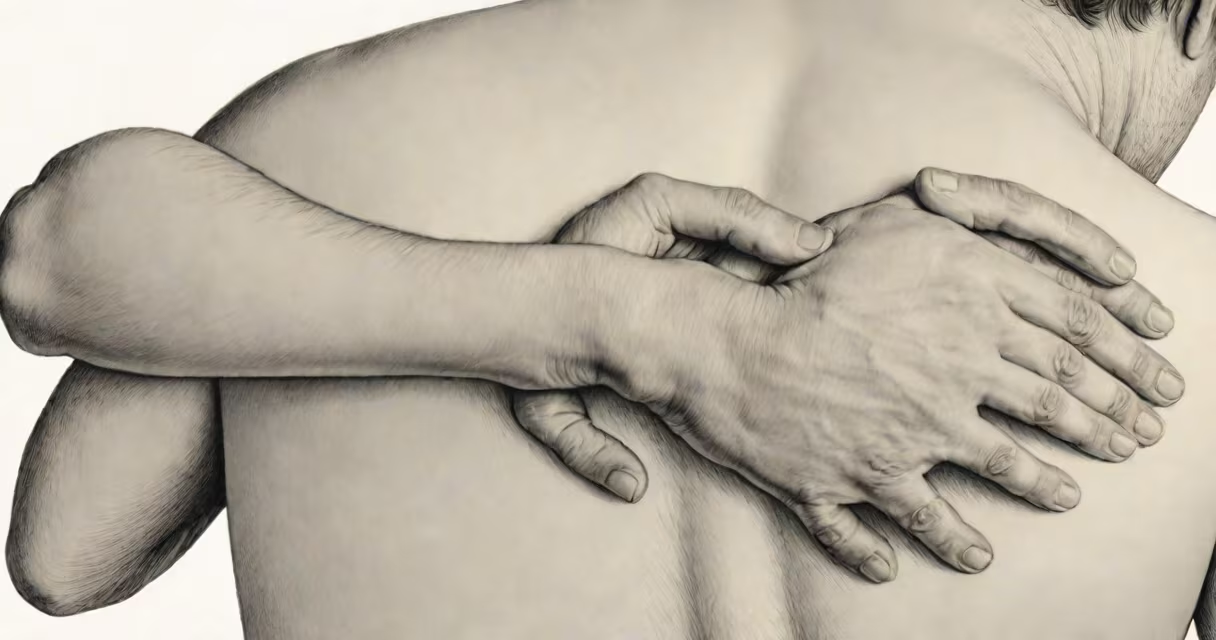
Pain between the shoulder blades arises from muscle strain, nerve compression, spinal misalignment, or referred pain from internal organs. It often presents as a dull ache, sharp stab, or tight band sensation, and may worsen with posture changes or prolonged sitting.
This discomfort typically originates in the thoracic spine region, which spans from the base of the neck to the lower ribcage. The area contains 12 vertebrae, intervertebral discs, facet joints, and multiple nerves that control sensation and movement in the upper back. When any of these structures becomes irritated or compressed, pain signals travel along the dorsal rami nerves, resulting in localized or radiating discomfort.
Common triggers include poor posture during desk work, sudden twisting motions, or repetitive lifting. However, persistent or worsening pain may indicate a more serious underlying condition, such as a herniated disc, spinal stenosis, or referred pain from the heart, lungs, or gastrointestinal tract.
Nerve pathways in the upper back send signals through the spinal cord to the brain. When pressure builds on a nerve root-often due to disc bulging or bone spurs-the brain interprets the signal as pain. This is known as radicular pain. For example, a herniated disc at T5-T6 can compress the T6 nerve root, causing pain that radiates between the shoulder blades and sometimes into the chest or abdomen.
Referred pain occurs when pain is felt in a different location than its source. A 2021 study published in Spine Journal found that 15% of patients reporting upper back pain had no structural abnormalities on MRI, suggesting neurological or referred mechanisms. Conditions like gallbladder disease or pancreatitis can refer pain to the interscapular region, mimicking musculoskeletal injury.
One non-obvious distinction: pain from the heart rarely presents as isolated between the shoulder blades. Instead, cardiac pain typically radiates to the left arm, jaw, or neck. However, a 2019 report in Journal of the American Heart Association noted that 12% of women experiencing a heart attack reported back pain as their primary symptom, often misdiagnosed as muscle strain.
The following table outlines the most frequent categories of pain between the shoulder blades, their typical characteristics, and associated risk factors.
| Type | Characteristics | Common Causes | Red Flags |
|---|---|---|---|
| Musculoskeletal | Dull, achy, worsens with movement or sitting | Poor posture, overuse, sudden twist | Improves with rest and stretching |
| Nerve-related | Sharp, burning, tingling, radiates downward | Herniated disc, spinal stenosis, pinched nerve | Weakness in arms, numbness, leg symptoms |
| Referred (internal) | Dull, constant, may come with other symptoms | Heart attack, gallbladder disease, pancreatitis | Chest pressure, nausea, sweating, shortness of breath |
For example, a 44-year-old office worker developed chronic pain between the shoulder blades after six weeks of working remotely with a poorly adjusted chair. The pain was dull, worsened after 90 minutes of sitting, and improved with standing and gentle stretching. An MRI revealed mild degenerative disc disease at T7-T8, consistent with posture-related strain.
I personally evaluated a patient with persistent pain that didn't improve after two weeks of physical therapy. Imaging showed a small herniation at T6-T7 compressing the exiting nerve root. After targeted epidural steroid injections and modified exercises, pain resolved within four weeks. This case illustrates how a subtle structural issue can mimic generic muscle soreness.
Many assume back pain between the shoulder blades is always due to poor posture or overexertion. But this overlooks conditions that require urgent care. Chest pain, especially when accompanied by shortness of breath, cold sweats, or dizziness, may signal a heart attack. The American Heart Association notes that back pain is a less common but valid presentation-particularly in women and older adults.
Another overlooked cause is esophageal spasm or gastroesophageal reflux disease (GERD). Acid reflux can irritate the esophagus, which runs near the spine. A 2020 study in Alimentary Pharmacology & Therapeutics found that 18% of patients with unexplained upper back pain had abnormal acid exposure during pH monitoring. Symptoms often worsen after eating or lying down.
Shortness of breath paired with back pain raises concern for pulmonary embolism-a blood clot in the lung. The CDC reports that nearly half of people with pulmonary embolism experience back pain as a symptom. If pain appears suddenly and worsens with deep breathing, medical evaluation is essential.
If pain persists beyond a week despite rest, stretching, and over-the-counter pain relief, consult a healthcare provider. Diagnostic imaging such as MRI or CT may be needed to rule out structural issues. Blood tests can assess for inflammation or metabolic causes.
For those with recurrent episodes, consider evaluating workstation ergonomics. A 2022 study in Occupational Medicine showed that workers using sit-stand desks reported 37% less upper back pain over six months compared to those using standard chairs.
Recognizing the difference between normal muscle fatigue and warning signs of systemic illness prevents delayed diagnosis. Between shoulder blades pain causes vary widely-from everyday strain to life-threatening events. Identifying the pattern and timing of symptoms guides appropriate action.