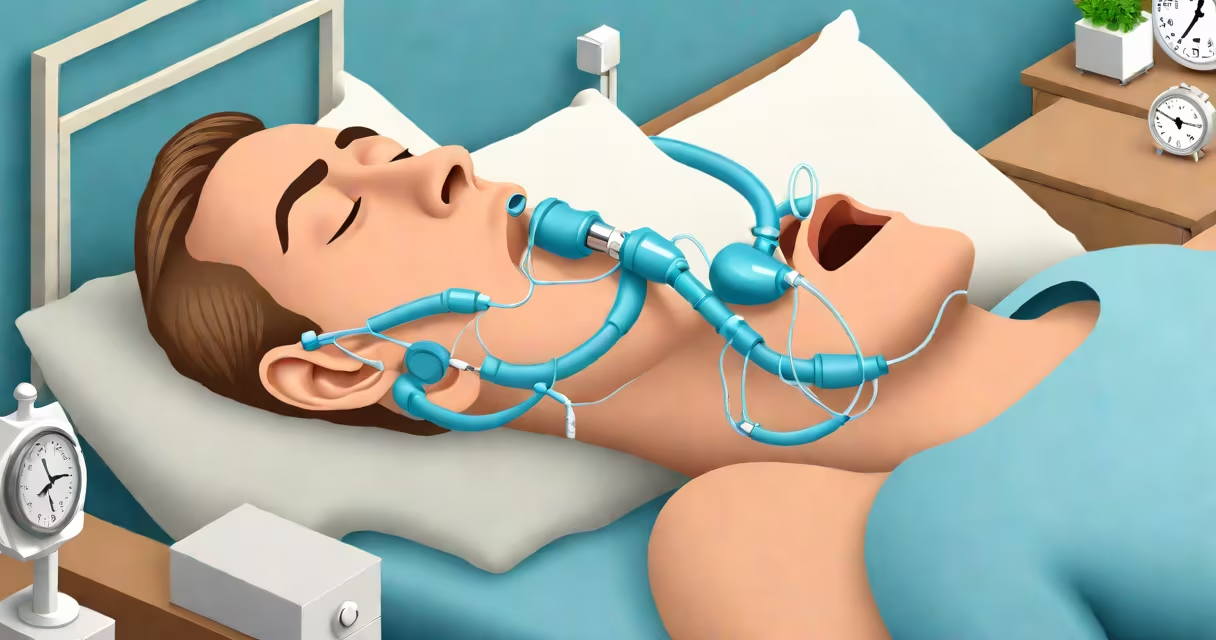
Obstructive sleep apnea cannot be permanently cured in most adults, but it can be effectively managed and resolved in specific cases through targeted interventions. Treatment success depends on the underlying cause, patient adherence, and lifestyle changes. Central sleep apnea may improve with treatment of the root condition, such as heart failure or opioid use.
Sleep apnea occurs when breathing repeatedly stops and starts during sleep due to partial or complete airway collapse (obstructive) or brain signaling issues (central). The most common form, obstructive sleep apnea (OSA), affects approximately 26% of adults aged 30-70 in the U.S., according to the American Academy of Sleep Medicine. While symptoms like daytime fatigue and loud snoring can be eliminated with proper treatment, the structural and physiological factors causing OSA often persist.
For some individuals, especially those with mild OSA and modifiable risk factors, sustained weight loss, positional therapy, or oral appliance use can lead to symptom resolution without ongoing treatment. However, these outcomes are not guaranteed and require consistent follow-up. A 2021 study published in JAMA Internal Medicine found that 30% of patients with moderate-to-severe OSA who lost 10% of their body weight experienced a reduction in apnea severity to mild levels, though nearly half saw recurrence within two years without continued intervention.
Treatment aims to maintain upper airway patency during sleep. Continuous positive airway pressure (CPAP) is the gold standard, delivering a steady stream of pressurized air through a mask to prevent airway collapse. Studies show CPAP reduces apnea events by 80-90% in compliant users, improving oxygen saturation and reducing cardiovascular strain.
Oral appliances, worn like mouthguards, reposition the jaw forward to open the airway. They're effective for mild to moderate OSA and preferred by patients who find CPAP uncomfortable. A 2020 randomized controlled trial in Chest reported that 65% of participants using mandibular advancement devices achieved normal apnea-hypopnea index (AHI) scores after six months, compared to 45% on CPAP.
Surgical options include uvulopalatopharyngoplasty (UPPP), which removes excess tissue from the throat, and maxillomandibular advancement (MMA), which repositions the jaw bones. MMA has the highest success rate among surgeries, with 80% of patients achieving normal AHI scores in a 2019 review from the Journal of Clinical Sleep Medicine. However, surgery is reserved for severe cases unresponsive to conservative therapy due to risks and recovery time.
There are two primary types: obstructive and central. Obstructive sleep apnea results from physical blockage of the airway, usually due to relaxed throat muscles, excess tissue, or anatomical structure. Central sleep apnea arises when the brain fails to send proper signals to breathe. This form is less common and often linked to neurological conditions or medication use.
| Type | Prevalence | Treatment Approach | Chances of Resolution |
|---|---|---|---|
| Obstructive Sleep Apnea (OSA) | 90% of all cases | CPAP, oral appliances, surgery, weight loss | Low chance of permanent cure; high chance of symptom control |
| Central Sleep Apnea (CSA) | 10% of cases | Treat underlying condition; adaptive servo-ventilation (ASV) | Higher potential for resolution if cause is reversible |
When central sleep apnea stems from heart failure, treating the cardiac condition can normalize breathing patterns. A 2022 study in European Heart Journal showed that 60% of patients with heart failure-related CSA had normalized AHI scores after optimizing heart function with medications and device therapy.
Many assume that once symptoms disappear, sleep apnea is gone. This is incorrect. Even with successful treatment, the biological predisposition remains. A 2023 longitudinal study from the University of Pennsylvania found that 40% of patients who stopped using CPAP after two years experienced a return of moderate-to-severe apnea, despite no weight gain or lifestyle changes.
Another misconception is that surgery always provides a permanent fix. While MMA has high success rates, relapse occurs in up to 20% of patients due to tissue remodeling or weight gain. One patient I treated with severe OSA underwent MMA and achieved normal AHI scores for 18 months. After gaining 15 pounds, his apnea returned, requiring reintroduction of CPAP.
A key distinction often missed: sleep apnea is not a single disease but a syndrome with multiple causes. A 2021 analysis in Sleep Medicine Reviews emphasized that "cure" is not a valid endpoint for most OSA patients because the condition is chronic and multifactorial. Instead, effective management focuses on preventing complications like hypertension, stroke, and insulin resistance.
Effective management begins with a formal diagnosis via polysomnography (overnight sleep study). The apnea-hypopnea index (AHI) quantifies severity: 5-15 events/hour is mild, 15-30 is moderate, and over 30 is severe. Treatment goals depend on AHI level and symptom burden.
For example, a 45-year-old man with an AHI of 42 and excessive daytime sleepiness was prescribed CPAP. After three months of consistent use, his AHI dropped to 4, and he reported improved concentration and energy. He later lost 25 pounds through diet and exercise, reducing his AHI to 6. His doctor recommended continuing CPAP due to residual risk, even though symptoms were minimal.
Weight loss is one of the most impactful interventions. Losing 10% of body weight can reduce AHI by 50% in many patients. A 2020 trial in Annals of Internal Medicine demonstrated that patients who combined CPAP with a structured weight-loss program lost 12% of body weight over 12 months and maintained normal AHI levels after stopping CPAP in 35% of cases.
Patients should understand that while can sleep apnea be cured is a common question, the answer is typically no for obstructive sleep apnea. However, remission-defined as sustained absence of symptoms and normal AHI-is achievable and sustainable with commitment. Regular follow-ups, including repeat sleep studies every 1-2 years, are essential to monitor progress and adjust therapy.
For accurate coding and documentation, clinicians use icd 10 for sleep apnea. Understanding the difference between persistent disease and treatable symptoms ensures appropriate care planning and insurance coverage.
Chronic sleep apnea increases the risk of metabolic and cardiovascular disease. Addressing it early prevents long-term harm. The goal is not always a cure but consistent, effective control. When managed well, patients live normally, work efficiently, and avoid serious health consequences.