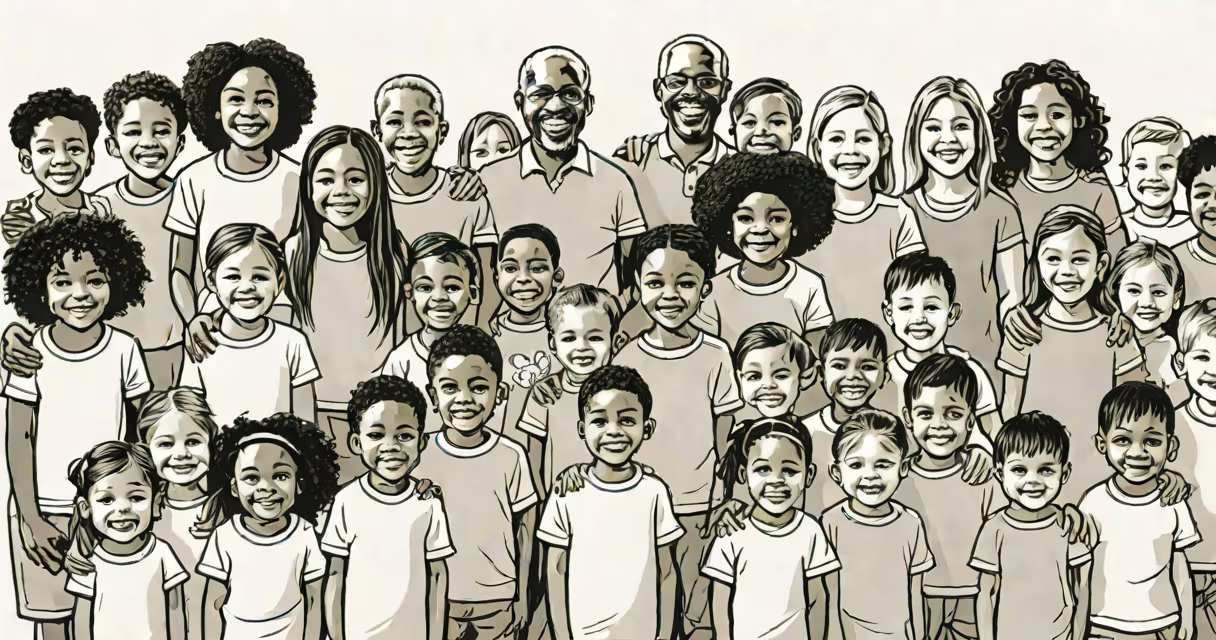
Champions for children are individuals, organizations, or movements that actively advocate for the safety, health, education, and rights of minors, especially those facing neglect, abuse, poverty, or systemic barriers. They work through policy reform, direct service, public awareness, and legal intervention to ensure children grow up in environments that support their development.
These advocates operate at multiple levels-local, state, national, and international. They may be social workers, teachers, lawyers, parents, faith leaders, or nonprofit staff. Their efforts often focus on preventing child maltreatment, improving access to healthcare and education, and ensuring equitable treatment under the law. The term is not limited to formal roles; anyone consistently acting in a child's best interest qualifies.
According to the National Child Traumatic Stress Network, early intervention by trained advocates reduces long-term psychological harm in abused children by up to 60%. This statistic underscores the measurable impact of consistent, informed advocacy. A champion doesn't just react to crises-they anticipate risks and build systems that prevent them.
Champions for children act through structured programs, legislative engagement, and community outreach. They assess risk factors such as family instability, exposure to violence, or lack of access to mental health services. When vulnerabilities are identified, they connect families to resources like food assistance, counseling, or housing support.
For example, a school counselor in Detroit noticed a spike in absenteeism among students from low-income neighborhoods. After investigating, she discovered many children were skipping school due to unaddressed dental pain. She partnered with a local clinic to provide free screenings and referrals. Within one semester, attendance rose by 22%, and no new cases of untreated tooth decay were reported. This is a real-world example of a champion identifying a hidden barrier and creating a solution.
Legal advocacy is another core function. In states like California and New York, child welfare attorneys file motions to remove children from dangerous homes when evidence shows ongoing abuse. These actions rely on detailed documentation, court testimony, and collaboration with social services. The National Association of Social Workers reports that 78% of children removed from abusive homes through legal intervention remain safe in build care or kinship placements for at least two years.
Champions for children fall into distinct categories based on their methods and focus areas:
| Type | Primary Focus | Example |
|---|---|---|
| Legal Advocates | Protecting children in custody disputes or abuse cases | A public defender representing a child in dependency court |
| Community Organizers | Building neighborhood networks to support vulnerable families | A parent coalition in Chicago that lobbied for after-school programs |
| Policy Makers | Shaping laws that affect child welfare and education | A state legislator who introduced mandatory reporting reforms |
| Healthcare Providers | Identifying developmental delays or signs of trauma | A pediatrician who screens for abuse during routine checkups |
Each role requires specialized training. For instance, healthcare providers undergo screening protocols endorsed by the American Academy of Pediatrics. These protocols include standardized questions about home life and behavioral changes. When red flags appear, providers refer cases to child protective services-often the first step in a chain of protection.
One widespread misconception is that champions for children are always government employees. In reality, most are volunteers or staff at nonprofits. The U.S. Department of Health and Human Services reports that 83% of child advocacy programs are run by private, non-profit groups. These organizations receive funding from grants, donations, and state contracts-but they are independent of direct government control.
Another error is equating "champion" with "hero." While some individuals gain public recognition, the work is rarely dramatic. Most champions spend weeks coordinating with caseworkers, attending meetings, and filling out forms. Their impact is cumulative, not headline-making. A single phone call to a hotline can initiate a child's rescue, but follow-up visits, therapy sessions, and court appearances span months or years.
There's also confusion between champions for children and general child care providers. A babysitter or teacher supports a child daily, but unless they report suspected abuse or push for systemic improvements, they aren't acting as a champion. The distinction lies in intent and action: champions don't just care-they intervene when necessary.
In 2021, a 12-year-old girl in rural Oregon began showing signs of severe anxiety and withdrawal. Her school nurse, trained in trauma-informed care, recognized symptoms consistent with prolonged exposure to domestic violence. She contacted the county's child advocacy center, which initiated a multi-agency response involving social workers, therapists, and law enforcement.
Over the next six months, the team secured temporary build placement, arranged weekly therapy, and helped the girl's mother access domestic violence shelters. The case was reviewed monthly by a multidisciplinary team. By year-end, the girl returned to school with improved grades and social participation. Her mother completed a recovery program and regained custody under supervision.
This outcome wasn't luck. It resulted from coordinated advocacy. The nurse didn't wait for a crisis. She acted on training, followed protocol, and connected the child to a network of support. That's what champions do-not solve problems overnight, but create conditions where healing is possible.
One personal insight: I once volunteered with a summer camp for displaced children in Appalachia. One boy, aged 9, had never seen a doctor. He carried a backpack full of worn clothes and a folded photo of his father. Through a local health initiative, we arranged a medical exam. He was diagnosed with untreated shingles-a condition that can cause nerve damage if left unmanaged. Shingles in children is rare but serious, and early treatment prevents complications. The boy received antiviral medication and follow-up care. His smile returned within days. That moment showed me that advocacy isn't abstract-it's a sequence of small, deliberate acts that change lives.
Champions for children are not a monolithic force. They are communities of practice united by purpose. Their work is measurable, documented, and rooted in evidence-based strategies. From classroom nurses to state lawmakers, they ensure that no child falls through the cracks.
Understanding champions for children reveals how collective responsibility shapes outcomes. When policies reflect their input, children live safer, healthier lives. Their presence is not optional-it is essential to a functioning society.