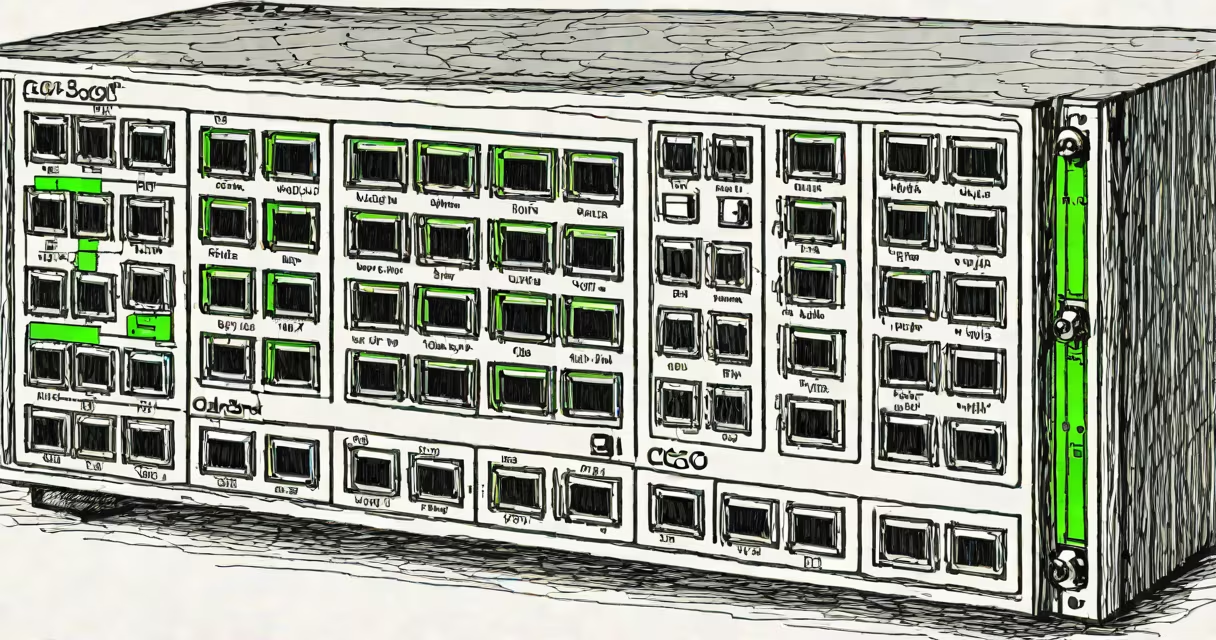
A cisco switch selector identifies the optimal network switch model based on port count, speed, power requirements, and management features. It ensures compatibility with existing infrastructure and supports current and future traffic demands.
Choosing the right switch begins with assessing your network's physical and performance needs. A cisco switch selector evaluates factors such as the number of devices to connect, required bandwidth, and whether the switch will support Power over Ethernet (PoE). For example, a small office with 15 devices and a few IP cameras may need a 24-port Gigabit switch with PoE, while a data center might require a 48-port 10GbE switch with stacking capability.
The process involves matching your environment to specific Cisco product lines. The Cisco Catalyst 2960-X series offers 24- or 48-port models with Gigabit Ethernet and PoE+, ideal for branch offices. The newer Cisco Catalyst 9200 series adds enhanced security, SD-Access integration, and centralized management via Cisco DNA Center. A cisco switch selector compares these options using criteria like maximum throughput, VLAN support, and remote monitoring tools.
A cisco switch selector uses technical specifications to match hardware to deployment scenarios. It filters options based on port density, speed, power delivery, and management interface. For instance, selecting a switch for a university classroom requires at least 24 ports, Gigabit speeds, and PoE to power wireless access points and video conferencing gear.
Modern selectors integrate with Cisco's product configurators and documentation. The Cisco Product Finder tool allows users to input parameters like "24 ports," "Gigabit Ethernet," and "PoE+" to generate a list of compatible switches. This reduces trial-and-error and prevents overspending on underused features.
For example, a school district upgrading its campus network selected a Cisco Catalyst 9200L 24-port switch after evaluating 11 models. The final choice supported 802.3at PoE+, had 10 Gb uplinks, and integrated with their existing Cisco Identity Services Engine (ISE) for device authentication. The selector confirmed that this model met all requirements and was available with a 3-year warranty.
Cisco offers several switch categories tailored to different environments. The table below outlines key models and their typical applications.
| Model Series | Ports | Speed | PoE Support | Best For |
|---|---|---|---|---|
| Cisco Catalyst 2960-X | 24 or 48 | Gigabit (10/100/1000) | Yes (PoE+) | Small to medium offices, branch locations |
| Cisco Catalyst 9200 | 24, 48 | Gigabit, 10Gb uplinks | Yes (PoE+) | Enterprise campuses, secure access networks |
| Cisco Nexus 9000 | 48, 96 | 10Gb, 40Gb, 100Gb | Yes (high-power) | Data centers, cloud environments |
| Cisco Small Business 240 Series | 24 | Gigabit | Yes (PoE) | Small businesses, retail stores |
Each series targets a distinct scale and complexity level. The 2960-X is cost-effective and easy to deploy, making it common in schools and retail chains. The 9200 series includes advanced security features like MACsec encryption and Secure Boot, which prevent unauthorized firmware changes. These features are critical in regulated industries such as healthcare and finance.
Non-obvious distinction: Not all PoE-capable switches deliver the same power output. A switch labeled "PoE" may support only 15.4 watts per port (802.3af), while PoE+ (802.3at) delivers up to 30 watts. The Cisco Catalyst 9200 supports PoE+ on all ports, enabling high-power devices like PTZ cameras and VoIP phones. Choosing a switch without checking PoE standards can result in devices failing to boot.
Many users assume that higher port counts automatically mean better performance. A 48-port switch doesn't outperform a 24-port model if both run at the same speed and have similar switching capacity. Performance depends on backplane bandwidth and ASIC processing power, not just port numbers.
Another error is overlooking management options. Basic switches require console access or web interfaces, while enterprise-grade models support SNMP, CLI, and integration with network orchestration platforms. A cisco switch selector flags this early-choosing a 9200 series switch enables automated provisioning through Cisco DNA Center, reducing configuration time.
I once configured a 24-port Cisco Catalyst 2960-X for a client's conference room. After installation, the AV system failed to connect. The issue wasn't the switch-it was the lack of VLAN tagging. The AV devices were on a separate VLAN, but the switch hadn't been configured to allow tagged traffic. A proper cisco switch selector would have flagged VLAN support as a requirement, preventing the misconfiguration.
Consider scalability and future growth. A switch with limited stacking capabilities may force replacement within five years. The Cisco Catalyst 9200 supports stacking up to 9 switches, allowing expansion without redesigning the network topology.
Power consumption matters too. A 48-port Gigabit switch with PoE can draw over 300 watts under load. Energy efficiency ratings like ENERGY STAR or EPEAT can reduce long-term costs. The Cisco Catalyst 9200 series meets ENERGY STAR v3.0 standards, consuming up to 30% less power than previous generations.
A cisco switch selector isn't a single tool. It's a structured method combining technical specs, deployment context, and vendor guidance. Use it to avoid overbuying, under-provisioning, or deploying incompatible hardware.