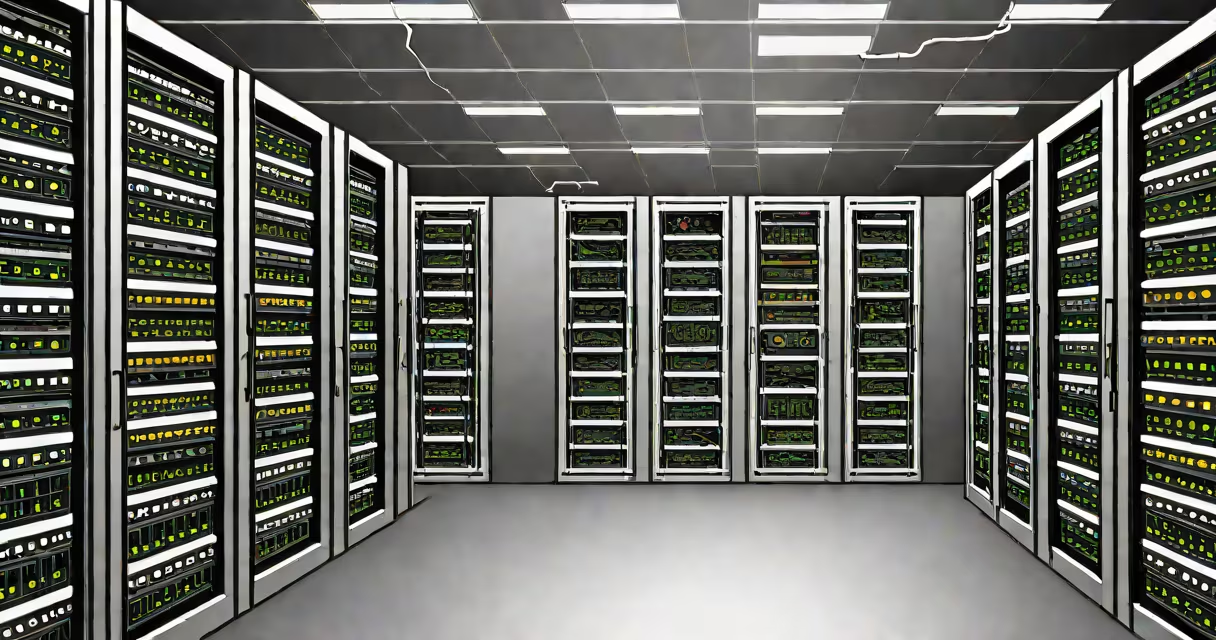
computer systems networking and telecommunications is the integration of technologies that enable computers and devices to communicate across distances using standardized protocols, physical media, and network architectures. This field governs how data moves between endpoints-from a smartphone sending a message to a server in another country-through wired, wireless, and optical systems.
At its core, computer systems networking and telecommunications relies on layered models such as the OSI and TCP/IP frameworks. These models define how data is packaged, routed, and delivered across interconnected systems. For example, when you send an email, your device formats the message into packets, assigns them destination addresses using IP protocols, and sends them through routers and switches until they reach the recipient's inbox.
The foundation of this system lies in physical infrastructure: copper cables, fiber optics, radio waves, and satellite links. These carry signals between nodes. The Internet itself is a vast network of networks-millions of interconnected systems using standardized communication rules. Without these shared standards, devices from different manufacturers couldn't exchange data reliably.
Data transmission begins when a user initiates an action-like loading a website. The device converts the request into digital signals, which travel through a local network to a gateway router. That router forwards the data to a service provider, which routes it across multiple core networks using BGP (Border Gateway Protocol).
Each packet contains metadata: source and destination IP addresses, port numbers, sequence identifiers, and error-checking codes. As packets traverse the internet, they may take different paths due to changing routing algorithms. Once they arrive at the destination, the receiving device reassembles them in order and processes the content.
A real-world example: streaming a video from Netflix. Your home router sends the request to Netflix's content delivery network (CDN). A CDN node near your location delivers the video in small chunks. The data flows over fiber-optic lines at speeds exceeding 1 Gbps, with latency under 50 milliseconds. This entire process happens in real time, relying on precise timing and error correction.
Networks consist of both physical and logical elements. Physical components include routers, switches, modems, antennas, and cabling. Logical components involve protocols, addressing schemes, and security mechanisms.
Common network types include:
| Type | Scope | Typical Use | Speed Range |
|---|---|---|---|
| LAN (Local Area Network) | Within a building or campus | Office Wi-Fi, school networks | 100 Mbps - 10 Gbps |
| WAN (Wide Area Network) | Across cities, countries, continents | Internet, corporate branch connections | 1 Mbps - 10 Gbps (varies) |
| MAN (Metropolitan Area Network) | City-wide coverage | Smart city infrastructure, municipal broadband | 100 Mbps - 1 Gbps |
| WLAN (Wireless LAN) | Short-range wireless | Home Wi-Fi, public hotspots | 150 Mbps - 9.6 Gbps (Wi-Fi 6/6E) |
Protocols like TCP, UDP, HTTP, and DNS ensure consistent behavior across diverse hardware. For instance, TCP guarantees delivery by retransmitting lost packets, while UDP prioritizes speed over reliability-ideal for live video streams.
Security is embedded throughout. Encryption protocols such as TLS protect data in transit. Firewalls filter traffic based on predefined rules. Access control lists (ACLs) restrict who can enter a network segment. Without these safeguards, sensitive data would be vulnerable to interception.
Many assume that "networking" only involves Wi-Fi or Ethernet cables. In reality, it spans everything from satellite communications to quantum key distribution. For example, Starlink uses low Earth orbit satellites to deliver broadband internet globally-even in remote regions where fiber isn't feasible.
Another misconception is that bandwidth equals speed. Bandwidth measures data capacity per second (e.g., 100 Mbps), while speed includes latency, jitter, and packet loss. A high-bandwidth connection with high latency (e.g., 100 Mbps but 200 ms delay) performs poorly for real-time applications like video conferencing.
Also, people often confuse "telecommunications" with "internet." Telecommunications refers to long-distance transmission of voice, video, and data-historically via telephone lines and radio. The internet is a global network built on telecommunications infrastructure but operates independently through its own protocols. You can have a telecom system without the internet, but not vice versa in modern contexts.
In a hospital, computer systems networking and telecommunications ensures patient safety and operational efficiency. Medical devices-ECG machines, MRI scanners, infusion pumps-are connected via a secure internal network. Their data flows to electronic health records (EHR) systems in real time.
For example, during surgery, a patient's important signs are transmitted wirelessly central dashboard. The network uses VLANs (Virtual Local Area Networks) to isolate medical traffic from administrative systems. If a surgeon requests imaging from a remote specialist, the system compresses the data, encrypts it with AES-256, and sends it over a private WAN link with guaranteed QoS (Quality of Service).
This setup prevents interference from non-critical traffic like staff emails. It also complies with HIPAA regulations requiring encrypted data storage and transmission. Failure in this system could delay diagnosis or compromise patient privacy.
I once observed a network outage during a cardiac procedure caused by a misconfigured firewall rule. The system blocked incoming telemetry from a remote monitoring station. The issue was resolved within 12 minutes after identifying the ACL conflict-but it underscored how deeply dependent healthcare operations are on stable networking and telecommunications.
According to the International Telecommunication Union (ITU), over 60% of the global population had access to the internet by 2023. This connectivity stems from decades of investment in computer systems networking and telecommunications. Fiber-optic cables now span oceans, carrying 100 terabits per second across transatlantic links.
Without these systems, e-commerce, remote work, cloud computing, and emergency response depend on unreliable or nonexistent channels. The 2020 pandemic highlighted this: organizations shifted to remote operations overnight, relying on stable networks to maintain productivity.
Emerging fields like autonomous vehicles, smart grids, and telemedicine require ultra-low latency and high reliability. 5G networks, designed for sub-10 millisecond response times, support these applications. They achieve this through massive MIMO (Multiple Input Multiple Output) antennas and edge computing-processing data closer to users rather than in distant data centers.
Understanding computer systems networking and telecommunications isn't just for IT professionals. It's essential for anyone using digital services. Knowing how data moves helps users make informed choices about privacy, performance, and reliability.