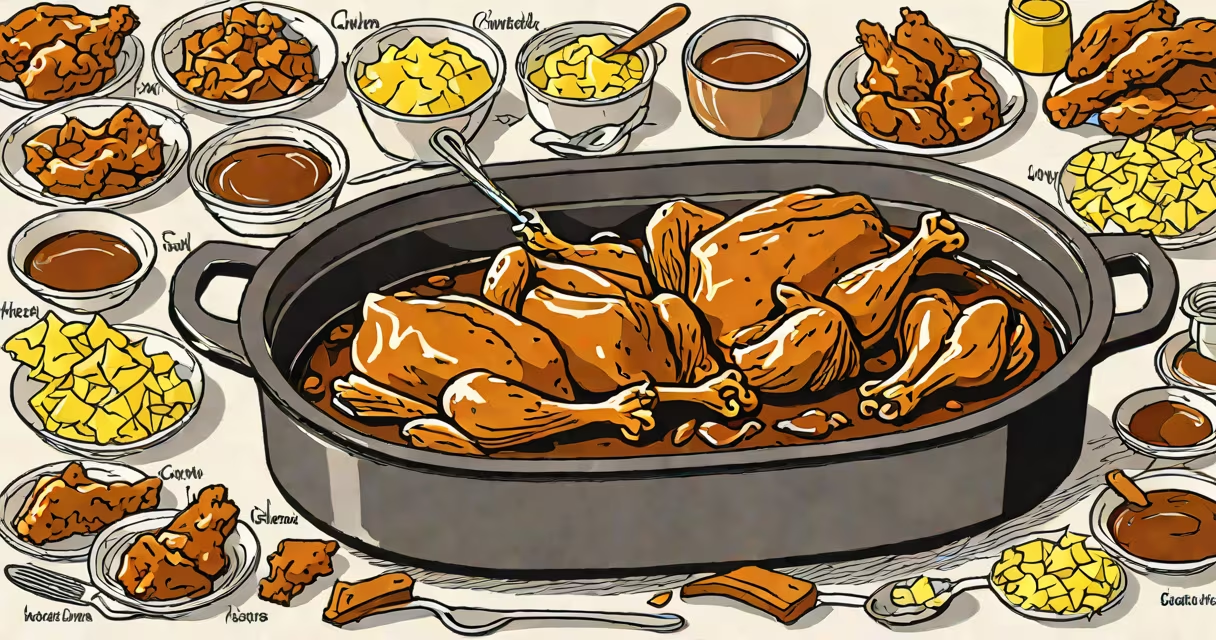
A crock pot chicken with gravy is a slow-cooked meal where bone-in chicken thighs or breasts simmer in broth and seasonings, resulting in fall-apart tenderness and a thickened, savory gravy formed from the natural juices and added thickener like flour or cornstarch.
This dish uses low, steady heat over 6-8 hours to break down connective tissue in the meat, releasing collagen that turns into gelatin. The result is moist, flavorful chicken and a deeply flavored sauce that develops complexity as it simmers. The method requires minimal attention-just combine ingredients, set the temperature, and walk away until dinner time.
It's ideal for home cooks seeking comfort food with little prep work. The slow cooking process enhances flavor through gradual melding of spices and liquids, producing a richer taste than stovetop methods. Unlike pressure cooking, which reduces cook time to 30-45 minutes, this method preserves texture and prevents overcooking.
Crock pot chicken with gravy relies on thermal conduction. The ceramic or stoneware insert retains heat evenly, circulating moisture around the food. As the chicken cooks, proteins denature and fibers relax, allowing the meat to absorb liquid and release natural fats and juices.
Gravy forms when starches from flour or cornstarch mix with the rendered fat and cooking liquid. When heated slowly, these components thicken without clumping. For best results, stir the mixture briefly before serving to distribute the thickener evenly.
For example, using 2 cups of chicken broth, 1 tablespoon of all-purpose flour, and 1 teaspoon of dried thyme yields a medium-bodied gravy. The flour is typically mixed with a small amount of cold water before adding to prevent lumps. This slurry is stirred into the pot during the last 30 minutes of cooking.
The base includes chicken (bone-in, skin-on thighs are preferred for richness), broth (chicken or vegetable), aromatics (onion, garlic, celery), and a thickening agent. Common additions include mushrooms, carrots, or frozen peas for color and texture.
Two common approaches differ in timing and technique:
| Method | Thickener Added | Best For | Time Required |
|---|---|---|---|
| Pre-thickened | Flour or cornstarch mixed with cold liquid | Consistent texture, fewer lumps | 6-8 hours |
| Post-thickened | Starch added after cooking, then reheated | More control over consistency | 8-10 hours (plus 10 min reheat) |
Using a pre-thickened method ensures even distribution. Post-thickening allows for adjustment after cooking but risks uneven thickening if not stirred thoroughly.
One non-obvious detail: the size of the crock pot matters. A 4-quart unit holds about 12 cups of liquid. Overfilling beyond ¾ capacity causes boiling over. Using a 6-quart pot with the same ingredients may dilute the gravy due to excess space and reduced concentration.
Many assume crock pot chicken with gravy requires expensive ingredients. In reality, a basic version uses pantry staples: canned broth, frozen vegetables, and flour. The flavor comes from long cooking, not premium components.
Another misconception is that the gravy must be served immediately. It actually improves after resting. Cooling the dish overnight thickens the gravy further due to gelatin setting. Reheating the next day yields a richer consistency than serving hot.
Some users try to speed up the process by increasing heat. This leads to uneven cooking and scorching. The low setting (around 200°F) maintains gentle simmering. High heat (around 300°F) causes rapid evaporation and can dry out the chicken.
I once prepared this dish using a 3.5-quart crock pot with 4 chicken thighs, 2 cups of low-sodium broth, ½ chopped onion, 2 cloves crushed garlic, and 1 tbsp flour. After 7 hours on low, the chicken pulled apart easily. The gravy had a deep amber hue and clung to the spoon. I added frozen peas in the last 30 minutes. Served over mashed potatoes, it was one of the most satisfying dinners I've made in months.
This recipe is popular in American households for family dinners, holiday leftovers, and meal prep. It's especially useful during holidays like Thanksgiving, when extra portions can be frozen and reheated later.
According to the USDA Food Safety and Inspection Service, slow cooking at temperatures above 140°F kills harmful bacteria like Salmonella and E. coli. The internal temperature of the chicken reaches 165°F within 4 hours, making it safe even if left unattended.
For those managing dietary restrictions, substitutions exist. Use gluten-free flour or cornstarch for a gluten-free version. Swap chicken broth for mushroom or vegetable broth to make it vegetarian. However, the dish loses its traditional profile without chicken stock.
When comparing to other slow cooker dishes, crock pot chicken with gravy stands out for its high yield of usable gravy. Unlike beef stew, which often ends with a thin broth, this dish produces enough sauce to serve 4-6 people with leftovers.
Chicken pot pie filling shares similar ingredients-chicken, vegetables, and thickened sauce-but differs in structure. While crock pot chicken with gravy is served as-is, chicken pot pie filling is baked under a crust. The filling itself can be made in the crock pot and transferred to a baking dish.
For a variation, replace the broth with apple cider and add a pinch of cinnamon and nutmeg. This creates a sweet-savory twist suitable for fall meals. The apples caramelize slightly, enhancing the gravy's depth.
When choosing between slow cooker and oven methods, consider time and convenience. Oven-baked chicken with gravy takes 2 hours at 350°F, requiring monitoring. Crock pot versions take longer but free up the kitchen. The trade-off is time versus effort.