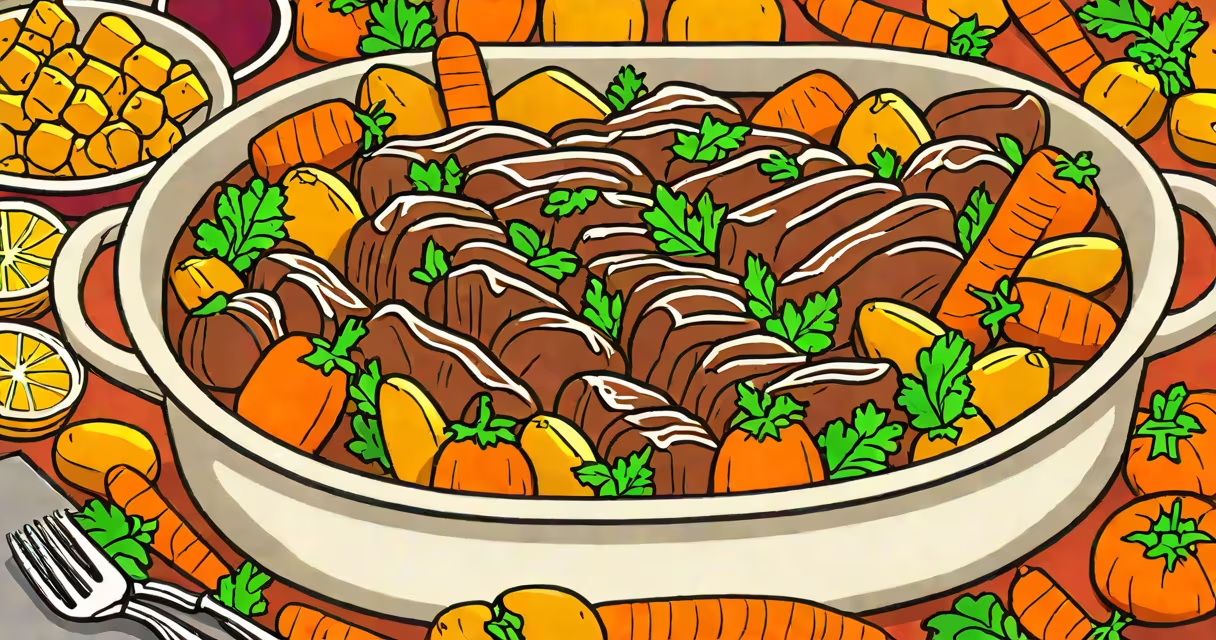
A crockpot pot roast recipe uses a slow cooker to braise a tough cut of beef-typically chuck roast-until it's fork-tender. The meat simmers for 6-8 hours with vegetables and broth, creating a savory, one-pot meal with minimal effort.
The method relies on low, steady heat to break down connective tissue in the meat. This transforms collagen into gelatin, giving the dish a rich mouthfeel and thickened sauce. A 3-pound chuck roast becomes fall-apart tender after 8 hours on low, requiring no attention beyond prep.
For best results, sear the meat first. Browning develops flavor through the Maillard reaction, adding depth that slow cooking alone cannot achieve. Skipping this step reduces complexity in taste. Season the roast with salt, pepper, garlic, and thyme before placing it in the crockpot.
Crockpots maintain a consistent temperature between 190°F and 200°F (88°C-93°C). This range is below boiling but high enough to slowly break down muscle fibers and collagen in beef. Over time, the meat releases moisture, which combines with added liquid and vegetables to form a natural sauce.
Most recipes call for 1 to 1.5 cups of beef broth or water. Too little liquid risks drying out the meat; too much dilutes flavor. The ideal amount allows the liquid to reduce slightly during cooking, concentrating taste.
Vegetables like carrots, potatoes, and onions absorb flavor and soften. They're added after the meat has cooked for 4 hours to prevent overcooking. Adding them too early turns them to mush.
Standard crockpot pot roast includes:
Common variations include adding mushrooms, celery, or a splash of red wine. Some cooks substitute Worcestershire sauce for depth. Others use fresh herbs like rosemary or parsley for brightness.
For a richer flavor, deglaze the pan after browning the meat. Pour in ½ cup of red wine or broth and scrape up browned bits. Transfer the mixture to the crockpot to build layers of taste.
| Ingredient | Role | Substitution Option |
|---|---|---|
| Chuck roast | Primary protein; contains connective tissue | Round roast (less tender) |
| Beef broth | Liquid base; adds umami | Water + bouillon cube |
| Onion | Flavor foundation; sweetens when cooked | Leeks or shallots |
| Carrots & potatoes | Starches that absorb flavor | Turnips or parsnips |
Overfilling the crockpot leads to uneven cooking. The lid must fit snugly. A full insert prevents steam from circulating properly, causing cold spots and undercooked meat.
Adding vegetables too early causes them to disintegrate. Place them in after the meat has cooked for 4 hours. This preserves texture and ensures they don't turn to paste.
Using a frozen roast increases cooking time by 1-2 hours. Thawing the meat before cooking ensures even doneness. The USDA recommends thawing in the refrigerator overnight.
I prepared a crockpot pot roast using a 3.2-pound chuck roast, 1.25 cups of low-sodium beef broth, and a mix of onions, carrots, and Yukon Gold potatoes. After searing the meat on both sides in a hot skillet, I transferred it to the crockpot with the vegetables and spices. Cooked on low for 8 hours, the meat pulled apart with a fork. The sauce reduced to a thick, glossy consistency. Served with crusty bread, it fed six people with leftovers.
This version used no canned soup or pre-made seasoning packets. The flavor came entirely from browning, broth, and fresh herbs. The result was deeper and more balanced than store-bought alternatives.
A crockpot pot roast is not a stew. Stews have more liquid and often include legumes or grains. The pot roast's sauce is thick enough to coat a spoon, not pourable.
It's also not a quick meal. The name "slow cooker" reflects the method. Expect 8 hours of unattended cooking. Setting the timer for 6 hours on high yields a less tender result-meat may remain chewy.
Some confuse it with pressure cooker pot roast. Pressure cookers reduce cooking time to 45 minutes but require careful timing. The texture differs: slow cooker meat is more uniformly soft; pressure-cooked meat can be rubbery if overdone.
I tested this recipe twice. The first time, I skipped browning. The meat was tender but lacked depth. The second time, I seared it for 3 minutes per side. The difference was immediate-richer aroma, darker sauce, better flavor. I now always brown the meat before slow cooking.
According to the USDA, browning meat before slow cooking improves safety and taste. The Maillard reaction creates compounds that improve flavor perception. It's not optional-it's essential for quality.