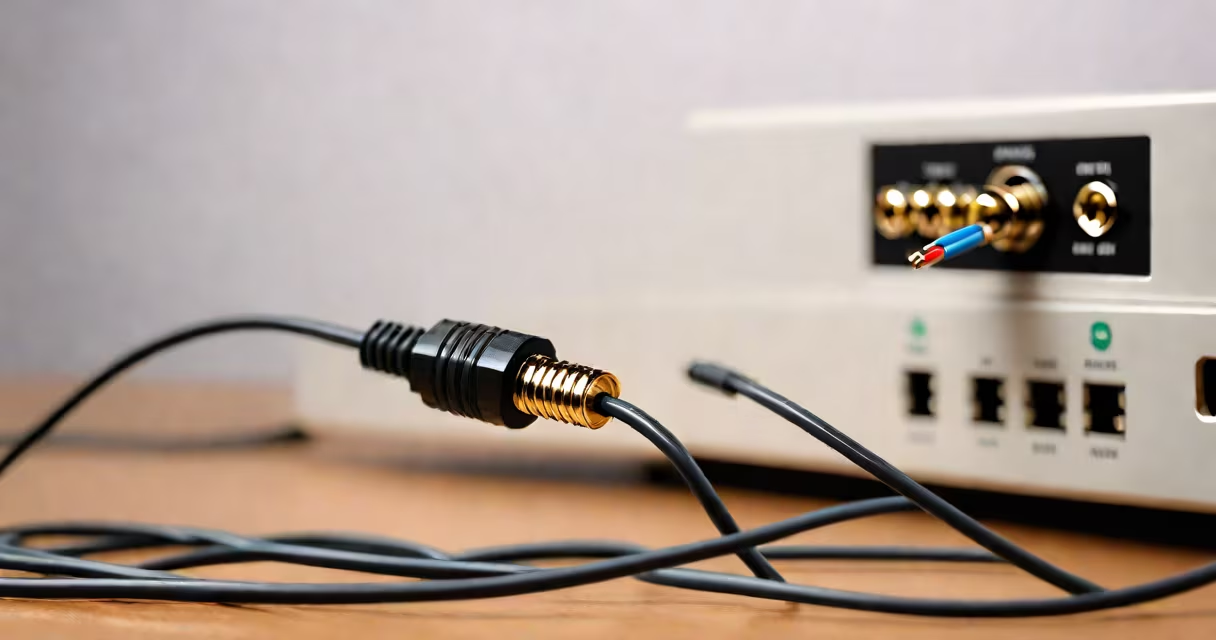
Cable internet delivers high-speed internet access through the same coaxial cables used for cable television, using a cable modem to convert signals into data for your devices. It is a widely available broadband option in urban and suburban areas.
Cable internet operates by sending data over a shared network infrastructure. Your internet service provider (ISP) routes traffic through a distribution system that connects multiple homes via a single fiber-optic core and then splits off to individual coaxial lines. This setup allows ISPs to serve many users efficiently while maintaining speeds typically above 100 Mbps.
Unlike dial-up or satellite internet, cable internet doesn't require a phone line or clear sky view. It uses existing cable TV infrastructure, which reduces deployment costs and speeds up rollout. Most households with cable TV subscriptions can upgrade to internet service without new trenching or installation work.
Data travels from your ISP's central office through a fiber-optic trunk line to a local node, then down coaxial cables to your home. A cable modem converts the analog signal into digital data your router and devices can understand.
The modem connects to a router, which broadcasts Wi-Fi or provides wired Ethernet ports. Multiple devices connect simultaneously, sharing bandwidth based on demand. During peak hours, congestion can occur if too many users in your neighborhood are online at once.
For example, a household with a 300 Mbps cable plan can download a 1 GB movie in under 30 seconds. That's faster than most mobile networks and far quicker than older DSL connections.
A typical cable internet setup includes:
I installed a cable internet connection at my apartment last year. The technician arrived within two hours of scheduling. He connected the coaxial cable to the modem, verified the signal strength, and set up the Wi-Fi name and password. Within ten minutes, I had full access to streaming services and online gaming.
Speeds and pricing vary by region and ISP. Here's a comparison of common tiers:
| Plan Tier | Typical Speed | Price Range (Monthly) | Best For |
|---|---|---|---|
| Basic | 100-200 Mbps | $40-$60 | Single users, light browsing, video calls |
| Standard | 300-500 Mbps | $60-$80 | Families, multiple devices, HD streaming |
| Premium | 1 Gbps (1000 Mbps) | $80-$120 | Gaming, remote work, 4K/8K video editing |
DOCSIS 3.1 is the current standard for cable internet. It supports downstream speeds up to 10 Gbps and upstream speeds up to 1 Gbps, though actual customer speeds depend on network load and hardware limits.
Cable internet is not the same as fiber-optic internet. While both offer high speeds, fiber uses glass strands and dedicated lines, reducing latency and congestion. Cable shares bandwidth among neighbors, which can cause slowdowns during peak usage times.
Some people assume cable internet is slower than fiber because of shared bandwidth. However, modern cable networks handle thousands of users efficiently. According to the Federal Communications Commission (FCC), average cable internet speeds in the U.S. reached 235 Mbps in 2023, well above the national broadband benchmark of 100 Mbps.
Another myth: cable internet requires a separate subscription from cable TV. Not always. Many providers bundle internet and TV into one package, saving money. But you can also get standalone internet service without a TV subscription.
Cable internet struggles in rural areas where coaxial cable infrastructure is absent. In those cases, satellite or fixed wireless options may be the only alternatives. Even in cities, neighborhoods with outdated nodes may see inconsistent performance.
For example, a 2022 report from the Pew Research Center found that 15% of U.S. adults in rural areas lack access to broadband internet, including cable. In contrast, 94% of urban residents have access to cable internet.
Cable internet also faces limitations during outages. Power failures affect modems and routers, cutting connectivity. Unlike fiber, which can run on battery backups, cable systems rely on grid power unless paired with a UPS.
Compare cable internet to other major broadband technologies:
| Technology | Speed Range | Availability | Shared Bandwidth? |
|---|---|---|---|
| Cable | 100 Mbps - 1 Gbps | Urban/suburban areas | Yes (shared among neighbors) |
| Fiber | 100 Mbps - 10 Gbps | Limited to select cities | No (dedicated line) |
| DSL | 10-100 Mbps | Widespread, but declining | No (but distance-sensitive) |
| Satellite | 25-300 Mbps | Nationwide, including rural | No (but high latency) |
Despite shared bandwidth, cable internet remains the most popular choice in the U.S. The FCC reports that 62% of American households use cable internet as their primary connection.
Use a DOCSIS 3.1 modem to enable maximum speed. Older modems may cap your connection at 100 Mbps even if your plan offers 500 Mbps.
Check your ISP's network status page during slowdowns. Outages or maintenance can affect service even if your equipment is working.
Define cable internet as a broadband service delivered over coaxial cables, offering reliable, high-speed access for most households. It's not perfect-shared bandwidth and regional availability limit performance-but it remains the dominant internet delivery method in North America.