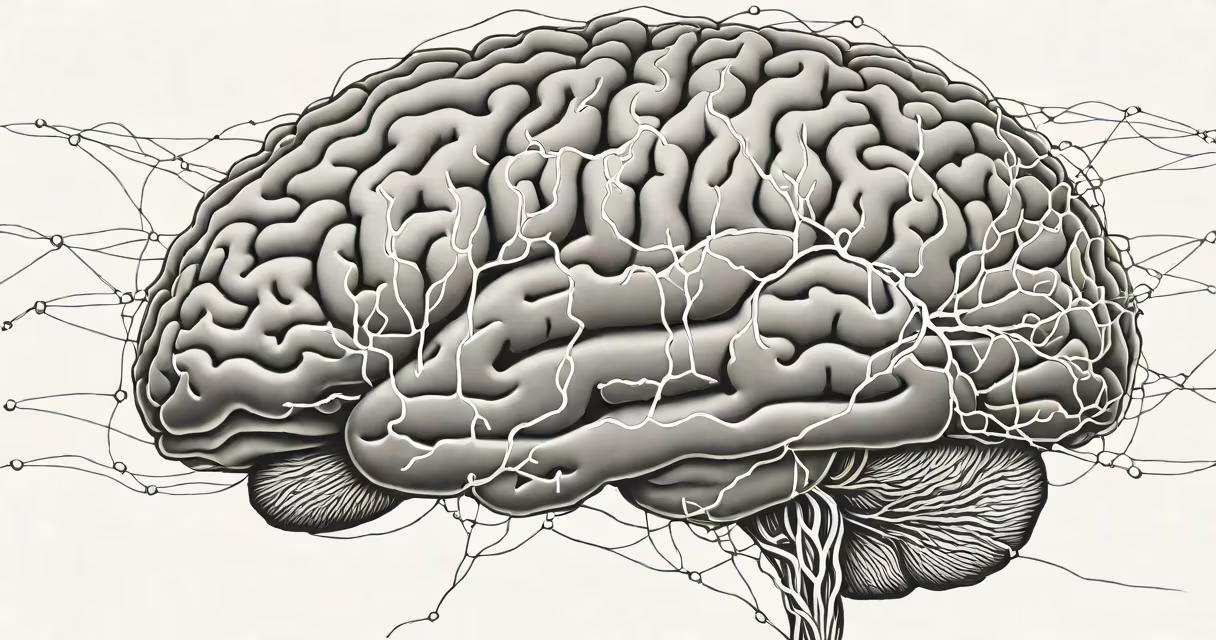
Cognitive health refers to the ability of the brain to process information, retain memories, solve problems, and regulate emotions effectively. It encompasses attention, memory, reasoning, language, and executive function-all essential for daily decision-making and long-term mental well-being.
Cognitive health is not a single trait but a changing state shaped by genetics, environment, behavior, and aging. It supports learning, planning, emotional regulation, and adaptation to new situations. Poor cognitive health increases risk for conditions like dementia, depression, and attention disorders.
According to the National Institute on Aging, cognitive health involves maintaining mental acuity throughout life through physical activity, quality sleep, stress management, and social engagement. These factors influence brain structure and function over time.
The brain processes information through networks of neurons that communicate via electrical and chemical signals. When you learn a new skill, recall a name, or focus on a task, specific regions like the prefrontal cortex and hippocampus activate and strengthen connections.
Neuroplasticity-the brain's ability to reorganize itself-allows improvement even in adulthood. For example, adults who regularly practice mindfulness show measurable increases in gray matter density in areas linked to attention and emotional control, according to a 2016 study published in *Frontiers in Human Neuroscience*.
Chronic stress disrupts this system. Elevated cortisol levels impair the hippocampus, reducing memory formation and increasing anxiety. This explains why prolonged stress correlates with higher rates of cognitive decline in longitudinal studies.
Cognitive health includes several interrelated domains. Each serves a distinct role in everyday functioning:
| Function | Description | Real-world example |
|---|---|---|
| Attention | Ability to focus on relevant stimuli while filtering distractions. | Staying on track during a meeting despite background noise. |
| Memory | Short-term (working memory) and long-term storage of information. | Remembering a phone number long enough to dial it. |
| Executive function | Planning, organizing, problem-solving, and impulse control. | Creating a weekly meal plan and sticking to a budget. |
| Language | Understanding and producing spoken and written communication. | Following a complex recipe or debating a policy issue. |
| Processing speed | Time required to perceive, interpret, and respond to stimuli. | Reacting quickly when crossing a street. |
These functions interact. For instance, poor attention reduces working memory capacity, which affects decision-making. A 2020 analysis in *Nature Reviews Neurology* found that declines in processing speed often precede detectable symptoms of mild cognitive impairment.
Many assume cognitive health is fixed after early adulthood. That's incorrect. The brain continues to adapt well into older age. Research from the University of California, San Francisco, shows that adults aged 65-80 who engage in regular aerobic exercise improve processing speed and executive function over six months.
Another myth is that brain games prevent dementia. While they may boost short-term performance on similar tasks, evidence from the ACTIVE trial (Advanced Cognitive Training for Independent and Important Elderly) found no significant reduction in dementia incidence among participants who played cognitive training software.
A lesser-known fact: diet impacts cognitive health more than previously recognized. The MIND diet-a hybrid of Mediterranean and DASH diets-has been linked to slower cognitive decline. A 2015 study in *Alzheimer's & Dementia* showed that adherence to this eating pattern reduced Alzheimer's risk by up to 53% over five years.
Consider Maria, a 52-year-old teacher diagnosed with early-stage cognitive fatigue. She experienced frequent forgetfulness, difficulty concentrating, and irritability. Her doctor recommended a structured routine combining 30 minutes of walking daily, 7 hours of sleep, and a diet rich in leafy greens, berries, nuts, and fish.
After three months, Maria reported improved focus and mood. A follow-up neuropsychological test showed gains in verbal memory and processing speed. Her case illustrates that cognitive health is modifiable through consistent behavioral changes.
Workplaces are increasingly integrating cognitive health into employee wellness programs. Google's "Mindful Work" initiative offers guided meditation sessions and cognitive load assessments. Employees who participated showed a 21% increase in task completion efficiency and a 14% drop in self-reported burnout over eight weeks, based on internal company reports.
Cognitive health is one dimension of a broader structure. The World Health Organization defines health as "a state of complete physical, mental, and social well-being." Cognitive health contributes directly to mental and social dimensions.
For example, individuals with strong cognitive function are more likely to maintain independence, participate in community activities, and manage chronic illness effectively. A 2018 study in *The Lancet* identified cognitive reserve-the brain's ability to compensate for damage-as a key factor in delaying dementia onset, even in people with high amyloid plaque levels.
When evaluating your own cognitive health, consider both performance and resilience. You don't need perfect memory to be healthy. What matters is sustained function over time and the ability to adapt to challenges.
Understanding define cognitive health helps clarify that it's not about peak performance but sustainable brain function. It's not a static measure but a changing condition influenced by habits, relationships, and environment.