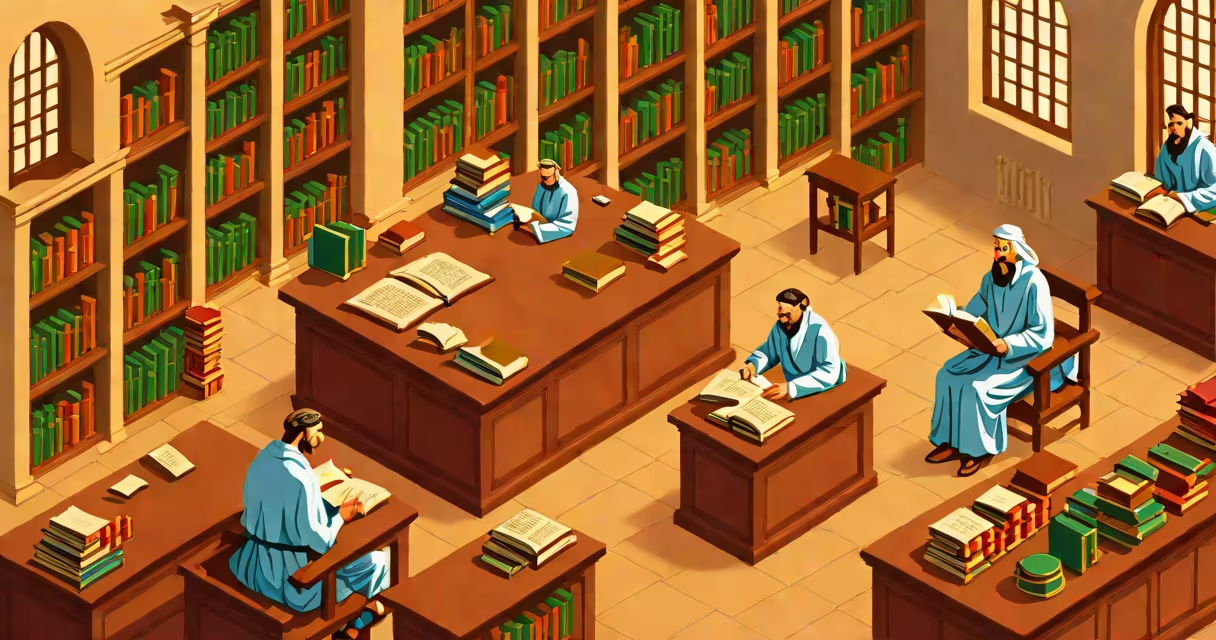
Theology is the academic and reflective study of the nature, attributes, and existence of God, as well as the beliefs, practices, and experiences associated with religious traditions. It involves analyzing sacred texts, doctrines, rituals, and ethical teachings through philosophical, historical, and linguistic lenses.
The term originates from the Greek *theologia*, meaning "discourse about God," combining *theos* (God) and *logia* (study or discourse). Early uses appear in the works of philosophers like Plato and later in Christian writings such as those of Pseudo-Dionysius. Modern theology emerged as a formal discipline during the medieval period, particularly within universities in Europe.
Theology is not limited to Christianity. It encompasses Islamic *kalam*, Jewish *halakha* and *mysticism*, Hindu *darshana*, and Buddhist philosophical traditions. Each tradition develops its own theological frameworks based on scripture, revelation, and interpretive methods.
Theology functions through structured inquiry. Scholars examine religious texts using historical-critical methods, comparing versions, dating manuscripts, and identifying authorial intent. They analyze doctrinal statements for consistency and evolution over time. For example, the Nicene Creed was formulated in 325 CE to clarify Christ's divinity amid theological disputes.
Modern theology often integrates philosophy, anthropology, and ethics. Systematic theology organizes beliefs into coherent systems-such as the doctrine of the Trinity in Christianity. Practical theology applies theological insights to real-world contexts like pastoral care, social justice, and interfaith dialogue.
Some theologians use hermeneutics-the theory and practice of interpretation-to decode layered meanings in scripture. A passage like Matthew 25:31-46 (the Judgment of the Nations) is interpreted symbolically, historically, and ethically.
Theological work falls into several categories, each serving distinct purposes:
| Type | Description | Example |
|---|---|---|
| Systematic | Organizes beliefs into logical structures around core themes like God, sin, salvation. | Reformed theology's emphasis on divine sovereignty. |
| Biblical | Focuses on interpreting scripture using linguistic, historical, and literary analysis. | Using Dead Sea Scrolls to understand Second Temple Judaism. |
| Practical | Applies theology to ministry, counseling, and community life. | Designing worship services that reflect liturgical theology. |
| Constructive | Develops new theological models in response to contemporary issues. | Environmental theology addressing climate change as a moral crisis. |
These types are not mutually exclusive. A course in Christian theology may combine biblical exegesis, systematic structure, and practical application in a single semester.
Theology shapes religious education, seminary training, and public policy debates. In seminaries, students study theology to prepare for ordained ministry. Courses cover topics like sacramental theology, ecclesiology (church doctrine), and eschatology (end times).
Religious institutions rely on theology to maintain doctrinal coherence. The Catholic Church's Catechism, published in 1992, is a complete theological reference. It defines concepts like original sin, grace, and the role of the Virgin Mary using centuries of theological reflection.
Public discourse also draws on theology. When politicians discuss abortion, same-sex marriage, or refugee policy, they often cite religious values rooted in theological principles. Theologians contribute to these conversations by offering ethical interpretations grounded in scripture and tradition.
Theology is not synonymous with faith. Faith is personal conviction; theology is disciplined analysis. Someone can have deep faith without formal theological training. Conversely, a person may study theology rigorously without being personally religious.
A common error is equating theology with preaching. While sermons may draw on theological ideas, theology itself is academic. Preaching aims to inspire or instruct congregants; theology seeks to understand and explain.
Another misconception is that theology is static. In reality, it evolves. The Protestant Reformation in the 16th century challenged Catholic theology, leading to new interpretations of justification by faith alone. These shifts were driven by theological debate, not just political or cultural forces.
For example, the 1965 Second Vatican Council reformed Catholic liturgy and doctrine. The document *Lumen Gentium* redefined the church's relationship to other religions-a significant shift from earlier exclusivist views. This change stemmed from theological reflection, not mere policy adjustment.
I once attended a theology seminar at a university where scholars debated whether divine omnipotence contradicts human free will. One professor cited Augustine's *On Free Will* (389 CE), arguing that God's foreknowledge doesn't eliminate choice. Another pointed to Kierkegaard's *Fear and Trembling*, which frames faith as a paradox beyond logic. The discussion revealed how theology operates not just as doctrine, but as ongoing intellectual wrestling.
Theology differs from related disciplines in method and focus:
While these fields intersect, theology centers on belief systems and their internal logic. It assumes the possibility of divine revelation and seeks to understand it systematically.
Not all theology is institutional. Some forms arise from lived experience. Liberation theology, developed in Latin America in the 1960s, emerged from the realities of poverty and oppression. Theologians like Gustavo Gutiérrez argued that God's presence is most seen in the struggles of the poor. This movement reshaped Catholic social teaching and influenced global development policies.
This shows that theology isn't confined to libraries or classrooms. It grows from social engagement, protest, and community life.
The word theology refers to the reasoned study of God and religious belief. It is not faith itself, nor is it merely religious instruction. Theology examines sacred texts, doctrines, and traditions using critical, historical, and philosophical tools. Its purpose is understanding-not persuasion.
Understanding theology helps clarify differences between faith, philosophy, and cultural studies. It reveals how beliefs are constructed, defended, and transformed. Whether in a classroom, a sermon, or a social justice campaign, theology remains central to how people make sense of the sacred.