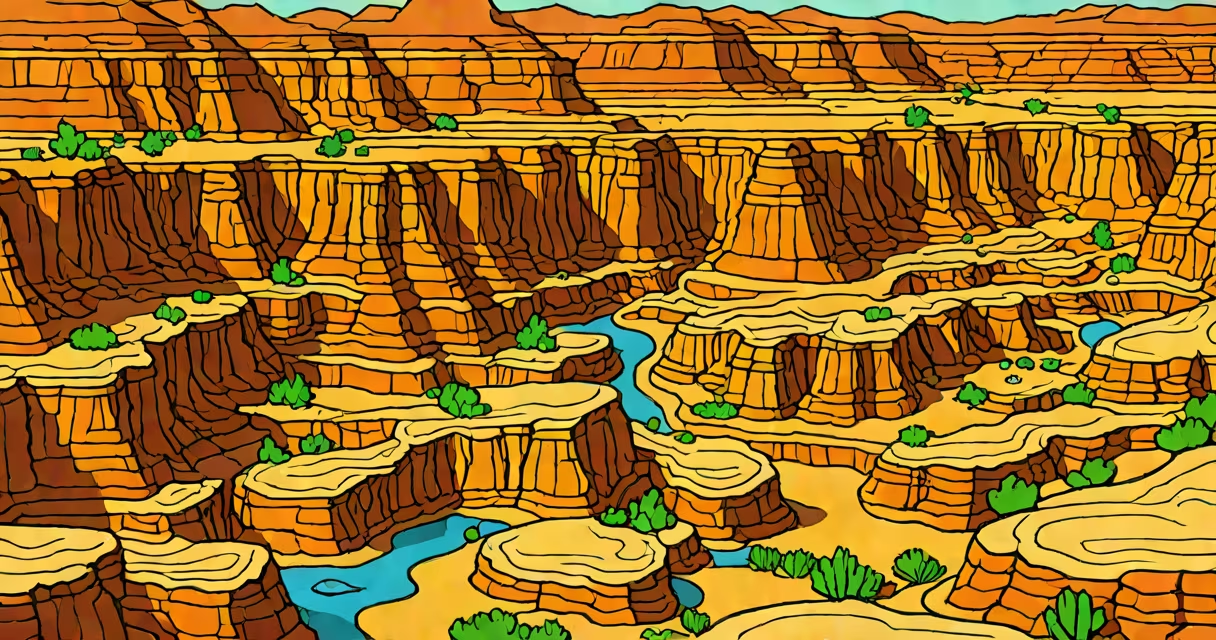
Sedimentary rock forms when mineral or organic particles accumulate, compact, and cement together over time under pressure. These rocks originate at Earth's surface through weathering, transport, deposition, and lithification-processes that change loose sediment into solid stone.
Sedimentary rock makes up about 75% of Earth's exposed crust, according to the United States Geological Survey (USGS). Unlike igneous or metamorphic rocks, which form from heat and pressure deep underground, sedimentary rocks grow slowly at or near the surface. They preserve evidence of past environments, including fossils and climate patterns.
The process begins when existing rocks break down through weathering-physical, chemical, or biological processes that fragment or dissolve rock. Wind, water, ice, or gravity then carry the broken-down material away. This transported debris settles in layers in lakes, oceans, deserts, or riverbeds. Over thousands to millions of years, weight from new layers squeezes out water and air, and minerals like calcite or silica bond the grains together. The result is a solid rock layer.
Sedimentary rocks fall into three main categories based on their origin: clastic, chemical, and organic.
| Type | Formation Process | Common Examples | Key Characteristics |
|---|---|---|---|
| Clastic | Fragmented pieces of pre-existing rocks | Sandstone, shale, conglomerate | Grain size determines name; sorted by water or wind energy |
| Chemical | Minerals precipitate from water solutions | Limestone, rock salt, chert | Form in evaporating seas or hot springs; often crystalline |
| Organic | Decomposed plant or animal remains accumulate | Coal, some limestones | Rich in carbon; formed in swamps or shallow seas |
For example, sandstone forms when sand-sized quartz grains settle in a riverbed or desert dune. Over time, groundwater rich in dissolved silica seeps through the sand. As water evaporates, silica crystals grow between the grains, binding them into a solid rock. A single sandstone layer may represent decades of deposition, compressed over millennia.
Shale, another common sedimentary rock, forms from clay-sized particles. These fine grains settle slowly in calm water, such as lake bottoms or deep ocean floors. After burial, compaction removes most pore space. Shale often splits into thin sheets due to aligned clay minerals-a feature visible in roadcuts and quarries.
Sedimentary rocks record Earth's history. Fossils preserved in layers provide direct evidence of ancient life. For instance, the Burgess Shale in British Columbia contains exquisitely preserved soft-bodied organisms from the Cambrian period, around 508 million years ago. These fossils help scientists understand early animal evolution.
Geologists use sedimentary rock layers to reconstruct past climates. Alternating bands of dark and light rock in formations like the Navajo Sandstone indicate shifts between wet and dry periods. The presence of ripple marks or mud cracks in a rock layer reveals whether it formed in a stream, tidal flat, or desert.
These rocks also supply natural resources. Coal, formed from buried peat in ancient swamps, fuels power plants worldwide. Limestone is crushed for cement, while sandstone and shale host oil and gas trapped in tiny pores. The Bakken Formation in North Dakota, composed of shale, holds significant oil reserves discovered through horizontal drilling.
Many assume sedimentary rock forms quickly. In reality, formation takes thousands to millions of years. A single meter of sedimentary rock may take 10,000 to 100,000 years to deposit, depending on the environment. Rapid accumulation occurs only in extreme events like floods or volcanic ash falls-but those are exceptions.
Another misconception is that all sedimentary rocks contain fossils. While many do, especially in marine settings, others like pure quartz sandstone or rock salt lack biological remains. Fossil preservation requires specific conditions: low oxygen, rapid burial, and minimal disturbance.
A key distinction lies in the difference between sediment and sedimentary rock. Sediment is loose material-sand, silt, clay-before it becomes rock. The transformation is called lithification. This process includes compaction (reducing volume under weight) and cementation (mineral precipitation filling gaps).
I once observed a field exposure of layered sandstone and shale in Utah's Canyonlands National Park. The alternating beds showed clear changes in grain size and color. Using a hand lens, I saw ripple marks in one layer-evidence of ancient water flow. That site exemplifies how sedimentary rock records changing environments over time.
Understanding the definition of sedimentary rock helps interpret landscapes, locate resources, and study Earth's past. When examining a rock outcrop, look for layering, grain size, and fossil content. These clues reveal the story of how the rock formed and what Earth was like when it did.