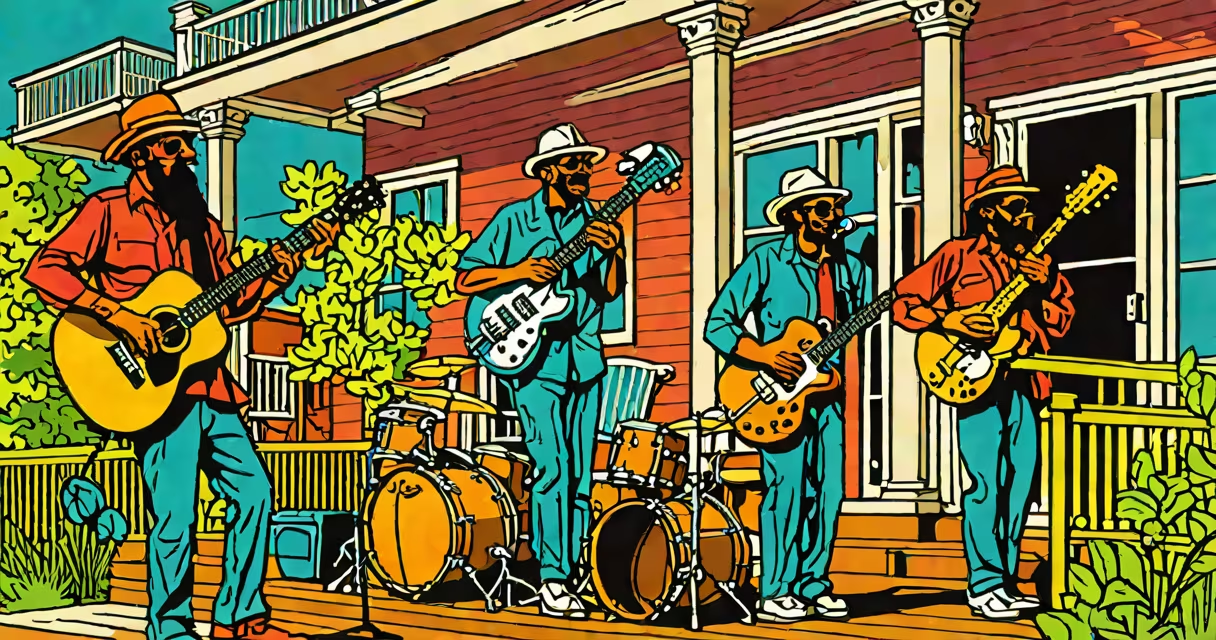
Denver Porch Fest is an annual outdoor music event where local musicians perform live on private porches across residential neighborhoods in Denver. The festival spans multiple days and features hundreds of acts across dozens of homes, creating a citywide listening experience without formal stages or ticketed entry.
Organized by grassroots volunteers and supported by local arts groups, Denver Porch Fest turns residential streets into informal performance zones. Attendees walk or bike between houses, choosing which porch to visit based on genre, mood, or surprise discovery. The event runs from late spring through early summer, typically overlapping with Denver's peak patio season.
Unlike traditional festivals, Denver Porch Fest has no central venue. Instead, it relies on homeowner participation-hosts open their porches to performers and audiences alike. The format encourages intimate, low-key interactions between artists and listeners, fostering a sense of neighborhood connection rarely seen at larger concerts.
Each year, organizers publish a map of participating homes and a schedule of performances. Hosts submit their addresses and preferred performance times. Musicians apply through a public call for artists, with selection based on diversity of genre, geographic spread, and adherence to noise guidelines.
Attendees receive a printed guide or access a digital map via a dedicated app. They start at one address and move through neighborhoods at their own pace. Most shows last 30 to 45 minutes, allowing time to hop between locations. Some hosts offer water, snacks, or seating; others expect guests to bring their own.
Sound levels are strictly monitored. Organizers require performers to use battery-powered amplifiers or acoustic instruments only. This keeps volume low enough to avoid disturbing neighbors while still allowing clear sound for nearby listeners. Noise complaints are rare due to these rules and the event's limited duration-typically 6-8 hours per day.
The festival showcases many genres, reflecting Denver's diverse musical culture. Genres include indie rock, folk, jazz, electronic, hip-hop, Latin fusion, and experimental noise. Acts range from solo singer-songwriters to full bands and even spoken word ensembles.
| Type | Typical Setup | Example Act |
|---|---|---|
| Acoustic Solo | Chair, guitar, small amp | Local folk artist playing original songs in a Capitol Hill backyard |
| Small Band | Two microphones, portable PA, drum kit | Indie pop trio from RiNo using battery-powered gear |
| Spoken Word/Performance Art | Reading chair, projector, ambient lighting | Community poet reciting pieces about urban change in Five Points |
One non-obvious rule: no amplified bass drums. This prevents low-frequency vibrations from rattling windows in nearby homes. Instead, many drummers use hand-held percussion or electronic triggers. A 2023 survey by the Denver Arts & Venues Office found that 89% of attendees reported feeling "connected to the neighborhood" during the event-higher than any other city-wide music festival in Colorado.
Denver Porch Fest takes place in neighborhoods like Capitol Hill, Highland, Sunnyside, and West Colfax. These areas were chosen for their mix of older homes with wide porches, pedestrian-friendly streets, and strong community ties. The event avoids high-traffic roads and focuses on quiet residential blocks.
Hosts must sign a liability waiver and agree to follow noise and safety guidelines. Organizers provide reusable signage, trash bags, and a protocol for handling unexpected issues like rain or power outages. In 2022, 37% of hosts reported attending at least one show themselves-many said they discovered new favorite artists this way.
Why it exists: Denver has a long history of DIY music scenes. The festival began in 2011 as a one-day experiment by a group of friends who wanted to share music without commercial pressure. Now it draws over 10,000 attendees annually and supports nearly 200 local artists through honorariums and sponsorships. According to the Colorado Music Association, 68% of participating musicians reported increased visibility and booking opportunities after appearing at Denver Porch Fest.
Many assume Denver Porch Fest is a single large concert. It is not. There is no headliner, no stage, no VIP section. The experience is fragmented by design-intentionally decentralized to avoid crowding and preserve the home-based feel.
Another myth: it's only for acoustic music. Not true. While acoustic sets dominate, electronic acts have performed using solar-powered speakers and Bluetooth setups. One 2023 act-a lo-fi producer from Berkeley-used a 12-volt battery pack and a custom-built speaker range to play ambient beats on a rooftop porch in Highland.
A common mistake is confusing Denver Porch Fest with similar events in other cities. Portland's Porchfest and Austin's Backyard Blues are related in concept but differ in scale and structure. Denver's version is unique in its integration with city planning. The Denver Department of Public Works helped reroute traffic during peak hours in 2023, and the city provided free compost bins at key intersections to reduce waste.
I attended Denver Porch Fest in 2022 with a friend. We started near 15th and Champa, walked south toward East 13th Avenue, and ended at a house in Sunnyside where a jazz trio played under string lights. We didn't plan our route-we just followed the crowd and the music. At one porch, a woman was singing blues in Spanish while her dog napped beside her. Another act played a loop-based set using only a ukulele and a foot pedal. We never stayed more than 20 minutes at any one spot, but we heard 17 different acts in four hours.
What stood out wasn't the music-it was the environment. People sat on steps, brought blankets, and chatted between sets. A man offered us lemonade from his kitchen window. No one asked for money. No one rushed. It felt like a shared secret among neighbors.
Homeowners can apply to host by visiting the official website and submitting a form with their address, porch dimensions, and availability. Artists must apply through the same portal and provide a demo link. Applications open in January and close in March. Selected participants receive a confirmation email and a toolkit with instructions for setup, guest etiquette, and emergency contacts.
Volunteers help with mapping, outreach, and on-site coordination. Roles include route guides, sound monitors, and waste coordinators. All positions are unpaid but offer access to exclusive artist meetups and behind-the-scenes tours.
Denver Porch Fest is not just a music event-it's a civic ritual. It proves that cultural experiences don't need stadiums to be meaningful. With no tickets, no gates, and no corporate sponsors, it remains one of the most authentic ways to experience Denver's creative spirit.