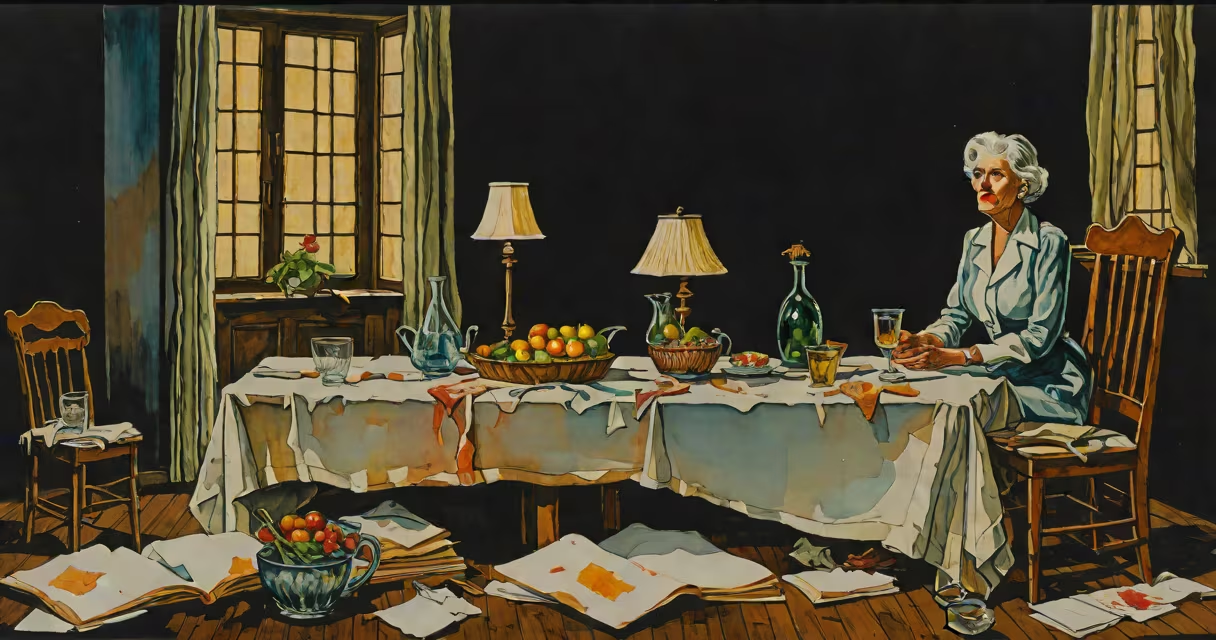
Die Ehefrau is a German-language psychological thriller novel written by American author Freida McFadden, published in 2023. The story follows a woman whose seemingly stable marriage unravels after she discovers her husband's secret life, leading to a spiral of paranoia, memory gaps, and escalating danger. The novel blends domestic suspense with unreliable narration, drawing readers into a mind where truth is fluid and trust is a liability.
The narrative unfolds through the protagonist's perspective, emphasizing emotional disorientation. She begins to question her own memories, especially after finding cryptic notes and receiving strange messages. Her husband denies everything, but inconsistencies in his behavior grow harder to ignore. As the plot progresses, the line between reality and delusion blurs, culminating in a revelation that reframes the entire story.
McFadden's work is rooted in the tradition of domestic noir, similar to authors like Gillian Flynn and Paula Hawkins. However, Die Ehefrau stands out due to its tight pacing and deliberate ambiguity. The title itself is a narrative device - "die Ehefrau" translates to "the wife," but it functions as both a character and a symbol of identity under siege. The novel is not about who committed a crime, but about how trauma reshapes perception.
Die Ehefrau uses a first-person narrative structure to immerse readers in the protagonist's mental state. The prose is concise, often using short sentences during moments of rising tension. This stylistic choice mirrors anxiety and fragmented thinking, making the reader feel the protagonist's instability in real time.
Key scenes are structured around small, unsettling details: a misplaced shoe, a phone call from an unknown number, a photo that wasn't there yesterday. These triggers accumulate until the reader shares the protagonist's suspicion. The novel avoids traditional red herrings; instead, the mystery lies in the reliability of the narrator herself.
For example, early in the book, the protagonist recalls walking home from the grocery store. Later, she finds a receipt from a different store, miles away. She remembers buying milk, but the receipt shows a purchase of wine and medication. This discrepancy forces her to reconsider her own actions - and her own mind.
While Die Ehefrau fits within the broader genre of psychological thriller, it incorporates specific subtypes that shape its structure:
| Type | Description | Example from the Novel |
|---|---|---|
| Unreliable Narrator | Protagonist's memory and perception are compromised. | She wakes up with blood on her hands but remembers nothing. |
| Domestic Deterioration | Marriage collapses from subtle signs of control and manipulation. | Husband insists she's "overreacting" when she finds hidden files. |
| Memory Fragmentation | Events are recalled in disjointed sequences, creating confusion. | A flashback shows a child's laughter - but she has no children. |
These elements combine to create a narrative where the reader cannot trust their own sense of time or logic. The novel's power lies in its refusal to offer easy answers. Instead, it asks: What happens when the person you love most becomes the source of your fear?
Die Ehefrau was released in Germany and Austria in 2023 and quickly became a bestseller on the Spiegel bestseller list. It topped the German Amazon charts for psychological fiction in its first month. According to Spiegel Online, the book sold over 120,000 copies in its first six weeks, a rare achievement for a debut novel in German translation.
Readers engage with the book not just for suspense, but for its exploration of gendered power dynamics in marriage. The protagonist is not a detective or a professional - she is a stay-at-home mother whose competence is dismissed. When she tries to report concerns, authorities treat her as unstable. This reflects real-world patterns documented by the German Federal Ministry for Family Affairs, which reported in 2022 that 68% of women experiencing domestic abuse initially doubt their own perceptions.
One non-obvious detail: the novel's title appears only once in the text - in a letter found in the attic. The word "die Ehefrau" is handwritten in faded ink. This moment marks the turning point. The reader realizes the title isn't just a label - it's a trap. The wife is not the victim. She is the architect of her own downfall.
Many readers assume Die Ehefrau is a standalone novel set in Germany. It is not. The story takes place in a fictional town near the Black Forest, but the characters speak English. The German title is a narrative device, not a linguistic requirement. The book was originally written in English and translated into German by Verena Schäfer for the European market.
Another common mistake: believing the protagonist is a therapist or psychologist. She is not. She is a former teacher who left her job after a student's suicide. Her training in empathy becomes a liability - she interprets her husband's silence as grief, not deception. This misreading fuels the central conflict.
I read Die Ehefrau in a single sitting during a stormy weekend in Berlin. The rain tapped against the window like footsteps. When I reached the final page, I sat still for ten minutes. The last line - "I didn't do it. But I remember doing it." - stayed with me. It wasn't a confession. It was a surrender.
Die Ehefrau Freida McFadden is a novel that refuses to explain itself. It demands attention, not because it reveals secrets, but because it makes the reader question their own assumptions. The truth isn't in the events - it's in the way they're remembered.