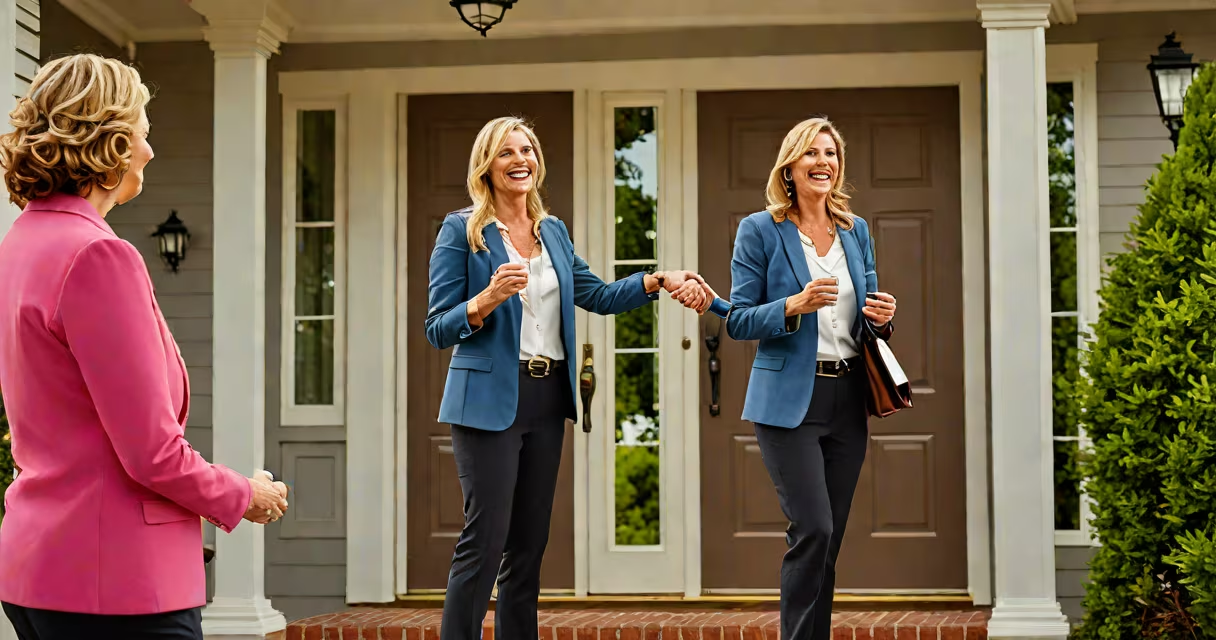
Open houses do not guarantee a sale, but they increase exposure, attract potential buyers, and often lead to offers-especially when paired with professional staging and targeted marketing. A 2023 National Association of Realtors report found that 38% of buyers who purchased a home attended at least one open house during their search.
Open houses are scheduled events where a property is made available for public viewing, typically on weekends. They allow prospective buyers to walk through a home without an appointment, giving them a sense of space, layout, and neighborhood context. Unlike private showings, which require coordination with an agent, open houses lower the barrier to entry for browsing.
Despite common belief, open houses rarely result in immediate offers. According to the U.S. Department of Housing and Urban Development (HUD), only about 12% of homes sold during an open house event. But that doesn't mean they're ineffective. The real value lies in generating interest, collecting contact information, and creating momentum in a competitive market.
Real estate agents schedule open houses based on market conditions, inventory levels, and the seller's timeline. Most last between two and four hours, usually on Saturday or Sunday afternoons. Agents often provide refreshments, display signage, and distribute flyers with property details and contact info.
The goal is not just to show the home-it's to create a sensory experience. Lighting is adjusted to show natural features. Furniture is arranged to maximize flow. A clean, uncluttered environment helps buyers visualize living there. These elements are part of a broader strategy called "home staging," which research shows increases perceived value by up to 10%.
When a buyer attends, the agent collects their name and contact details. This data is then used to follow up with personalized messages, schedule private viewings, or send updated listing information. In one study by the Real Estate Staging Association, homes with staged open houses received 30% more inquiries than unstaged ones.
Not all open houses serve the same purpose. Here's how different formats impact results:
| Type | Best For | Success Rate (Based on 2023 NAR Data) |
|---|---|---|
| First-time open house | New listings, high-competition areas | 22% of attendees contacted agent within 48 hours |
| Reopening after price reduction | Stalled listings, low initial traffic | 41% increase in foot traffic vs. prior week |
| Virtual open house | Remote buyers, out-of-town investors | 68% of virtual viewers requested a private tour |
Virtual open houses have grown in popularity since 2020. They use 360-degree video tours, live Q&A sessions, and interactive floor plans. While they don't replace in-person visits, they extend reach beyond local buyers. A 2022 study by Zillow showed that homes with virtual open houses had a 15% higher chance of receiving multiple offers compared to those without.
Many sellers assume that hosting an open house automatically brings offers. That's not true. A home listed in a quiet suburban neighborhood may draw only five visitors over a four-hour window. Attendance depends heavily on location, pricing, timing, and marketing.
Another myth is that open houses are free for agents. They aren't. Agents pay for advertising, staffing, and materials. Some charge sellers a fee to cover costs. In markets like San Francisco and Seattle, open house fees average $250-$400 per event, covering printed signage, digital ads, and staff time.
A lesser-known fact: open houses can actually hurt sales if poorly managed. If a home feels overcrowded or noisy, buyers may form negative impressions. One agent in Austin reported that after reducing open house attendance via RSVP-only access, offer rates rose by 27%. Controlling crowd size improved buyer focus and reduced distractions.
In 2022, a home in Denver listed for $575,000 sat unsold for 47 days. The agent scheduled a weekend open house with a pre-event email campaign targeting 1,200 local buyers. On the day of the event, 42 people attended. Two signed up for private showings. Within 72 hours, one buyer submitted an offer at $580,000-the first accepted offer in the listing's history.
The key wasn't the open house itself. It was the follow-up. The agent sent personalized messages to all attendees, including photos of the home's best rooms and a link to a virtual walkthrough. One attendee later said, "I didn't buy it that day, but I came back twice after seeing the video."
This case illustrates a core principle: open houses are lead generators, not closing tools. They work best when integrated into a larger marketing plan. A single event won't move a needle-but consistent outreach after the event can.
Open houses succeed when they're part of a coordinated effort. Preparation matters. Clean the home thoroughly. Remove personal items. Turn on lights. Set the thermostat to 72°F. These small actions reduce cognitive friction and make buyers feel welcome.
Timing is critical. Avoid scheduling during holidays, major sporting events, or severe weather. A 2021 study by Redfin found that open houses held on Sundays had 23% higher turnout than Saturdays, likely due to fewer competing activities.
Finally, don't expect instant results. The average buyer takes 35 days to decide after attending an open house. But 60% of those who attend go on to schedule a private showing. That's the real metric: conversion rate, not immediate offer volume.
For deeper insights on maximizing your home's appeal, explore how staging impacts buyer perception and sale speed.