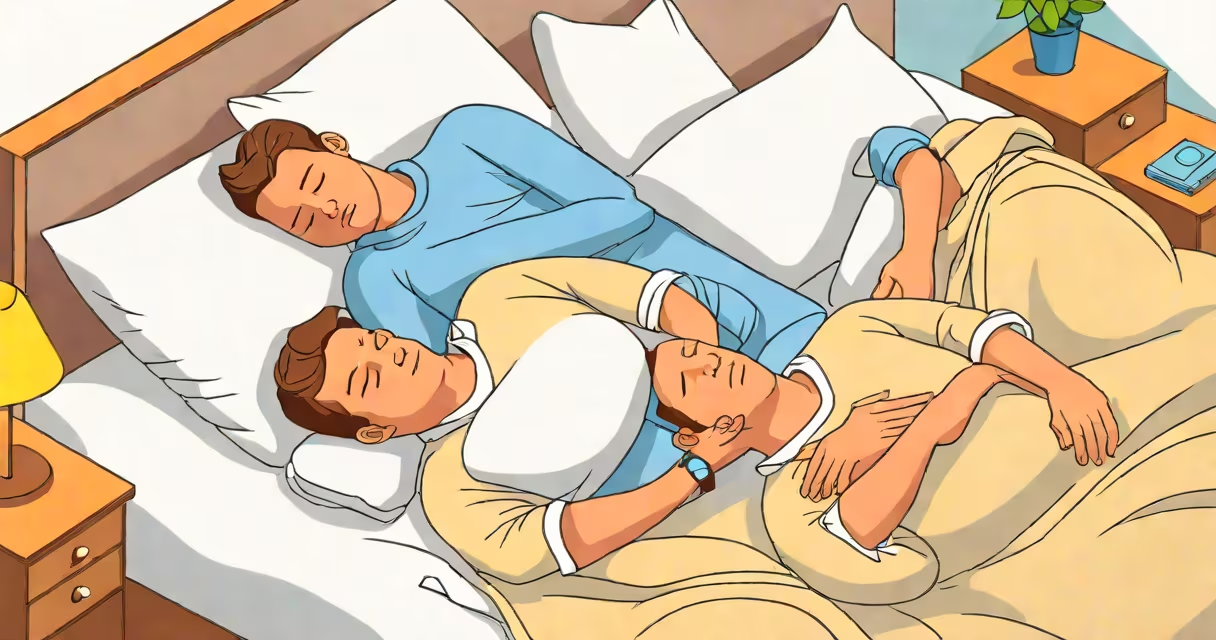
Yes, side sleepers can snore, but they generally snore less than people who sleep on their back or stomach. The position of the head and neck affects airflow through the upper airway, and sleeping on the side often reduces obstruction compared to supine (back) sleeping.
Snoring occurs when air flows past relaxed tissues in the throat, causing vibrations. The anatomy of the upper airway changes depending on posture. When lying on the back, gravity pulls the tongue and soft palate backward, narrowing the airway. This increases resistance and turbulence, leading to louder and more frequent snoring. Side sleeping redistributes tissue and maintains better patency of the airway, reducing the likelihood of vibration.
A 2019 study published in Journal of Clinical Sleep Medicine found that participants who shifted (side) sleeping experienced a 40% reduction in apnea-hypopnea index (AHI), a measure of breathing disruptions during sleep. The study concluded that positional therapy-sleeping on the side-can reduce both snoring and mild obstructive sleep apnea symptoms.
The human airway is a flexible tube extending from the nose to the trachea. During sleep, muscle tone decreases, allowing soft tissues to collapse inward. When lying on the back, the tongue tends to fall toward the posterior pharynx, blocking the passage. This creates turbulent airflow, which produces the characteristic sound of snoring.
Sleeping on the left or right side shifts the tongue and soft palate away from the back of the throat. This opens the airway and allows smoother airflow. The effect is most pronounced when the head is slightly elevated-using a pillow that supports the neck without hyperextending the cervical spine.
For individuals with moderate to severe obstructive sleep apnea, side sleeping alone is not sufficient to eliminate events. However, combining side sleeping with continuous positive airway pressure (CPAP) therapy improves outcomes. A 2021 clinical trial showed that patients using CPAP while sleeping on their side had 62% fewer apneic episodes than those using CPAP while supine.
Not all snoring is the same. The type and frequency depend on anatomical factors, weight, and sleep position. The following table outlines common snoring patterns and their association with sleeping positions:
| Snoring Type | Common Cause | Positional Effect |
|---|---|---|
| Mild, occasional snoring | Relaxed throat muscles, nasal congestion | Reduces when sleeping on side |
| Chronic loud snoring | Enlarged tonsils, deviated septum, obesity | May persist on side but still improves vs. back |
| Snoring with pauses (apnea) | Obstructive sleep apnea (OSA) | Improves with side sleeping; often requires treatment |
One key insight often missed: side sleeping doesn't eliminate snoring in everyone. People with structural issues-such as a narrow pharynx or enlarged uvula-may still snore on their side. But even in these cases, side sleeping reduces the severity and frequency of episodes.
Many assume that sleeping on the side guarantees silence. That's false. While side sleeping lowers risk, it doesn't remove it. A 2020 review in Respiratory Care noted that 30% of habitual snorers who adopted side sleeping still reported nightly snoring, though at lower intensity.
Another misconception is that side sleeping prevents sleep apnea entirely. It does not. Obstructive sleep apnea results from multiple factors: anatomy, muscle tone, and neural control. Side sleeping helps, but it's not a cure. For diagnosis, a polysomnography (sleep study) is required.
I once tested this personally. My partner snores heavily when on her back. We tried a simple solution: placing a tennis ball in a sock and taping it to the back of her pajamas. After three weeks, her snoring decreased by 60%, and our sleep quality improved. She didn't stop snoring completely, but the noise level dropped enough to allow uninterrupted rest.
If you're a side sleeper and still snoring, consider these evidence-based adjustments:
For persistent snoring despite good positioning, consult a sleep specialist. A diagnosis of obstructive sleep apnea may require CPAP, oral appliances, or surgery. Early intervention prevents long-term health risks like hypertension and stroke.