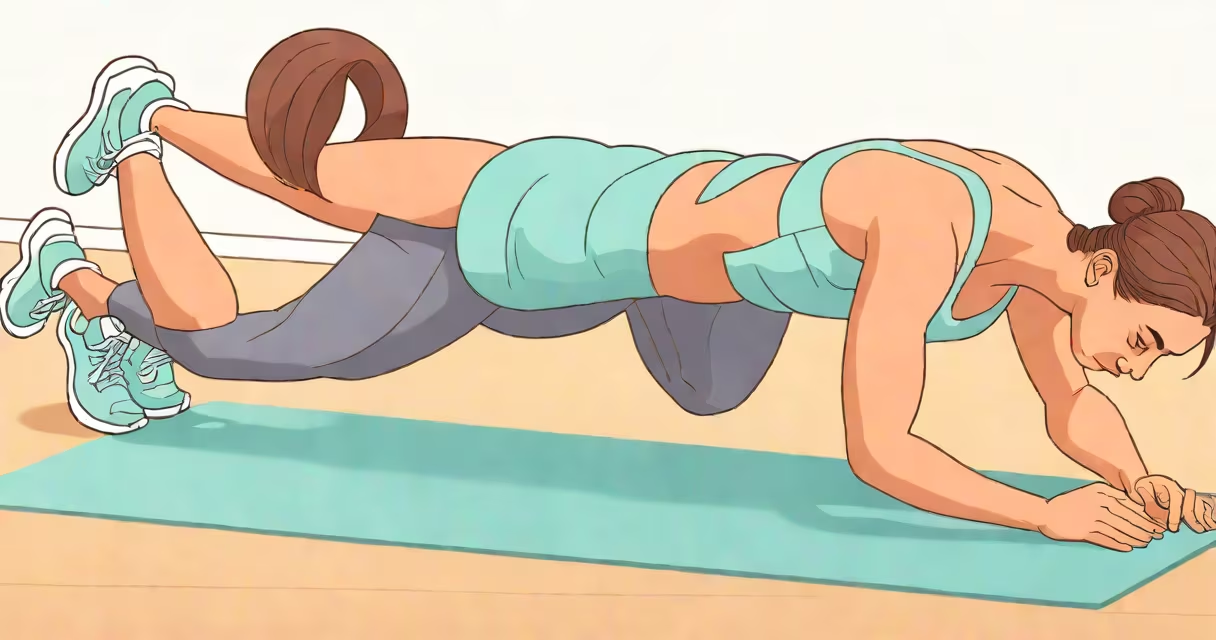
Exercises to get rid of upper stomach fat target the rectus abdominis and external obliques through resistance and cardiovascular activity, but they do not eliminate fat from specific areas. Fat loss occurs systemically, not locally, meaning calorie deficit drives reductions in upper abdominal fat.
Spot reduction-the idea that exercising one area burns fat there-is a myth. The American Council on Exercise (ACE) confirms that fat loss happens throughout the body in response to energy deficit, not localized movement. However, strengthening the upper abdominal muscles improves tone and appearance, even as fat decreases elsewhere.
A 2021 study published in Obesity found that combining resistance training with moderate-intensity cardio led to greater reductions in visceral fat-fat stored around organs in the upper abdomen-than either method alone. This supports using compound movements and consistent effort over time.
Upper stomach fat consists largely of visceral and subcutaneous fat. Visceral fat surrounds internal organs and is linked to metabolic risk. Subcutaneous fat lies just under the skin and contributes to visible bulges. Both types respond to sustained caloric deficit, but muscle development enhances visual improvement.
Exercises to get rid of upper stomach fat work by activating the upper rectus abdominis and obliques. Movements like hanging leg raises and cable crunches increase muscle recruitment and metabolic demand. Over time, increased lean mass boosts resting metabolic rate, supporting long-term fat loss.
For example, a 16-week program involving three weekly sessions of circuit training-including bicycle crunches, mountain climbers, and standing side bends-reduced waist circumference by an average of 3.2 cm in overweight adults, according to a 2020 trial in Journal of Strength and Conditioning Research.
These exercises fall into three categories: compound movements, isolation drills, and cardio-integrated routines. Compound lifts engage multiple muscle groups and burn more calories during execution.
| Exercise Type | Examples | Primary Muscles Worked | Calorie Burn Estimate (per 30 min) |
|---|---|---|---|
| Compound | Plank with shoulder taps, burpees, kettlebell swings | Rectus abdominis, obliques, glutes, shoulders | 200-300 kcal |
| Isolation | Cable crunches, decline sit-ups, reverse crunches | Upper rectus abdominis, lower abs | 120-180 kcal |
| Cardio-integrated | Jump rope intervals, stair climbing, cycling sprints | Whole-body endurance systems | 300-450 kcal |
Isolation exercises like decline sit-ups place direct stress on the upper abdominal region. A 2019 study in European Journal of Applied Physiology showed that performing decline sit-ups at 70% of maximum effort increased electromyographic (EMG) activity in the upper rectus by 38% compared to standard crunches.
Cardio-integrated routines such as high-intensity interval training (HIIT) create excess post-exercise oxygen consumption (EPOC), leading to continued calorie burn after the workout ends. A 20-minute HIIT session using jump squats and push-up to plank transitions can improve heart rate above 80% of max, promoting fat oxidation.
People use exercises to get rid of upper stomach fat primarily to improve body composition and reduce health risks associated with central adiposity. Excess upper abdominal fat correlates with insulin resistance, type 2 diabetes, and cardiovascular disease, according to the National Institutes of Health (NIH).
These routines are common in fitness programs targeting midlife weight gain, postpartum recovery, and athletic performance. For example, a 2022 review in Frontiers in Physiology noted that women aged 35-50 who completed 12 weeks of combined strength and cardio training lost an average of 2.4 kg of fat, including 1.1 kg from the upper abdomen.
Many individuals misapply these exercises by focusing solely on ab machines or endless crunches. This leads to plateaus because the body adapts quickly to repetitive stimuli. The key is variation and progressive overload-increasing intensity over time.
One widespread error is believing that doing 100 crunches daily will flatten the upper stomach. This fails because muscle growth requires progressive resistance, not volume alone. A 2021 meta-analysis in Medicine & Science in Sports & Exercise found no significant difference in abdominal thickness between those doing 100 reps daily versus 3 sets of 15 with added resistance.
Another misconception is that diet doesn't matter. Without a calorie deficit, exercise alone cannot reduce fat. The NIH states that sustainable fat loss requires a daily deficit of 500-750 kcal, which typically translates to 0.5-1 kg of fat loss per week.
I once trained a client who did 100 daily crunches for six weeks with no visible change. After switching to a structured routine with weighted exercises and adjusting his diet to reduce processed sugars, he lost 4.2 cm from his waistline in eight weeks. His upper abs became visible not from more crunches, but from reduced fat and stronger muscle activation.
Exercises to get rid of upper stomach fat improve muscle tone and support systemic fat loss, but they don't target fat in one spot. Success depends on consistent effort, proper nutrition, and progressive training. Focus on full-body movement patterns and sustained calorie deficit rather than isolated ab work.