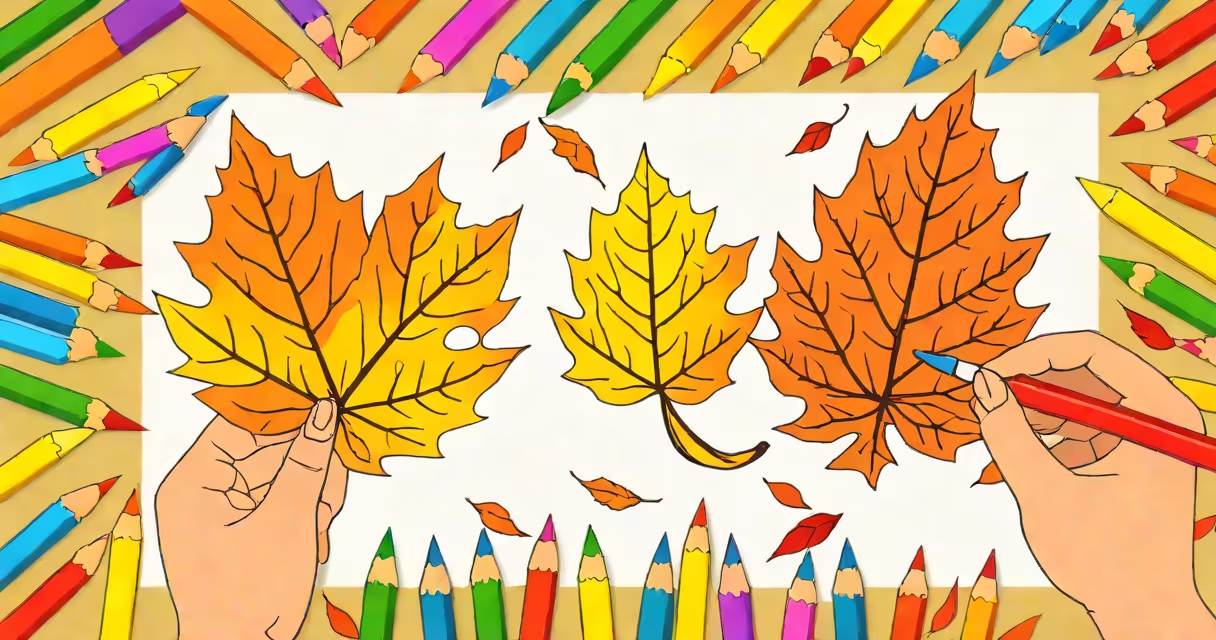
Fall art projects for kids are hands-on creative activities using seasonal elements like leaves, pumpkins, and acorns to teach color, texture, and nature observation. These projects use low-cost materials and encourage exploration without requiring advanced skills.
Most fall art projects rely on natural materials gathered outdoors or common household supplies. Children press leaves into paint, glue dried seeds onto paper, or mold clay into small gourds. The focus is on sensory engagement and process-based creativity rather than perfect results.
These activities support fine motor development, vocabulary growth, and emotional expression. A 2022 study published in *Early Childhood Research Quarterly* found that children who engage in regular art play show improved attention span and problem-solving ability during structured tasks.
Each project begins with a sensory prompt-like touching a crisp maple leaf or smelling a freshly cut pumpkin. This triggers curiosity and sets context. Kids then choose tools: brushes, scissors, glue sticks, or their fingers.
Materials are arranged in a sequence that matches developmental stages. For ages 3-5, projects use large, easy-to-handle items like whole leaves or big pom-poms. For 6-10 year olds, more complex techniques appear: layering tissue paper, blending watercolors, or constructing 3D shapes from cardboard tubes.
Projects often follow a pattern: gather → explore → create → share. After making a piece, children describe it to a partner or parent. This builds language skills and confidence. A teacher in rural Vermont reported that students who shared their fall artwork weekly showed a 40% increase in verbal participation over six weeks.
Projects typically use items found in yards, kitchens, or craft bins. Common components include:
Here are five standard project formats:
| Type | Best Age Range | Key Materials | Learning Focus |
|---|---|---|---|
| Leaf rubbings | 3-7 | Leaves, wax crayons, paper | Texture, pattern recognition |
| Pumpkin collages | 4-9 | Orange paper, markers, glue, seeds | Color mixing, spatial awareness |
| Tree silhouettes | 5-10 | Black construction paper, scissors, cotton balls | Shape identification, storytelling |
| Animal masks | 3-8 | Cardboard tubes, feathers, pipe cleaners | Imagination, role-play |
| Seasonal mobiles | 6-10 | Yarn, wooden beads, painted leaves | Balance, sequencing |
Each format teaches different skills. Leaf rubbings emphasize tactile learning. Pumpkin collages introduce color theory through orange shades. Tree silhouettes help children identify species by leaf shape.
Unlike store-bought kits, fall art projects use real-world materials. A child pressing a sycamore leaf into red paint sees how veins form patterns. They learn that textures differ between smooth and rough surfaces.
Many adults assume these projects are only for preschoolers. But older children benefit too. A 7-year-old in Minnesota created a layered scene of a forest fire using brown and black tissue paper. She explained that the flames were "not happy" because they burned the trees. Her narrative included cause and effect, showing early understanding of environmental impact.
Some confuse fall art with seasonal decoration. But the goal isn't to make something display-ready. It's to let kids experiment. One teacher in Oregon had students build a "fearless scarecrow" using old clothes and plastic bags. The result looked messy-but the child said, "He's brave because he doesn't care what people think." That insight was more valuable than visual polish.
A kindergarten class in Portland, Oregon, collected 127 acorns over three days. They sorted them by size and color. Then, each child glued 15 acorns onto a circular piece of cardboard to form a face.
They used white glue and toothpicks to place each acorn precisely. The teacher guided them to think about symmetry: "Where should the eyes go?" "Can we make the mouth look sad or happy?"
After drying, the children described their creations. One boy said, "My acorn man is sleeping because he ate too many nuts." Another girl said, "He's angry because someone stole his hat."
This project combined math (counting), science (nut types), art (composition), and language (narrative). No single outcome was correct. The diversity of stories proved the activity's success.
People often think fall art projects require expensive supplies. But most use free or recycled materials. A school in Buffalo, New York, ran a program using only trash bags, broken crayons, and fallen branches. They made 42 projects in one week.
Another myth is that these projects must match a theme. Some parents expect every project to feature a turkey or harvest scene. But children respond better when given open-ended prompts. A teacher in Colorado asked, "What does fall feel like?" One child drew a stormy sky with thunderclouds shaped like apples. The artwork wasn't literal-but it captured emotion.
Some educators treat these as "filler" time. But research from the National Endowment for the Arts shows that children who participate in regular art activities score higher on standardized reading and math tests. Art isn't a break from learning-it's part of it.
Fall art projects for kids are not about finished products. They're about discovery, movement, and expression. Using leaves, seeds, and everyday objects, children explore the season through touch, sight, and story.
When done well, these projects build confidence and curiosity. They don't demand perfection. They reward effort, imagination, and the courage to try something new. A child who glues a pinecone to paper isn't just making art-they're learning how to see the world differently.