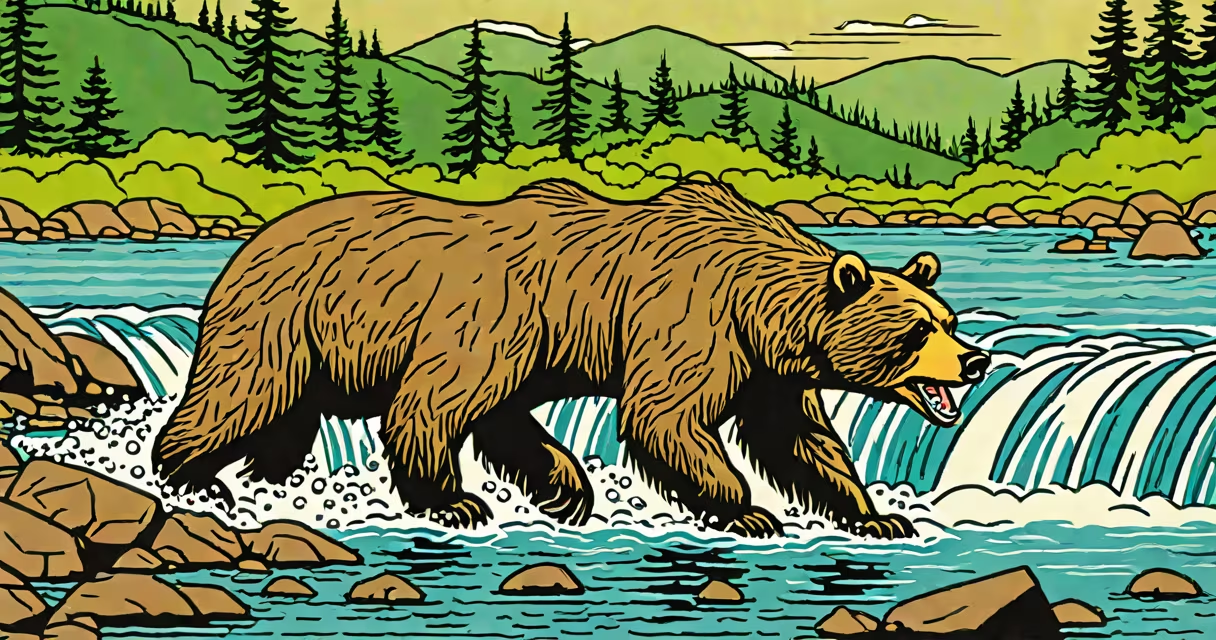
fat bear week cam is a live-streaming event featuring grizzly bears in Katmai National Park, Alaska, as they feast on salmon to build fat reserves before hibernation. The event runs annually in October and draws millions of viewers globally.
The live feed captures bears at Brooks Falls, where salmon migrate upstream to spawn. Cameras mounted on poles and trees record the bears' feeding behavior in real time. Viewers watch as bears catch fish, drag them ashore, and consume them in large quantities. The event is hosted by the National Park Service and streamed via platforms like YouTube and Facebook Live.
Each year, the competition begins with 12 bears selected based on their size and feeding habits. Fans vote daily for the "fattest" bear through a bracket-style system. The winner earns a virtual trophy and recognition as the season's most successful feeder. The event combines wildlife observation with public engagement, turning animal behavior into a shared cultural moment.
Cameras installed at Brooks Falls operate 24/7 during the peak salmon run. The feeds are unedited and show raw footage of bears interacting with the environment. No human intervention occurs during filming. Bears appear on screen based on movement and proximity to the falls.
Viewers access the streams through official park pages or partner sites. The National Park Service maintains the cameras and provides updates on bear activity. During high-traffic periods, such as morning fish runs, streams can handle over 100,000 concurrent viewers.
A key feature is the absence of narration or commentary. The audio includes natural sounds-water rushing, bears growling, fish splashing. This preserves authenticity and allows viewers to interpret behavior independently. Some fans track individual bears across multiple years, noting changes in weight, behavior, and dominance.
Brooks Falls hosts several distinct bear families. The most famous is Bear 747, a dominant male who weighs over 1,000 pounds. He appears frequently during peak feeding times and often dominates the best fishing spots. His presence draws attention due to his size and aggressive feeding style.
Other notable bears include Bear 642, a female known for her calm demeanor and consistent success. She often shares space with cubs and avoids confrontations. Her feeding patterns are studied by biologists tracking reproductive success and cub survival rates.
Table: Common bears seen on fat bear week cam
| Bear ID | Gender | Notable Behavior | Weight Estimate |
|---|---|---|---|
| 747 | Male | Aggressive, dominant, frequent fish grabs | 1,050 lbs |
| 642 | Female | Calm, frequent feeding with cubs | 820 lbs |
| 610 | Male | Highly selective, waits for optimal fish size | 980 lbs |
Biologists use the footage to study bear population dynamics. Data collected during fat bear week cam includes feeding frequency, energy intake, and social interactions. These observations inform conservation strategies and habitat management plans.
Millions tune in annually, drawn by the spectacle of nature's raw efficiency. The event blends education, entertainment, and environmental awareness. Viewers report reduced stress levels while watching the streams, citing the calming effect of observing natural cycles.
A 2022 study published in *Frontiers in Psychology* found that participants who watched wildlife streams for 15 minutes reported lower cortisol levels and improved mood compared to control groups. The study noted that predictable, non-threatening animal behavior-like bears eating fish-reduces cognitive load and promotes relaxation.
One viewer, a software engineer from Oregon, shared that he watches the feed every morning during work hours. "I don't check email until after the first bear catches a fish," he said. "It's my reset button."
Many assume the bears are fed by humans. They are not. All food comes from wild salmon runs. The bears rely entirely on natural resources. Feeding stations or supplemental food are banned within the park.
Another misconception is that the event is staged. The footage is real-time and unscripted. While cameras are maintained and occasionally adjusted, no actors or artificial setups exist. The National Park Service confirms that all footage is authentic and verified.
A lesser-known fact: the bears' fat accumulation is not just about survival. Research from the University of Alaska Fairbanks shows that fat stores influence mating success. Male bears with higher fat reserves have better reproductive performance, as they can sustain longer fights and defend territories.
In 2023, Bear 747 won the competition after consistently outperforming others in daily voting. Over seven days, he caught 42 salmon and consumed an estimated 12,000 calories per day. His average daily weight gain was 15 pounds.
By the end of the week, he had gained 105 pounds since the start of the salmon run. Biologists confirmed this through aerial drone surveys conducted after the event. The data matched predictions from prior years, showing that bears who dominate early in the run maintain advantages throughout.
On Day 5, a rare interaction occurred: Bear 747 faced off against a younger male, Bear 610. The encounter lasted 14 minutes and ended with Bear 610 retreating. The video went viral, amassing over 2 million views in 48 hours. The National Park Service later released a detailed analysis of the incident, noting that dominance hierarchies were reinforced through non-violent displays.
Live streams are available on the National Park Service's official website and YouTube channel. Streams begin at 6 AM Alaska Time and continue until midnight. Time zones vary, so viewers should convert using tools like timeanddate.com.
Viewers should expect variable quality. Weather, snow, and fog can obscure visibility. Camera angles shift slightly during maintenance. Some days, bears may not appear for extended periods. Patience is required.
For those interested in the science behind the behavior, the National Park Service offers downloadable guides and educational materials. These explain bear physiology, salmon migration timing, and seasonal feeding patterns.
During the event, the park hosts virtual events, including Q&A sessions with rangers and live chats with biologists. These are free and open to all ages.
Watching fat bear week cam offers more than entertainment. It connects people to ecological processes and underscores the importance of preserving wild habitats. The bears are not performers-they are survivors going through a fragile balance between abundance and scarcity.