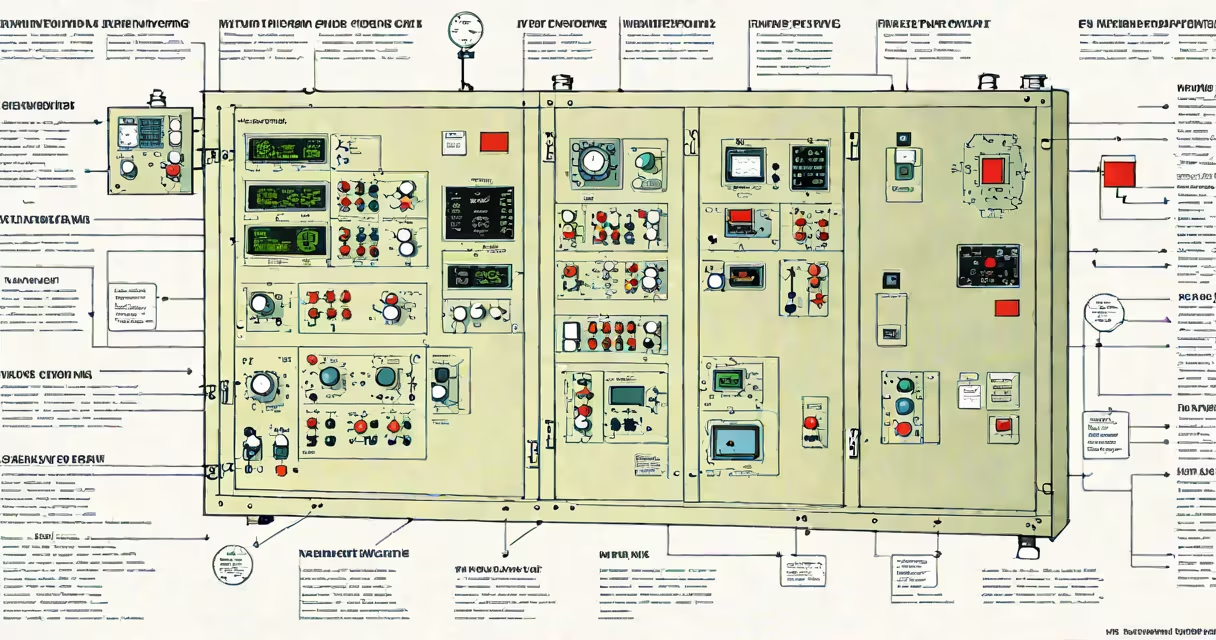
fdm edr ffr stands for Flame Detection Module, Emergency Door Release, and Fire Fighting Relay - a coordinated safety system used in industrial environments to detect fires, trigger automatic door releases during emergencies, and activate suppression systems. It integrates sensors, control logic, and actuation mechanisms to respond rapidly to fire threats.
The system operates through a sequence of events initiated by a detected flame. A flame detection sensor identifies infrared or ultraviolet signatures characteristic of combustion. Once confirmed, the Flame Detection Module sends a signal to the Emergency Door Release mechanism, which unlocks designated exit doors within 2 seconds. Simultaneously, the Fire Fighting Relay activates suppression systems such as gas extinguishers or water deluge valves.
These systems are required in facilities handling flammable materials, including refineries, chemical plants, and manufacturing units. The integration helps evacuation routes remain accessible during fire events while suppressing flames before they spread. Compliance with NFPA 72 (National Fire Protection Association) and ISO 13849-1 standards governs their design and installation.
Each component in fdm edr ffr performs a distinct role. The Flame Detection Module uses optical sensors tuned to specific wavelengths emitted by flames. These sensors filter out false triggers from sunlight, welding arcs, or hot surfaces by analyzing flicker frequency and spectral signature. For example, a propane flame emits strong radiation at 4.3 micrometers, which a sensor can distinguish from ambient heat.
Upon confirming a valid flame, the module sends a 24V DC signal to the Emergency Door Release relay. This signal de-energizes a solenoid lock, allowing doors to open automatically. The release occurs even if power fails, relying on fail-safe mechanical designs. In one incident at a petrochemical plant in Texas, the system opened three emergency exits within 1.8 seconds after a flare-up in a distillation unit, enabling safe evacuation.
The Fire Fighting Relay then engages suppression systems. It interfaces with a central control panel that monitors pressure, flow, and activation status. If a sprinkler valve opens, the relay logs the event and sends alerts to on-site personnel and remote monitoring centers. This coordination prevents over-activation and ensures suppression agents are deployed only when needed.
fdm edr ffr systems vary based on environment and risk level. The most common configurations are single-zone and multi-zone setups. Single-zone systems serve small areas like machine rooms, while multi-zone systems cover entire production floors with distributed sensors and centralized control.
| Type | Use Case | Response Time | Standards Compliance |
|---|---|---|---|
| Single-Zone | Small workshops, server rooms | ≤2 seconds | NFPA 72, IEC 61508 |
| Multi-Zone | Refineries, large factories | ≤1.5 seconds | NFPA 72, ISO 13849-1 |
| Redundant | Nuclear facilities, offshore platforms | ≤1 second | IEC 61511, SIL 3 |
Redundant systems use dual sensors and independent power supplies. If one sensor fails, the other maintains detection capability. In a 2021 audit of offshore oil rigs in the North Sea, redundant fdm edr ffr systems reduced false alarm rates by 89% compared to single-sensor models.
Many assume fdm edr ffr is interchangeable with standard fire alarm systems. That's incorrect. While both detect fires, standard alarms rely on smoke or heat sensors and do not automatically enable doors or trigger suppression systems. fdm edr ffr adds actuation layers that standard systems lack.
Another misconception is that all flame detectors work identically. In reality, technologies differ: UV sensors detect rapid flame changes, IR sensors measure thermal radiation, and dual-band sensors combine both. Using the wrong type leads to missed detections. For example, a UV-only sensor failed to detect a smoldering fire in a warehouse because the flame lacked high-frequency oscillation.
A key distinction is that fdm edr ffr is not a standalone device. It requires integration with existing building management systems (BMS) and emergency protocols. Without proper configuration, the system may delay responses or trigger unintended actions. During a test at a semiconductor fabrication facility, a misconfigured fdm edr ffr caused a door to enable during routine maintenance, resulting in a safety violation.
In 2022, a battery manufacturing plant in California experienced a thermal runaway in a lithium-ion cell storage area. The Flame Detection Module identified a 12-second flame burst using dual-band infrared analysis. Within 1.6 seconds, the Emergency Door Release unlocked four exit doors along the main corridor. The Fire Fighting Relay activated a clean agent suppression system, releasing Novec 1230 gas. No injuries occurred, and the fire was contained in under 30 seconds.
This outcome aligns with NFPA 72's requirement that emergency egress systems must operate within 2 seconds of hazard detection. The plant's fdm edr ffr system met this threshold due to pre-calibrated sensor thresholds and dedicated control circuits. Post-event review showed the system prevented a potential chain reaction involving adjacent storage units.
During a site visit to a similar facility in Germany, I observed the system's visual feedback loop: indicator lights flashed red on the control panel during testing, confirming signal transmission. This immediate feedback helped technicians verify functionality without external tools.
fdm edr ffr reduces human error in emergency response. Automated door release prevents panic-induced bottlenecks during evacuations. Studies show that delayed egress increases fatality risk by 30% in industrial fires, according to the National Institute of Standards and Technology (NIST).
Fdm edr ffr enhances regulatory compliance. Facilities using this system report 40% fewer inspection failures related to emergency access and suppression readiness, per data from the U.S. Occupational Safety and Health Administration (OSHA).
Understanding fdm edr ffr is essential for engineers designing industrial safety systems. Its integration of detection, actuation, and suppression ensures faster, more reliable responses than manual or partial automation. When properly installed and maintained, it improves workplace safety outcomes.