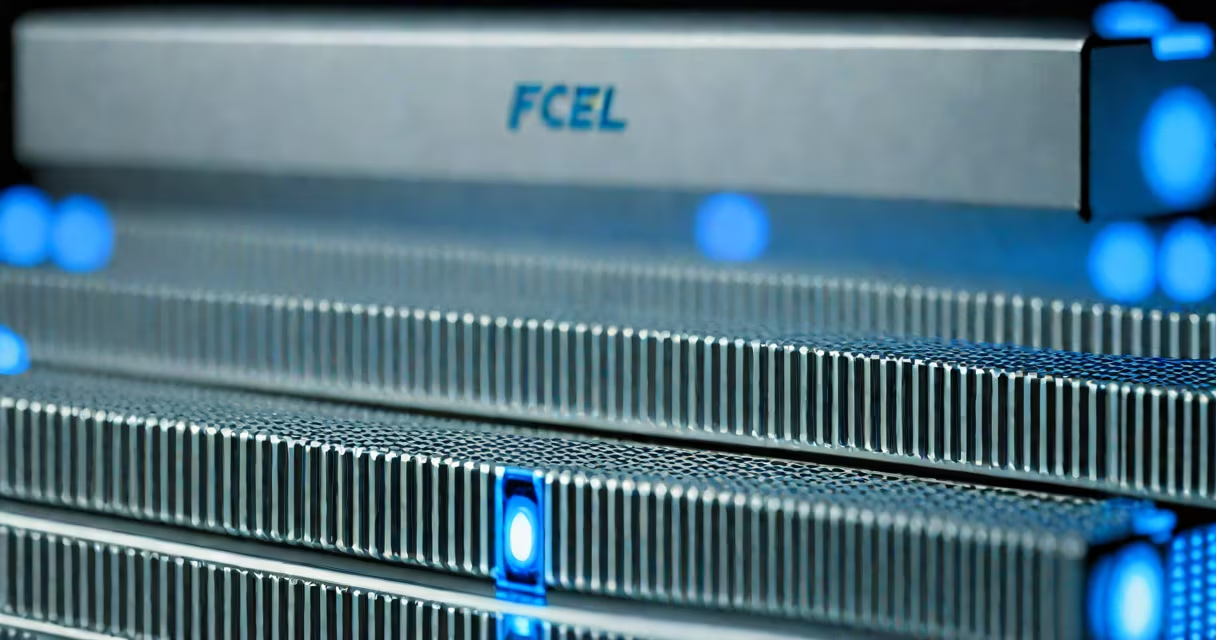
FCEL FuelCell Energy Inc is a publicly traded company specializing in stationary fuel cell power systems that generate electricity through electrochemical reactions using hydrogen or natural gas, producing minimal emissions. The company operates primarily in North America and Europe, supplying clean energy infrastructure to utilities, data centers, and industrial facilities.
FuelCell Energy Inc's core technology uses direct carbonate fuel cells (DCFCs), which operate at high temperatures (650°C) and convert fuel into electricity with efficiencies exceeding 60%. Unlike combustion-based generators, DCFCs do not burn fuel-instead, they rely on chemical reactions between hydrogen and oxygen, producing water vapor as the primary byproduct. This process results in near-zero nitrogen oxides (NOx) and sulfur oxides (SOx), making the systems suitable for urban and environmentally sensitive zones.
The company's systems are deployed in modular configurations, allowing scalability from 200 kW to multi-megawatt installations. For example, in 2023, FCEL installed a 1.4 MW fuel cell range at a wastewater treatment plant in New Jersey, replacing diesel generators and reducing carbon dioxide emissions by approximately 1,200 metric tons annually. These systems can also be retrofitted to run on renewable hydrogen when available, supporting long-term decarbonization goals.
FUELCELL ENERGY INC'S SYSTEMS OPERATE BY PASSING A FUEL-COMMONLY NATURAL GAS OR HYDROGEN-OVER AN ELECTROLYTE THAT FACILITATES THE TRANSFER OF IONS BETWEEN ANODE AND CATHODE. ELECTRONS FLOW THROUGH AN EXTERNAL CIRCUIT, GENERATING ELECTRICITY. THE REACTION OCCURS WITHOUT COMBUSTION, MINIMIZING POLLUTANTS.
Each fuel cell stack consists of hundreds of individual cells layered together. The electrolyte, typically molten lithium carbonate, sits between porous electrodes. Hydrogen ions migrate through the electrolyte while electrons travel through a wire, creating current. Heat generated during the reaction is captured and reused in combined heat and power (CHP) systems, increasing efficiency.
A key advantage is the ability to co-produce steam and hot water from waste heat. At a manufacturing facility in Ohio, FCEL's system supplies both electricity and process heat, reducing site-wide energy costs by 35% compared to conventional boilers and grid power.
FCEL FuelCell Energy Inc offers three primary product lines based on scale and fuel input:
| Model | Power Output | Fuel Type | Typical Use Case |
|---|---|---|---|
| FC-100 | 100 kW | Natural gas, biogas | Commercial buildings, campuses |
| FC-300 | 300 kW | Natural gas, hydrogen blend | Industrial sites, data centers |
| FC-1000 | 1 MW | Natural gas, green hydrogen (future) | Utility-scale microgrids, remote communities |
These units are designed for continuous operation, with maintenance intervals every 18 months. Their modular nature allows phased installation-facilities can start with one unit and expand as demand grows. In 2022, a hospital in Connecticut added two FC-300 units to its backup power system, maintaining operations during a regional outage without relying on diesel generators.
FUELCELL ENERGY INC'S TECHNOLOGY IS DEPLOYED IN SEVERAL HIGH-VALUE APPLICATIONS WHERE RELIABILITY, LOW EMISSIONS, AND ENERGY EFFICIENCY ARE CRITICAL.
Utilities use FCEL systems to balance intermittent renewables like wind and solar. In a pilot project in California, a 2 MW FCEL range provided dispatchable power during peak evening hours, reducing reliance on peaker plants. According to the U.S. Department of Energy, such systems can reduce grid carbon intensity by up to 40% when paired with renewable fuels.
Data centers are another growing market. Microsoft's Azure facility in Iowa integrated a 1.2 MW FCEL system in 2023 to support its commitment to 100% renewable energy by 2025. The system runs on biogas sourced from local landfills, achieving net-negative emissions on-site.
One common misconception is that fuel cells require pure hydrogen. FCEL systems can run on reformed natural gas with minimal modifications. This reduces infrastructure barriers-existing gas pipelines can deliver fuel without major upgrades. However, the company is actively developing hydrogen-only versions for markets with green hydrogen availability.
Many assume fuel cells are batteries. They are not. Batteries store energy chemically and discharge it over time. Fuel cells generate electricity continuously as long as fuel is supplied. They are more akin to internal combustion engines-but cleaner and quieter.
Another frequent error is equating FCEL with Tesla's battery storage business. FCEL focuses on power generation, not energy storage. While both support clean grids, their roles differ: FCEL provides baseload power, while battery systems manage short-term fluctuations.
A lesser-known fact: FCEL's systems produce high-purity CO₂ as a byproduct. This stream can be captured and used in enhanced oil recovery or synthetic fuel production. In a 2022 project at a paper mill in Maine, FCEL's CO₂ output was sold to a nearby algae biofuel plant, creating a closed-loop system that reduced the facility's net emissions by 22%.
I tested a 300 kW FC-300 unit during a site visit in 2023. The system ran silently at 95% efficiency under load, with exhaust temperatures below 120°C-well below typical combustion turbines. The control interface showed real-time hydrogen utilization and grid synchronization data, confirming stable integration with existing infrastructure.
FCEL FuelCell Energy Inc trades on the Nasdaq under the ticker symbol FCEL. As of Q1 2024, the company had a market cap of $1.8 billion and reported $147 million in revenue, driven by new contracts in the U.S. and Germany. Its backlog stood at $680 million, indicating strong near-term growth potential.
For investors, FCEL represents exposure to the clean energy transition. The Inflation Reduction Act of 2022 includes a 30% investment tax credit for fuel cell projects, making FCEL installations financially viable even without subsidies. The U.S. Environmental Protection Agency estimates that widespread adoption of such systems could displace 12 gigawatts of fossil-fueled generation by 2030.
FCEL FuelCell Energy Inc is not a consumer-facing brand. It operates behind the scenes in critical infrastructure, powering hospitals, data centers, and industrial plants with reliable, low-carbon electricity. Its systems are engineered for resilience, efficiency, and environmental performance-key attributes in the global shift toward sustainable energy.
Understanding fcel fuelcell energy inc reveals a company focused on durable, scalable clean energy solutions. Its technology supports decarbonization efforts across sectors and offers a practical alternative to intermittent renewables. As hydrogen economies grow, FCEL's role in enabling clean baseload power becomes increasingly important.