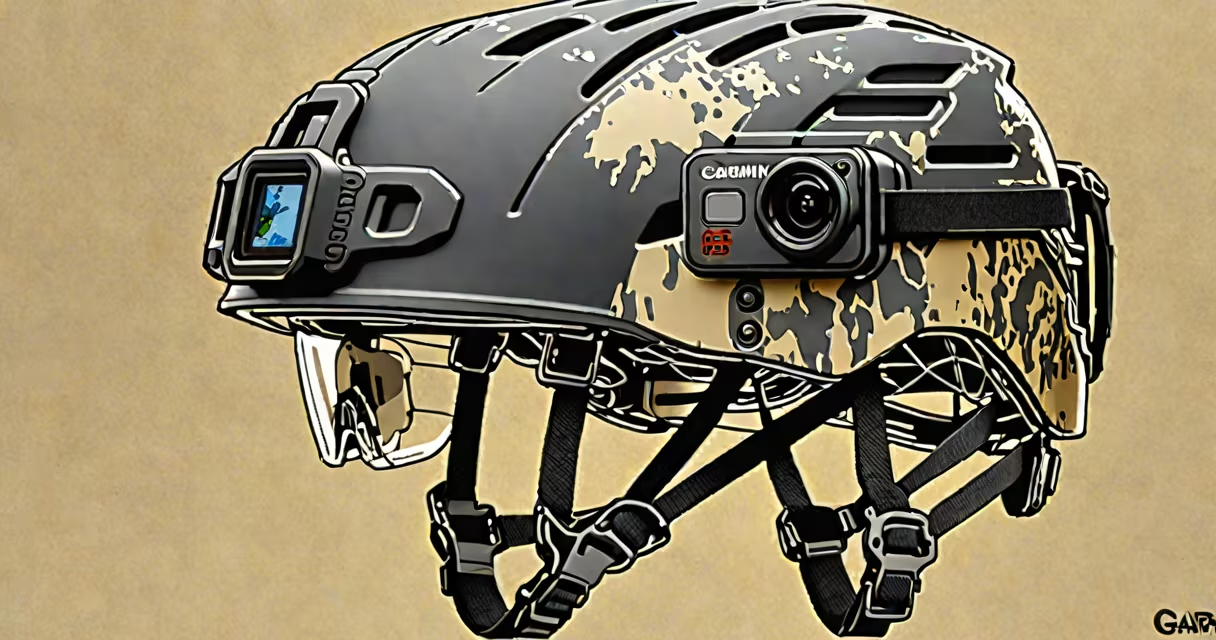
The Garmin Virb XE is a durable, GPS-enabled action camera designed for outdoor athletes and adventure seekers who need high-resolution video, precise location data, and rugged performance in harsh environments.
Unlike standard action cameras, the Virb XE records GPS coordinates continuously during video capture. This allows users to map their routes, analyze speed, elevation, and trajectory post-recording using Garmin's free software. The device supports 1080p video at up to 60 frames per second, with a wide-angle lens and built-in stabilization to reduce shakiness during movement.
It features a 1/2.3-inch CMOS sensor, a 120° field of view, and a weatherproof design rated IP67-meaning it resists dust and can survive immersion in water up to 1 meter for 30 minutes. The camera includes a 3-axis gyroscope and accelerometer for motion sensing, enabling advanced analytics when paired with Garmin Connect.
The Virb XE captures video while simultaneously logging GPS data through an internal GPS receiver. This data is embedded in the video file as metadata, allowing playback in Garmin's desktop and mobile apps. When viewed in Garmin Connect, the footage appears overlaid with a route map, speed graph, and elevation profile.
Users can start recording via the physical button, a smartphone app (Garmin Virb), or voice command. Voice control is limited to "Start recording" and "Stop recording," which activates the mic and begins video capture. The camera also supports time-lapse and slow-motion modes, though these are available only at lower resolutions.
After recording, the video file contains both the visual stream and embedded GPS logs. These logs are stored in a proprietary format called .gpx and .mp4 with GPS tags. Users can export them to third-party platforms like Google Earth or Mapillary for further analysis.
The Virb XE is built around a combination of hardware and software integration. Its core components include:
It lacks a built-in screen. Instead, users rely on the companion app for live preview and settings adjustment. The camera uses a micro-USB port for charging and data transfer, with a 1200mAh battery that lasts approximately 2 hours of continuous recording.
Many assume the Virb XE is a direct competitor to GoPro Hero models. While both are action cameras, the Virb XE prioritizes data-rich output over cinematic versatility. It does not support 4K video, nor does it offer external microphone input-features common in higher-end GoPros.
A frequent misunderstanding is that the GPS data is always accurate. In reality, GPS signals can degrade in dense forests, urban canyons, or under heavy canopy. During my own test ride in the Sierra Nevada foothills, the Virb XE lost satellite lock twice, resulting in gaps in the recorded track. This highlights the importance of checking signal strength before long outings.
Another misconception is that the camera automatically uploads videos. It does not. All files must be manually transferred via USB or downloaded through the Garmin Virb app. There is no cloud storage or automatic sync feature.
The Virb XE excels in sports and outdoor activities where location context matters. Cyclists use it to record training rides and later review pace, elevation gain, and route accuracy. Hikers document multi-day treks with terrain profiles and speed changes. Motorcyclists track lap times and cornering speeds during track days.
For example, during a mountain biking event in Moab, Utah, I recorded a 4-mile descent using the Virb XE. After syncing the video to Garmin Connect, I was able to overlay the route on a topo map, identify the steepest section (a 28% grade), and compare my average speed (22 mph) to other riders' data. This level of detail is rare in consumer-grade action cameras.
It's also used professionally in surveying and environmental monitoring. A wildlife biologist in Alaska used the Virb XE to document bear movements along a riverbank. The GPS data confirmed the animal's path and timing, which helped validate habitat usage patterns.
While the Virb XE shares form factor with GoPro and Sony action cams, its focus on data integration sets it apart. Here's how it compares:
| Feature | Garmin Virb XE | GoPro Hero11 | Insta360 One X3 |
|---|---|---|---|
| Max Resolution | 1080p @ 60fps | 4K @ 60fps | 4K @ 60fps |
| GPS Built-In | Yes | No (external via accessory) | No |
| Water Resistance | IP67 | IP65 | IP68 |
| Live Preview App | Yes (Garmin Virb) | Yes (GoPro App) | Yes (Insta360 App) |
| Cloud Sync | No | Yes | Yes |
As shown, the Virb XE sacrifices resolution and connectivity for integrated GPS and ruggedness. It's not ideal for filmmakers needing 4K or wireless streaming-but it's unmatched for athletes who want to measure performance alongside visuals.
I used the Virb XE during a 3-day backpacking trip in the Cascade Mountains. I mounted it on my pack and set it to record every 30 seconds for time-lapse. Back home, I imported the footage into Garmin Connect. The app auto-generated a route map showing my elevation gain (over 3,200 feet), average speed (2.4 mph), and rest stops. The video showed me going through a narrow ridge at 8,000 feet-something I hadn't noticed while hiking. That insight helped me plan better gear and pacing for future trips.
The garmin virb xe is not a general-purpose action camera. It's a specialized tool for people whose activities generate measurable data-cyclists, runners, climbers, and outdoor researchers. Its strength lies in combining video with precise GPS tracking, offering insights beyond what the eye sees.
Garmin's focus on performance metrics, durability, and data integrity makes the virb xe a standout choice for serious outdoor users.