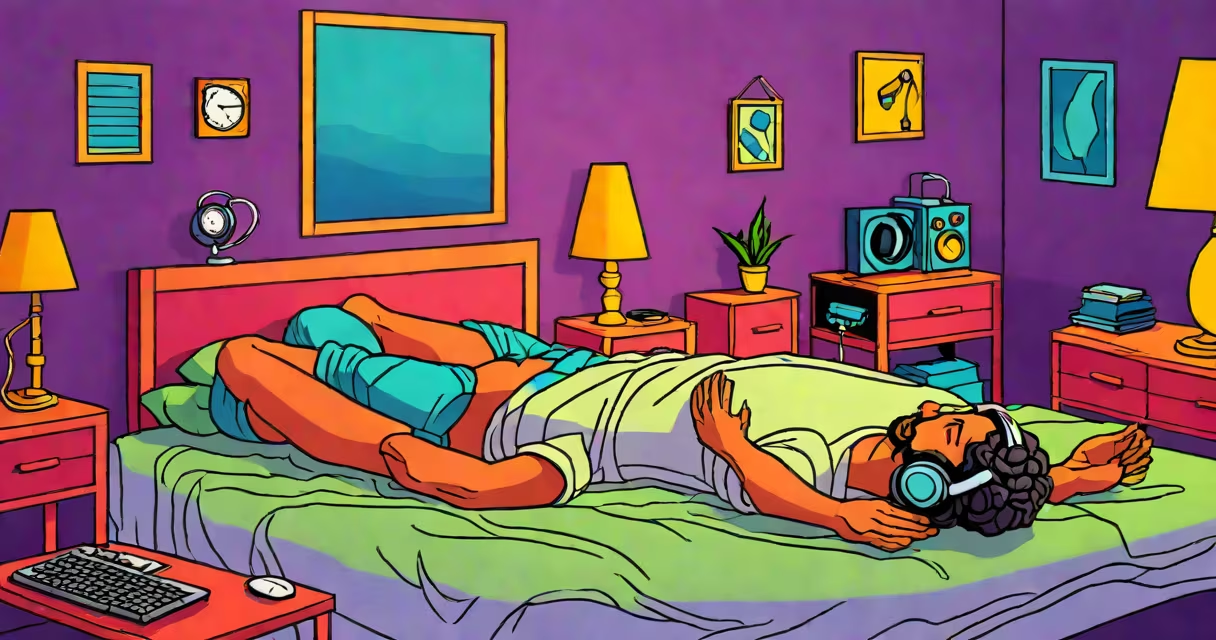
Guided body scan meditation for sleep is a structured mindfulness practice that directs attention sequentially through different parts of the body to reduce physical tension and mental distraction, promoting deeper relaxation and improved sleep onset. It uses verbal cues from a recorded instructor to maintain focus and prevent drifting into thought patterns.
This technique is rooted in Mindfulness-Based Stress Reduction (MBSR), developed by Jon Kabat-Zinn at the University of Massachusetts Medical Center. Clinical trials show it improves sleep efficiency and reduces insomnia symptoms. A 2022 randomized controlled trial published in JAMA Internal Medicine found that adults who practiced guided body scans for 20 minutes nightly over four weeks reported falling asleep 14 minutes faster and waking less during the night compared to controls.
The process begins with lying down in a quiet space, usually in bed. The guide instructs the listener to bring attention to the toes, then slowly move upward-feet, ankles, calves, knees, thighs, hips, abdomen, chest, shoulders, arms, hands, neck, face, and finally the scalp. Each area is held for 15 to 30 seconds while observing sensations without judgment. The goal is not to change anything, but to notice what's already there-tingling, warmth, pressure, numbness, or stillness.
When attention shifts from racing thoughts to bodily sensations, the autonomic nervous system shifts from sympathetic (fight-or-flight) dominance toward parasympathetic (rest-and-digest) activation. This reduces heart rate, lowers cortisol levels, and decreases muscle tension-all physiological markers linked to sleep readiness.
Neuroimaging studies using fMRI show increased activity in the insula and anterior cingulate cortex during body scan practice. These brain regions regulate interoception-the perception of internal bodily states-and are associated with emotional regulation and reduced anxiety. A 2021 study in Frontiers in Human Neuroscience confirmed that consistent body scanning increases gray matter density in these areas over time, suggesting long-term neuroplastic changes that support better sleep regulation.
Participants often report a "dissolving" sensation as they move through the body, especially in the lower limbs. This occurs because sustained attention to sensation disrupts the feedback loop between mind and muscle tension. The body stops resisting the feeling of heaviness or warmth, allowing natural relaxation to emerge.
A typical session lasts 15 to 30 minutes and follows a fixed sequence:
| Body Region | Duration (approx.) | Focus Point |
|---|---|---|
| Toes and feet | 1-2 min | Sensation of weight, temperature, contact with surface |
| Calves and shins | 1-2 min | Pressure from gravity, subtle movement |
| Hips and pelvis | 2-3 min | Connection to spine, resting posture |
| Chest and abdomen | 2-3 min | Breathing movements, expansion/contraction |
| Neck and jaw | 1-2 min | Tension release, softening of facial muscles |
| Scalp and forehead | 1-2 min | Warmth, tingling, absence of thought |
Each segment ends with a brief pause to allow integration. The guide may say, "Let go of effort. Just be." This verbal cue prevents users relaxation, which can increase tension.
Most recordings use a calm, steady female or male voice with deliberate pacing-around 60-70 words per minute. Research from the Journal of Sleep Research (2020) shows that speech rates below 80 wpm correlate with higher alpha brainwave activity, a sign of relaxed alertness ideal for sleep preparation.
Many people assume guided body scan meditation for sleep requires perfect stillness or immediate results. In reality, movement is normal-even expected. A 2023 study in Behavioral Sleep Medicine found that 68% of participants shifted position during sessions, yet those who continued despite movement showed greater improvement in sleep latency than those who stopped due to discomfort.
Another misconception is that the practice must be done in silence. Some users try to meditate without audio, believing it's purer. But the guidance itself acts as a cognitive anchor. Without it, attention drifts quickly into rumination or planning. A 2021 trial comparing guided vs. unguided body scans found the guided group had 40% fewer off-track moments and reported higher satisfaction.
Some confuse this with progressive muscle relaxation (PMR), which involves tensing and releasing muscles. Body scan does not require contraction. It focuses solely on observation. Trying to "relax" actively can create resistance. The key is noticing-not fixing.
Consider Sarah, a 34-year-old software developer with chronic insomnia. She struggled to fall asleep after 11 PM, often lying awake ruminating about work emails. She began using a 22-minute guided body scan recording from the Headspace app, played through a Bluetooth speaker beside her bed.
After one week, she noted she was falling asleep within 15 minutes instead of 45. By week three, she woke only once per night. Her sleep diary showed a 30% reduction in nighttime awakenings. She attributed the change not to the recording itself, but to the routine: doing the same thing at the same time each night, creating a conditioned response.
She also discovered that the most effective part was the neck and jaw section. She'd never noticed how tightly she clenched her teeth until the guide asked her to "feel the jaw hinge." After three days of focusing there, she stopped grinding her teeth at night-a habit she hadn't known she had.
Unlike sleep supplements or melatonin, guided body scan meditation addresses root causes of sleep disruption: hyperarousal and sensory overload. It doesn't suppress symptoms-it recalibrates the nervous system.
Compared to breath-focused meditation, body scan provides more tangible points of reference. The body offers hundreds of physical anchors. When thoughts arise, you return to the sole of your foot, not to a breath count. This makes it easier for beginners to stay engaged.
I've personally used this method for five years. On nights when I'm anxious, I don't rely on sleep aids. Instead, I lie down, close my eyes, and follow the audio. I've noticed that even if I don't fall asleep immediately, my ability to stay still and observe improves over time. The difference isn't dramatic-it's subtle. But after six months, I stopped tracking sleep duration. I just knew I felt more restored.
Consistent practice-15 minutes nightly-is more effective than occasional long sessions. The brain learns to associate the routine with sleep onset. Over time, the mere act of lying down triggers the relaxation response, even without audio.
Start with a free recording from YouTube or a reputable app. Use headphones to minimize external noise. Keep the volume low enough to hear the voice but not so loud it disrupts the calm. Practice for at least 14 days to assess impact. Track sleep onset time and morning energy levels.
Guided body scan meditation for sleep is not a quick fix. It's a daily tool for training attention and calming the nervous system. With regular use, it becomes a reliable bridge between wakefulness and rest.