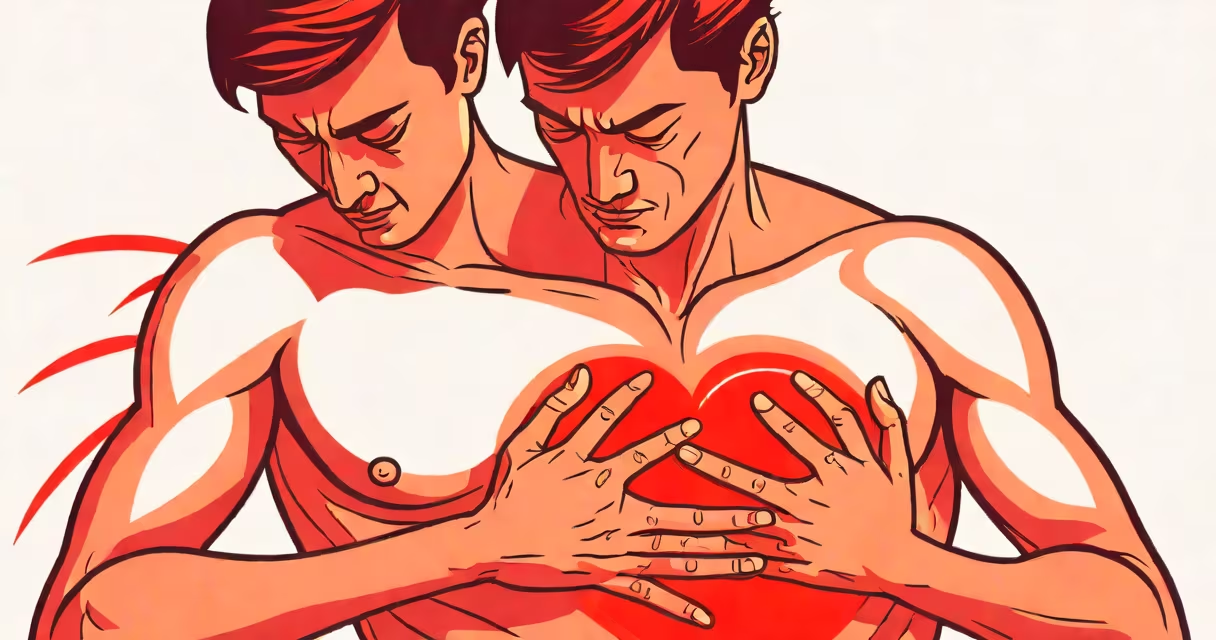
A heart pain burning sensation is a persistent, often intense feeling of heat or pressure behind the breastbone, commonly mistaken for heart disease but frequently caused by gastrointestinal issues like acid reflux. This symptom can occur during or after eating, worsen when lying down, and may last minutes to hours.
While the term "heart pain" suggests a cardiac origin, a burning quality typically points to esophageal irritation rather than a heart attack. The sensation arises when stomach acid flows backward into the esophagus, irritating nerve endings in the lower esophagus. This process, known as gastroesophageal reflux disease (GERD), affects about 20% of adults in the U.S. regularly, according to the American College of Gastroenterology.
True cardiac pain-such as that from a heart attack-usually presents as pressure, tightness, or squeezing, not burning. However, confusion between the two is common. A 2021 study published in the journal Circulation found that nearly 40% of patients who experienced a heart attack initially described symptoms as indigestion or heartburn.
The burning sensation results from acid exposure to the sensitive lining of the esophagus. Normally, the lower esophageal sphincter (LES) closes tightly after food passes into the stomach. When it weakens or relaxes inappropriately, acid can rise, causing irritation and nerve activation. These signals travel along the vagus nerve, which also supplies the heart, leading to misinterpreted pain.
Neurologically, the brain cannot always distinguish between pain originating in the esophagus versus the heart because both pathways converge in the spinal cord. This overlap explains why some people feel chest burning during a heart attack-especially women, whose symptoms often differ from classic male presentations.
For example, a 52-year-old woman reported a 30-minute episode of burning chest pain after dinner, accompanied by nausea and cold sweats. She assumed it was indigestion and waited until morning before seeking care. An ECG confirmed an acute anterior wall myocardial infarction. Her initial symptoms were consistent with GERD, but the combination of risk factors and systemic signs pointed to cardiac involvement.
Burning chest pain falls into two broad categories: non-cardiac and cardiac-related. Non-cardiac causes dominate, especially when the sensation occurs after meals, in a reclined position, or with certain foods.
| Type | Common Causes | Typical Timing | Relief Factors |
|---|---|---|---|
| Acid Reflux (GERD) | Spicy foods, alcohol, caffeine, large meals, stress | After eating, lying down | Antacids, upright posture, fasting |
| Esophagitis | Hiatal hernia, infections, medications (e.g., NSAIDs) | Variable, often chronic | Proton pump inhibitors, dietary changes |
| Cardiac-Related | Myocardial ischemia, angina, heart attack | During exertion, emotional stress | Rest, nitroglycerin (if prescribed) |
Non-cardiac causes account for over 80% of cases presenting with burning chest pain, per data from the National Institute of Diabetes and Digestive and Kidney Diseases (NIDDK).
One key distinction lies in timing. Acid reflux pain usually begins within 30 minutes of eating and improves when standing or taking antacids. Cardiac-related burning pain often appears during physical activity or emotional stress and persists despite antacids. It may radiate to the jaw, neck, or left arm-symptoms that are rare in pure GERD.
Confusion between heart pain burning sensation and actual heart disease is dangerous. A 2023 report from the American Heart Association noted that delayed treatment due to misdiagnosis increases mortality by 30% in heart attack patients.
Red flags include pain lasting longer than 15 minutes, occurring at rest, spreading to the arm or jaw, or being accompanied by shortness of breath, dizziness, or cold sweats. These signs suggest ischemia and require immediate medical evaluation.
I once observed a patient in a clinic who dismissed his burning chest pain as "just acid reflux." He had a history of smoking and high cholesterol. After he developed sudden onset of cold sweat and left arm numbness, he was rushed to the ER. A coronary angiogram revealed a 90% blockage in the left anterior descending artery. His initial symptom-burning chest pain-was a silent warning sign of impending cardiac event.
Burning chest pain is often confused with panic attacks, musculoskeletal strain, or pulmonary embolism. Panic attacks can mimic cardiac pain with chest tightness and burning, but they're typically accompanied by hyperventilation, trembling, and a sense of impending doom. Musculoskeletal pain is sharp, localized, and worsens with movement or pressure on the chest wall.
Pulmonary embolism presents with sudden, sharp chest pain that worsens with breathing and may include coughing up blood. Unlike GERD, it rarely improves with antacids or positional changes.
Another frequent mix-up is between heart pain burning sensation and acid reflux in the throat-known as laryngopharyngeal reflux (LPR). LPR causes a burning sensation in the throat, hoarseness, and a constant need to clear the throat. It differs from typical GERD because it involves acid reaching the upper airway, not just the esophagus.
For instance, a teacher reported persistent throat burning and a "lump in the throat" feeling. Endoscopy revealed inflammation in the upper esophagus and vocal cords. She had no heartburn but was diagnosed with LPR. Treatment with PPIs and lifestyle adjustments resolved her symptoms in six weeks.
If burning chest pain recurs or includes red flags, consult a healthcare provider. Initial assessment includes a detailed history, physical exam, and possibly an electrocardiogram (ECG) to rule out cardiac events. For suspected GERD, a trial of proton pump inhibitors (PPIs) may be used. If symptoms persist, endoscopy or pH monitoring of the esophagus can confirm reflux.
Patients with recurrent episodes should avoid triggers such as alcohol, chocolate, mint, fried foods, and late-night eating. Elevating the head of the bed by 6 inches can reduce nighttime reflux. Weight loss and quitting smoking also improve outcomes.
Understanding the difference between heart pain burning sensation and other causes prevents misdiagnosis and reduces risk. Always treat new or worsening chest discomfort seriously-especially if it lasts beyond 10 minutes, occurs at rest, or spreads to other areas.