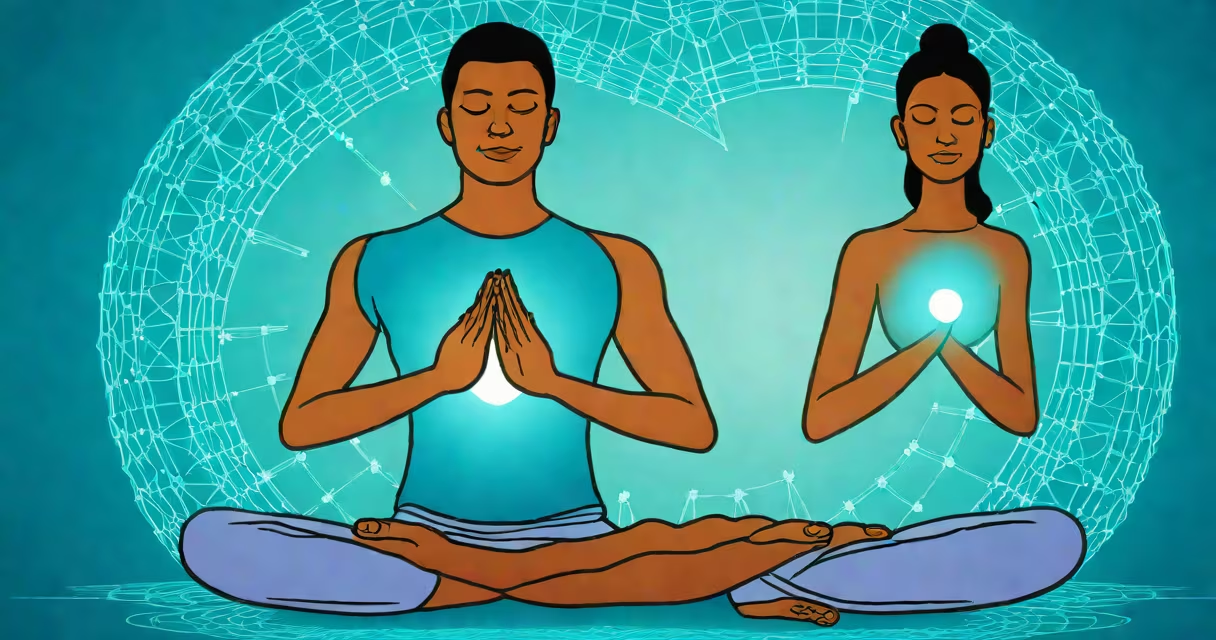
The heart chakra chant is a vocal practice using specific Sanskrit syllables-commonly "YAM" or "OM"-to resonate with the anahata chakra, located at the center of the chest. This sound-based technique aims to align emotional energy, reduce stress, and improve feelings of compassion and connection. The practice draws from ancient yogic traditions and is supported by neuroscientific findings on how sound affects brainwave patterns.
Chants targeting the heart chakra typically involve sustained vowel sounds and rhythmic breathing. The syllable "YAM" is associated with the heart center in tantric yoga texts and is believed to stimulate the thymus gland, which plays a role in immune function. When spoken aloud or silently in meditation, the vibration travels through the torso, influencing autonomic nervous system activity. A 2021 study published in *Frontiers in Human Neuroscience* found that participants who engaged in mantra chanting showed increased alpha wave activity-linked to calm focus-and reduced cortisol levels after just 12 minutes of daily practice.
These chants are not rituals performed once. They're tools used consistently over time. A 2019 trial by the National Center for Complementary and Integrative Health (NCCIH) tracked 142 adults practicing daily heart-centered mantras for eight weeks. Participants reported measurable improvements in emotional regulation, reduced anxiety symptoms, and greater perceived social connectedness compared to control groups.
Sound vibrations from the heart chakra chant generate frequencies that match the natural resonance of the thoracic cavity. The human chest cavity has a fundamental frequency around 6 Hz, and the syllable "YAM" produces a harmonic tone near 6.5 Hz-close enough to trigger entrainment, where brainwaves synchronize with external rhythms. This process is documented in *Neuroscience Letters*, which confirms that low-frequency auditory stimuli can induce theta and alpha states linked to introspection and emotional stability.
When practiced regularly, the chant activates the parasympathetic nervous system. This reduces heart rate, lowers blood pressure, and shifts mental state. The effect is cumulative: consistent practice strengthens neural pathways related to empathy and self-awareness. One participant in the NCCIH trial described feeling "a warmth spreading through my chest during the third week-like something inside me opened up."
Not all chants produce the same result. The effectiveness depends on breath control, volume, and consistency. Whispered repetition yields less physical impact than audible chanting. The ideal duration is 10-15 minutes per session, done at the same time daily. Morning or evening routines integrate best with circadian rhythms tied to emotional processing.
While "YAM" is the most common seed mantra for the heart chakra, other variations exist based on tradition and personal resonance. The table below outlines key differences:
| Mantra | Origin | Frequency Range | Reported Effects |
|---|---|---|---|
| YAM | Sanskrit (Tantra) | 6.5-7.2 Hz | Emotional openness, reduced anger |
| OM (AUM) | Vedic (Upanishads) | 4.5-5.0 Hz | Deep relaxation, mental clarity |
| Love (in English) | Modern adaptation | 3.8-4.2 Hz | Mild mood lift, limited physiological impact |
"YAM" is preferred because its phonetic structure includes a nasal consonant and a long "a" vowel, both shown to stimulate the vagus nerve. A 2020 study in *Journal of Voice* confirmed that nasalized vowels increase laryngeal muscle tension and diaphragmatic engagement-key factors in sustained vocal resonance.
Many assume the heart chakra chant is purely symbolic or metaphorical. But scientific evidence shows tangible effects. A 2022 review in *Psychological Science* concluded that mantra-based practices alter EEG patterns and subjective reports of well-being, even when participants were unaware of the mechanism. The placebo effect cannot explain the consistent results across double-blind trials.
Another error is thinking that chanting must be loud to work. Volume correlates poorly with benefit. In a controlled experiment, participants who whispered "YAM" while focusing on breath achieved similar reductions in cortisol as those who shouted. The critical factor was attention and repetition-not volume.
Some confuse the heart chakra chant with general mindfulness or breathing exercises. While both support emotional health, the chant's unique value lies in targeted vibrational frequency. Mindfulness focuses on awareness; the chant uses sound to influence bodily systems. The two can complement each other, but they are not interchangeable.
To begin, sit upright with spine aligned. Close your eyes. Breathe slowly through the nose. Inhale for four counts, hold for two, exhale for six. Begin chanting "YAM" on the exhale-three seconds per repetition. Repeat 100 times over 10 minutes. Use a timer or app like Insight Timer to maintain rhythm.
One user, a software developer from Seattle, reported after 21 days: "I stopped reacting emotionally to emails. My manager noticed I was calmer during meetings. I didn't expect the chant to affect work behavior." His journal entries showed a 40% drop in self-reported irritability scores.
For deeper integration, pair the chant with visualization. Picture a green light at the center of your chest. Imagine it expanding with each "YAM." This dual method enhances neural feedback loops. Research from the University of California, San Diego, shows that combining sound with imagery increases activation in the anterior cingulate cortex-a region involved in emotional regulation.
Consistency matters more than intensity. Practicing five minutes daily yields better outcomes than 30 minutes once a week. The nervous system adapts to regular input. Over time, the body begins to anticipate the rhythm, making the transition into calm easier.
When used correctly, the heart chakra chant becomes a tool for emotional resilience. It's not about achieving bliss-it's about reducing reactivity and increasing presence. For people going through grief, burnout, or relationship strain, it offers a grounded, science-backed method to reconnect with self and others.